

July 22, 2026, 3:17 pm | Read time: 4 minutes
Suddenly, the cat twitches in its sleep, its paws wiggle, and its whiskers move. For many owners, this looks alarming. However, there’s usually something entirely natural behind it. PETBOOK explains why your cat twitches, whether it’s dreaming, and when you should see a vet.
Why Does My Cat Twitch in Its Sleep?
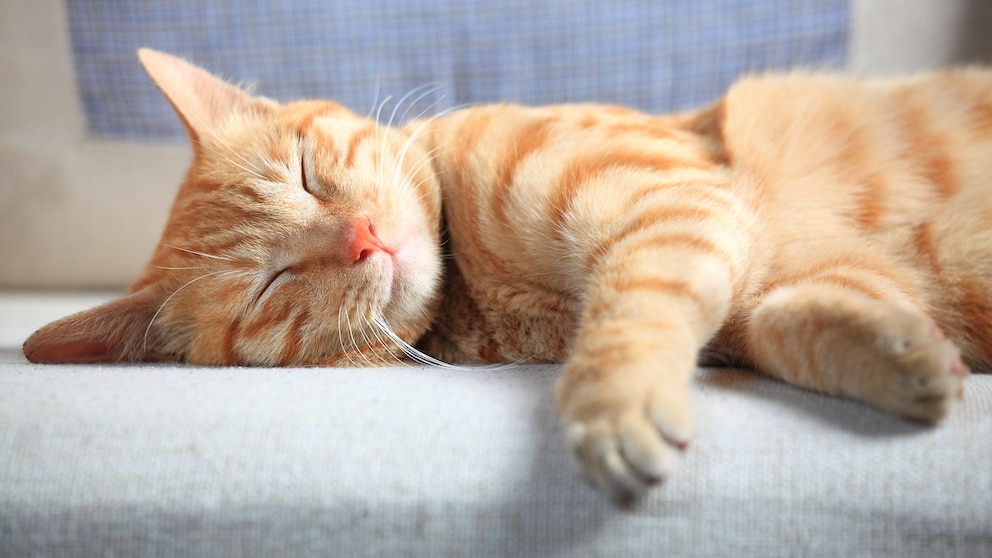
As soon as the cat falls into a deep sleep, its paws suddenly start twitching. Sometimes the whiskers, ears, or even the corners of the mouth move. For many owners, this behavior initially seems alarming. In most cases, however, the twitching is completely harmless. On the contrary, it is usually a sign that the cat is in a deep sleep phase.
During this so-called REM sleep phase, the brain is particularly active. Impressions of the day are processed, and possibly even dreams are experienced. Many cat owners therefore suspect that their feline friend is dreaming of the last mouse hunt—and indeed, there are some exciting scientific indications of this.1
How Long Should Cats Sleep During the Day?
Adequate sleep is one of a cat’s most essential basic needs—just like food, activity, and health care. Depending on their age, cats sleep between 12 and 16 hours a day. Older animals often spend even more time sleeping, while kittens spread their sleep over many short rest periods throughout the day.
For most of this time, cats are only in a light sleep phase. They doze, relax, and briefly wake up now and then. Only during deep sleep phases does the cat sleep soundly. It is precisely then that the brain begins to work particularly intensively—and many cats start twitching their paws, ears, whiskers, or tail tip. 2
As mentioned earlier, cats also have deep sleep phases. Typical signs include:
- closed eyelids
- twitching paws, ears, tail tip
- chewing movements
- soft meowing or other sounds
Often, the REM sleep phase in cats lasts no longer than six minutes at a time. Calculated over the entire sleep duration during the day, cats achieve about four hours of active deep sleep.
Also interesting: 4 Reasons Why Cats Suddenly Start Staring at You

What Do Cats Dream About?

What Do Dogs Dream About?
Do Cats Dream in Their Sleep?
There is much to suggest that cats do indeed dream. During the REM sleep phase, their brain is particularly active—just like in humans. The fact that paws, ears, or the tail tip move and some cats even softly meow or purr is considered an indication that they are experiencing a dream.
A particularly revealing experiment by French scientist Michel Jouvet was insightful: He disabled the natural muscle inhibition in cats during REM sleep, which normally prevents dreams from being physically acted out. The animals crouched, suddenly jumped, or seemed to chase invisible prey. These observations are still considered an important indication that cats do indeed dream in their sleep. So if a cat twitches, it might even be dreaming.
What exactly cats dream about cannot be said for sure. However, researchers assume that they—similar to humans—process experiences of the day. These can be successful hunting attempts during play, encounters with other cats, a particularly tasty meal, or even stressful situations like a vet visit. Kittens, in particular, spend a lot of time in REM sleep. This phase likely helps them process the many new impressions of their daily lives and consolidate what they’ve learned in their memory.
How Your Cat Sleeps Especially Well
For cats, sleep is much more than just rest. While they doze or sleep deeply, their brain processes the day’s impressions and stores new information. At the same time, the body regenerates, stress is reduced, and important metabolic and digestive processes occur. Adequate sleep is therefore an important component of physical and mental health.
To ensure your cat can sleep restfully, its sleeping place should meet some requirements:
- Quiet location: The sleeping place should not be in a frequently used passageway.
- Protected and secure: Cats sleep particularly relaxed in places where they can retreat and still keep an eye on their surroundings.
- Cozy and warm: A soft cat bed, a blanket, or an elevated spot provides comfort.
- Offer multiple retreats: Many cats change their favorite sleeping spot depending on the time of day or temperature.
- Ensure quiet in the evening: Dimmed lights and a relaxed atmosphere support the natural sleep rhythm.
If your cat is healthy and shows no other abnormalities, twitching paws, ears, or whiskers in sleep are usually no cause for concern. On the contrary, they are often a sign that the animal is in a deep sleep and possibly even dreaming. However, if the movements become unusually strong, cramps occur, or the cat shows neurological abnormalities even when awake, it should be examined by a veterinarian.