



August 12, 2025, 4:43 pm | Read time: 4 minutes
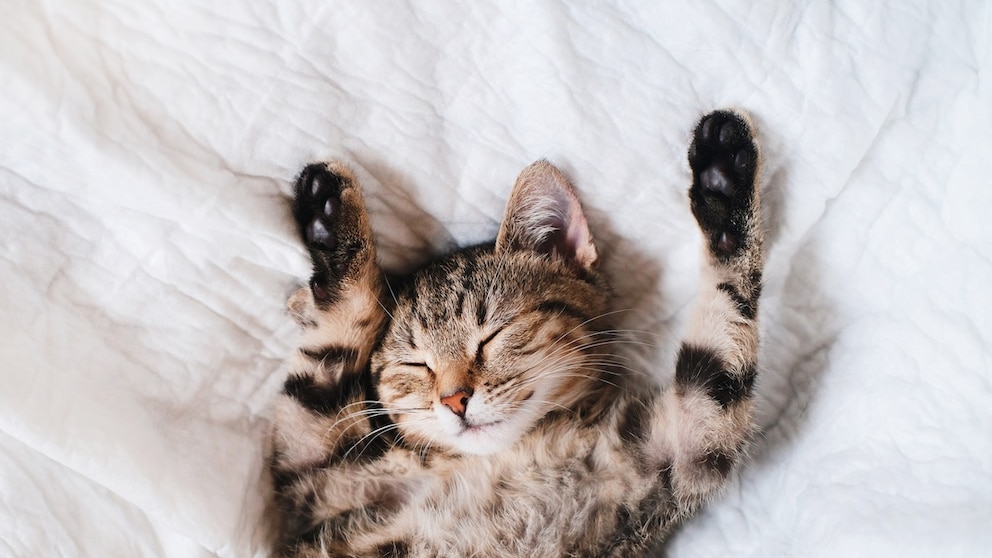
Cats spend up to two-thirds of their lives sleeping–that’s about 15 to 16 hours a day. But what actually happens in their minds during these long periods of rest? Anyone who has ever watched a cat in deep sleep may have wondered: Can cats dream? And if so, what do they dream about?
Cats Sleep a Lot–and They Probably Dream Too
While humans typically sleep seven to eight hours a night, cats enjoy significantly more rest. Young animals, older cats, or sick animals often sleep even longer. Sleep serves them–as it does us–for regeneration, information processing, and sorting stimuli.
As early as the 1960s, French neuroscientist Michel Jouvet laid the foundation for the assumption that cats also dream. Modern research impressively confirms this notion: Cats experience REM sleep phases, just like humans, during which the brain is very active. It is precisely in this phase that dreams occur.
Evidence of Cat Dreams in REM Sleep
Many cat owners are familiar with the typical sleep movements: twitching paws, twitching ears, a quivering tail tip, sometimes accompanied by soft sounds like meowing, purring, or snoring. All of this can be an indication of dream activity. Particularly intriguing is the finding that these movements often occur precisely when the brain is running at full speed during REM sleep–a sleep phase in which humans also dream intensely.1
A groundbreaking study by Jouvet illustrated this particularly vividly: In an experiment, the muscle blockade in REM sleep, which normally prevents dreams from being physically acted out, was deliberately switched off. The result: The cats began to “hunt prey” in their sleep, crouching, jumping, and catching imaginary mice. For many researchers, this was proof: Cats dream–and vividly so.
Also interesting: What Do Dogs Dream About?
Dreamlike Hunting Sequences and Daily Processing
Although cats can’t tell us what they dream about, behavior and scientific findings allow us to make informed assumptions. They likely process the day’s experiences: encounters with fellow cats, playing with a feather toy, a tasty meal, or stressful situations like a vet visit.
This is where the so-called continuity hypothesis comes into play: Dreams reflect the day’s experiences and interests. What intensely occupied a cat during the day–such as watching a bird on the balcony–is likely to appear in its dream world.
Additionally, their sensory perception in dreams might differ from ours: While we rarely dream of smells, this could indeed be the case for cats–since their sense of smell is highly developed and plays a central role in their lives. 2
Do Cats Dream of Their Humans?
One of the most fascinating questions is: Can cats also dream of their humans? The answer is: Most likely yes–albeit in their own unique way. Especially cats with a strong bond to their caregiver might relive them in dreams. Unlike dogs, which are often very human-oriented, cats focus more on their environment and independent actions. Nevertheless, their favorite humans are undoubtedly among the defining elements of their daily lives–and thus their dreams. 3
Kittens Dream Especially Often
Young cats seem to have very vivid dreams. No wonder–they discover something new every day. The multitude of impressions must be processed. Much like young children, they spend more time in REM sleep, indicating intense cognitive development. Their dreams could be full of play, hunting, and new impressions–the brain “sorts” and stores learned and experienced things.
Do Cats Have Nightmares?
Yes, it’s possible. Especially after stressful experiences–such as a confrontation with another cat, a fall, or a sudden threat–negative scenarios might recur in dreams. In such cases, cats may hiss, growl, or twitch frantically in their sleep. However, a dreaming cat should not be awakened–suddenly pulling them out of REM sleep can lead to confusion, fear, or even aggression.

Why Cats Suddenly Twitch in Their Sleep

What Do Dogs Dream About?
How to Encourage Good Dreams
A pleasant sleep environment can positively influence sleep–and possibly dreams. Quiet retreats, soft sleeping places, and a low-stimulus environment promote relaxed sleep. Additionally, play opportunities, species-appropriate activities, and loving attention ensure the cat has positive experiences–and perhaps sweet dreams.
Conclusion: The Dream World of Cats Remains Mysterious
Even though we can never say for sure what exactly our cats dream about–the evidence is clear: They dream. And quite a bit. Whether of exciting hunts, soothing cuddles, or wild adventures with fellow cats–their dream world is likely as rich and diverse as their character.