


April 14, 2026, 4:02 am | Read time: 5 minutes
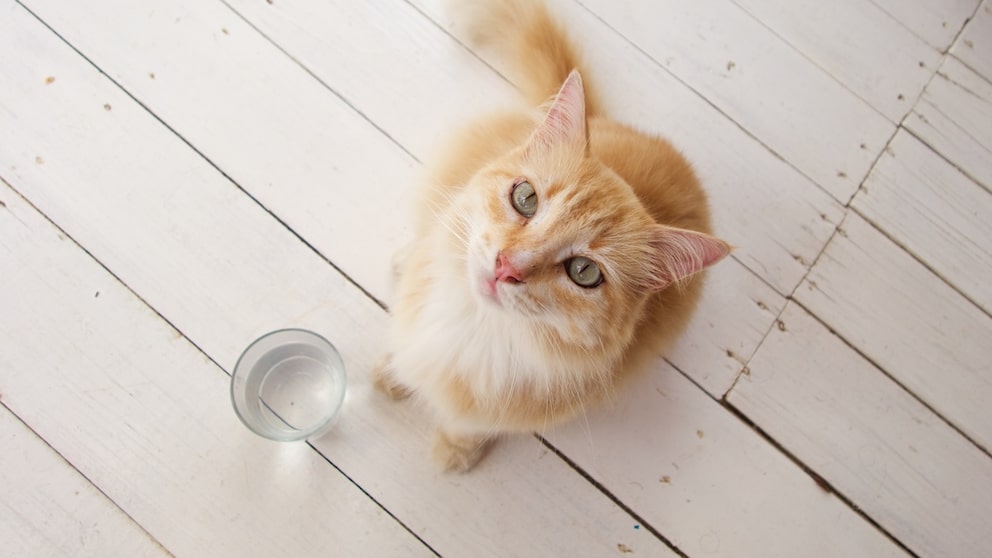
Many cat owners are frustrated that their pet barely touches the water bowl. They quickly worry that the cat is drinking too little–and that could be dangerous. But the surprising answer: This behavior is completely normal for cats. PETBOOK editor and biologist Saskia Schneider explains why cats are naturally poor drinkers and what really lies behind this.
Why Cats Are Naturally Poor Drinkers
Many cat owners know the problem: The water bowl often remains untouched. It quickly gives the impression that something is wrong with the cat. In fact, the opposite is true.
Cats are naturally not big drinkers. Their ancestors, the African wildcats, lived in dry regions where water was scarce. Instead of drinking regularly, they met their fluid needs through their prey–small rodents or birds that consist largely of water.
The Problem: The Reality of Our Cats’ Lives Has Changed
This principle still applies today. Even our house cats are biologically programmed to absorb fluids through food. Drinking is more the exception than the rule for them.
The problem: The reality of many cats’ lives has changed. Instead of water-rich prey, there is often dry food–and that contains very little moisture. However, the cat’s body still functions like that of a desert animal.
Do Cats Feel Thirst?
Yes, cats do feel thirst–but it’s quite different from humans or dogs. While we notice relatively quickly when we’re lacking fluids, cats react much later. Their bodies are designed to conserve water. The kidneys work extremely efficiently and can produce very concentrated urine.1
This has a crucial effect: Cats often only feel thirsty when their bodies are already starting to compensate for a deficit. This also explains why many cats ignore the water bowl, even though from a human perspective they “drink too little.” If they get enough moisture from their food, they simply see no reason to drink additional water.2
Which Water Sources Would Cats Prefer in Nature?
When cats drink, it’s not random. Their behavior is strongly influenced by their instincts.
In nature, cats prefer fresh, flowing water sources. Standing water can be contaminated and contain pathogens–a risk that cats instinctively avoid.
This behavior is also evident in everyday life: Many cats prefer to drink from the faucet rather than the bowl. Or they scoop water with their paw from glasses, watering cans, or even the shower.
Additionally, cats are very sensitive to cleanliness and smell. Even small impurities or stale water can lead them to reject the offer.
And another typical cat trait: They don’t like to drink where they eat. In nature, a water source next to prey would pose a potential risk.3
How to Encourage Your Cat to Drink
Even though cats naturally drink little, there are some simple ways to increase their fluid intake:
- Offer multiple water sources: Place bowls around the house, ideally in quiet places and not directly next to the food.
- Provide fresh water: Daily changes are important–cats are sensitive to smells and impurities.
- Use flowing water: Drinking fountains or gently running water sources can appeal to their natural instincts.
- Feed wet food: It already provides a large portion of the needed fluids.
- Mix water into food: A simple trick to subtly increase intake.
- Add flavor: Unsalted meat broth or special cat drinks can motivate particularly reluctant drinkers.
- Consider individual preferences: Some cats prefer certain materials, temperatures, or even “stale” water–observation is key here.
It’s important to note: There is no one-size-fits-all solution for all cats. Each animal has its own preferences, and often a bit of experimentation is needed. We’ve compiled more tips for you here: 8 Tips to Get Cats to Drink More Water

7 tips to get cats to drink more water

Drinking Fountains for Cats: 3 Popular Models Tested in Everyday Use
When Drinking Becomes a Warning Sign
As normal as it is for cats to drink little, changes should always be taken seriously. If a cat suddenly drinks significantly more than usual, it can be a sign of illnesses, such as kidney problems, diabetes, or hyperthyroidism.
But the opposite is also critical: If a cat takes in hardly any fluids over a long period, dehydration can occur. Early signs include fatigue, dry mucous membranes, or loss of appetite.
You should be particularly alert if additional symptoms such as weight loss, vomiting, or behavioral changes occur. In such cases, it’s better to visit the vet one time too many than one time too few.
Conclusion: Cats Need to Drink
Cats drink little–and that’s completely normal. Their bodies are designed to absorb fluids through food and use water as efficiently as possible. For us owners, this means one thing above all: It’s not just the amount they drink that matters, but the total fluid intake.
With the right feeding, suitable water offerings, and a watchful eye on changes, a cat’s health can be well supported. Because even though cats are poor drinkers, they still can’t do without enough fluids.