

February 6, 2026, 10:12 am | Read time: 4 minutes
They keep popping up and garner millions of clicks: videos where cats jump high into the air while eating because a cucumber suddenly appears behind them. What seems like harmless fun to many raises serious questions upon closer inspection. Are cats really afraid of cucumbers, or is there something else behind these extreme reactions? PETBOOK spoke with animal welfare experts.
Cats and Cucumbers–the Videos Explained
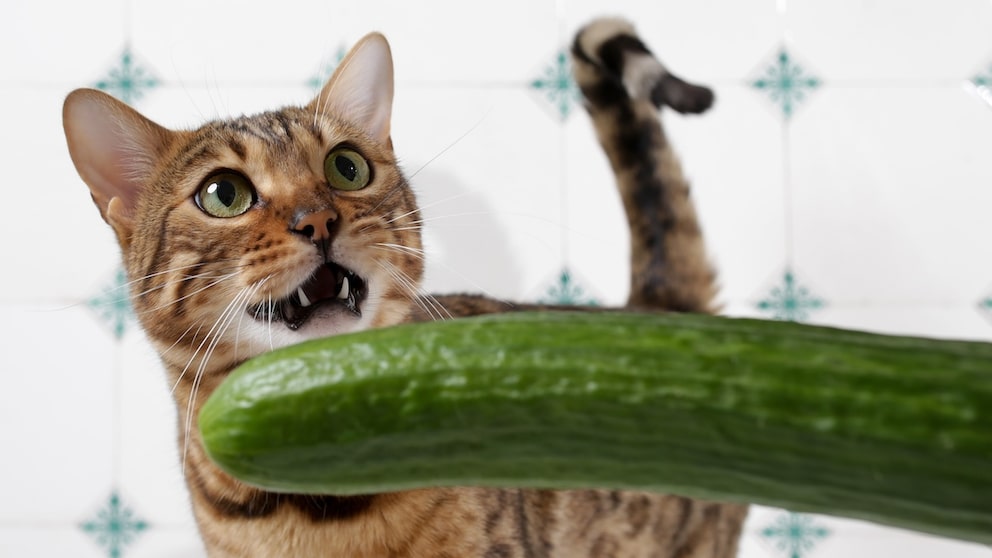
A few years ago, the clips were everywhere, and the trend still resurfaces occasionally. The sequence is almost always the same. A cat eats calmly from its bowl while the owner approaches from behind. Unnoticed, a cucumber is placed directly behind the animal. When the cat turns around, it gets startled: a leap upward or to the side, often accompanied by loud laughter behind the camera.
After the first clips went viral in 2015, the concept was widely copied. Instead of cucumbers, bananas, eggplants, and zucchinis were also used. Some owners even placed the vegetables next to the animals’ sleeping spots, so they would be startled right upon waking.

Startle Reaction Instead of Cucumber Fear
The noticeable reactions cannot be attributed to a specific fear of cucumbers. Cats are generally skittish and react sensitively to sudden stimuli. Loud noises, unexpected movements, or new objects can trigger strong overreactions.
Behavioral biologist and cat expert Dennis Turner explained to Spektrum that a fear of vegetables has no evolutionary benefit. “The cats in the videos are startled due to the surprise effect, as the cucumbers are always placed directly behind them without their notice.”
Veterinarian Dr. Daphne Ketter, who specializes in behavioral medicine, also emphasized that cats typically do not expect danger at their feeding spot. Therefore, they are particularly inattentive to their surroundings in this situation. It is conceivable that cucumbers are particularly effective because they roughly resemble an animal: size, shape, and an unfamiliar scent for cats could amplify the reaction.
Cucumber Resembles Snake? “Far-Fetched”
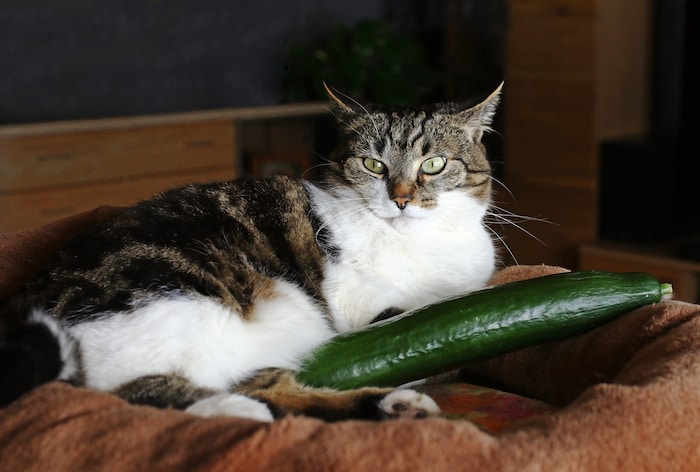
The idea that the cucumber resembles a reptile or snake has been circulating in the media since the internet trend emerged in 2015. However, the notion that the fear is a remnant from when cats lived in the wild has not been verified.
Lea Schmitz, spokesperson for the German Animal Welfare Association, contextualizes the assumption for PETBOOK with the following words: “Cats are naturally more skeptical of unfamiliar things.” The combination of the surprise effect and an unfamiliar object triggers a startle reaction in such a situation, similar to humans. Schmitz also considers the idea that the cucumber would be mistaken for a dangerous snake as somewhat far-fetched.
Also interesting: Where Do Dangers Lurk for Cats?
Cat Puts Toy in Bowl–Is It Really Trying to “Feed” It?

Many Viral Trends on Social Media Harm Dogs
Clear Warning from Animal Welfare Experts
As amusing as the videos may seem to outsiders, they are problematic from an animal welfare perspective. Experts strongly advise against deliberately startling cats. 1
The German Animal Welfare Association states clearly: “For cats, the whole thing is less amusing than it may appear to the viewer. While some animals react quite calmly, in the frequently clicked videos, the animals sometimes react more extremely. It is obvious that they cannot control their initial reactions, and injuries to walls or furniture are possible. Additionally, it can also happen that the cat chokes, especially if it has just eaten.”
In general, it is said: “The feeding and sleeping area represents a functional space for cats where they should not be disturbed under any circumstances.” The sudden fright triggers a pronounced flight reaction–with increased blood pressure, faster heartbeat, and heightened muscle activity. This is followed by an adrenaline rush, causing the initial flight reaction, and then the release of cortisol, which ensures prolonged alertness.
Possible Consequences for the Animal
If a cat is repeatedly startled, it can have long-term effects. In the worst case, its eating behavior changes: the bowl is avoided, or the animal stops eating altogether. What was intended as a brief joke can cause lasting stress.
“Especially after eating, an animal needs–just like a human–peace to continue the digestion process. Cats are very sensitive animals. If the animal cannot feel safe while eating or in its comfort zones, this can lead to behavioral problems,” says Lea Schmitz.
The expert’s assessment is clear: cucumber videos may bring clicks, but for cats, they mean unnecessary fear–and should not be imitated.