

November 17, 2025, 5:37 am | Read time: 13 minutes
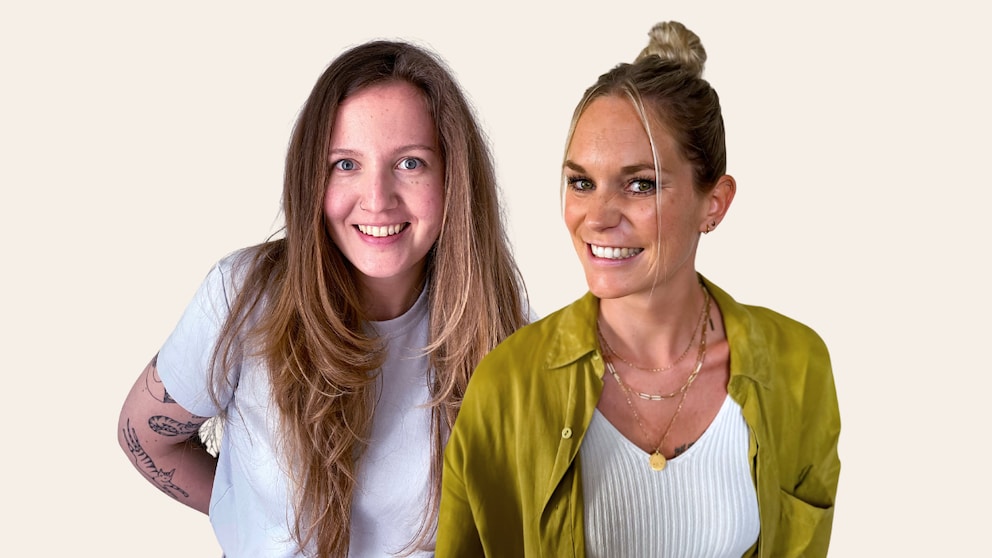
In the first part of our PETBOOK interview, Madeline and Saskia from Strayz shared how everything began with the street cat Mushki–and how a moving encounter in the Seychelles led to the creation of a brand that combines pet food and animal welfare.But even a heartfelt mission isn’t immune to criticism: When Strayz was tested by “Stiftung Warentest,” instead of praise, they received a “poor” rating.In the second part, the founders discuss why they still see the verdict as an opportunity, what lies behind the test ratings–and how they continue to grow, donate, and educate despite setbacks. They also reveal how they choose their animal welfare partners, the moving encounters they’ve experienced, and where Strayz aims to go in the next five years.
“We found it exciting that they even considered us for selection”
PETBOOK: That brings me to a point we need to discuss: your performance in “Stiftung Warentest.” Why did you receive a “5” or “poor” rating?
Saskia: “My favorite topic! So, we were tested by Stiftung Warentest–which was an honor for us because we’re still a very small brand. We found it exciting that they even considered us for selection. In the end, however, we received a “5” due to various deficiencies that were identified.
First, you need to understand how these tests are structured: There are different categories where you can earn points. The final grade is based on the total score. For example, we received significant deductions for packaging–it was deemed too large in relation to the food content, essentially a “deceptive package.” Yes, theoretically, the bags could be smaller–I completely agree–but you also have to consider which materials can run on the supplier’s filling machines. We’re simply not that flexible. Still, I don’t want to use that as an excuse.
What I find interesting, though, is that some other manufacturers in the test received very good ratings, partly because their product-to-packaging ratio was considered optimal. Yet, their food is less nutritious, so you would need to feed three bags per day per animal to achieve the same effect. With us, one and a half bags are enough. So, I naturally wonder: Who really uses more packaging material in the end? Unfortunately, such connections are often not considered in the tests.”
“We are working to ensure our information aligns even more closely with standard values in the future”
Madeline: “We also received deductions because we advertise with the claim “no added sugar.” I have the impression that Stiftung Warentest views the sugar issue less critically than we do–we consciously avoid it. That quickly leads to point deductions.
The tested batch was also–due to natural fluctuations in the ingredients–a bit fattier than usual. As a result, the nutritional values on the packaging did not exactly match the lab values in this case.
That, of course, shouldn’t happen, and we are working to ensure our information aligns even more closely with standard values in the future. Still, it must be said: We use natural ingredients, while many of the highly rated brands work with highly standardized base mixtures–comparable to liquid meal drinks.
They are, of course, perfectly balanced–but in the end, it’s the question: Do I want a vitamin C tablet or rather eat an orange?”
“We turned the whole thing into something positive”
Saskia: “We regularly conduct our own lab tests–and have been doing so long before the Stiftung Warentest test. We even provided the editorial team with results from our internal tests, both from earlier and later batches.”
Madeline: “Exactly. The usual process is that you are informed in advance that a test is planned. Then you have the opportunity to fill out questionnaires and respond after publication.
From industry insiders who have been developing recipes for major brands for many years, we’ve learned that it apparently matters how you argue–and with whom you speak at Stiftung Warentest. That can have a certain influence on the final result. As a small, young brand, we naturally don’t have established contacts or routines yet.
Still, I think we turned the whole thing into something positive. We publicly addressed the grade and achieved a wide reach as a result. Within our community, our statement even had the opposite effect–it heightened awareness of the issue and criticism of such tests.
The test methods are often questioned anyway because you simply can’t compare apples to oranges. I would love it if Stiftung Warentest would create two categories in the future–one for classic supermarket food and one for natural, high-quality products. That would be a truly fair comparison.”
Saskia: “Exactly–and it would also need to consider which factors influence the results. Because as it currently stands, some differences are simply accepted as given.”
Strayz Founder: “Openness and transparency are hardly considered”
PETBOOK: The composition–or rather the declaration–often plays only a very small, almost subordinate role in the tests. Yet, for me as a consumer, that would actually be one of the most important points.
Madeline: “Yes, absolutely. Openness and transparency are hardly considered. Basically, only what’s in the bowl is analyzed–the lab values, not the origin or composition. But still: It was a very exciting experience for us.
Saskia: Yes, you could say that! We hardly slept during that time–especially Madeline, who formulated our statement within five hours. It was a really exciting phase.”
PETBOOK: Definitely. Let me put it this way: Some products on this list I wouldn’t necessarily feed.
Saskia: “Exactly. That was also the sentiment in our community. Many saw it similarly. Of course, there are people who rely on such test results–and that’s understandable. Stiftung Warentest does great work in many areas, especially with products that can be objectively compared–like vacuum cleaners or technical devices.
I don’t want to speak ill of it. But with food–or pet food–it’s just much more difficult because so many individual and qualitative factors come into play. You can see that in their honey tests, which also regularly spark discussions.”
Madeline: “Yes, exactly. It’s all quite complex–and sometimes hard to fit into a uniform evaluation system.”
“The pressure on the industry is definitely increasing”
PETBOOK: At PETBOOK, we’ve also conducted some of our own food tests–together with a nutrition expert. We don’t just look at what happens in the lab, but also at the declaration on the packaging: Does the food really nourish the animal healthily? And that’s actually well-received. We feel that this topic is being examined more critically and in more detail.
Madeline: “Yes, absolutely–the pressure on the industry is definitely increasing. That’s why we also focus heavily on educational work, especially on Instagram. There, we regularly share insights and openly say: ‘Five years in the pet food industry–we show you what’s really happening.’
We also encounter limits. For example, we can’t produce some snacks because glycerin would be needed to keep the products soft and moist. But we’ve consciously decided against it.
That means: We have our own ‘do-not-use’ catalog with ingredients we exclude. And we honestly tell our community: ‘Sorry, we know you want these little sausages–but that just doesn’t work with our quality standards right now.’”
How Strayz Chooses Animal Welfare Organizations for Their Donations
PETBOOK: How do you choose the animal welfare organizations that receive your donations?
Madeline: “We’ve tried different approaches by now. Initially, we actually did our own research, finding the first two animal welfare associations through personal contacts where we knew good work was being done. That’s how we built it up back then.
Now, we consciously involve our community in the process. For several years, we’ve been making multiple calls a year on Instagram, where our followers can nominate associations for us to take a closer look at.
We review the suggestions based on clear criteria, including:
- that the association conducts spay and neuter programs,
- that it is registered and nonprofit,
- that it works with the TRACES system when animals are brought from other European countries to Germany,
- that it is authorized to conduct adoption work,
- and that it holds the appropriate permit under Section 11 of the Animal Welfare Act.
We require all evidence to be submitted in writing. Then we curate a selection of associations that we put to a final vote. For us, one thing is central: Our customers enable the donations–so they should also have a say in where the money goes.”
(Editor’s note:) The TRACES system (“Trade Control and Expert System”) is a central EU database that monitors and documents the transport and trade of animals and animal products within Europe. It ensures that all imports comply with applicable animal welfare and health regulations. Section 11 of the Animal Welfare Act, in turn, regulates the conditions under which individuals or organizations in Germany may commercially work with or adopt out animals.
A Dog Lived 10 Years Chained in a Barrel
PETBOOK: That’s wonderful. Do you have some examples? Have you ever been on-site to see the work?
Saskia: “Yes, I was just recently at PAWS on Paros in Greece and visited the shelter there–truly impressive. They feed over 400 street cats daily across the island in various colonies and care for many animals directly in the shelter.
It was incredible to see what the team accomplishes there. The shelter manager lives on the premises, day and night, to care for the animals. They just rescued a dog that had lived chained in an old barrel for ten years–he could barely walk, just lay there. Now he’s receiving physical therapy to get back on his feet.
Many of their cases come through tourists who notice injured animals, bring them by, or call. Experiencing all of this live was very moving.”
Animal Welfare Workers Sometimes Work Three Jobs at Once
Madeline: “I’m impressed by Nordic Strays, for example, who are active in Bosnia and Croatia. In Bosnia, Svjetlana, a young woman in her late twenties, lives in a remote mountain village–in winter, it’s hardly accessible by car.
She lives with a whole pack of former street dogs, is building an animal shelter, and is doing it all on her own. She has incredible confidence, energy, and heart–it’s truly her calling.
Or Christina in Split, Croatia: She and her sister climb a steep mountain several times a week to feed cat colonies there. I was there once myself–it’s physically demanding work.
Sometimes they go out at night with live traps to catch injured or to-be-neutered cats. Christina works three jobs to finance her animal welfare work–she’s really at her limit, keyword ‘Activism Burnout.’
That’s why we’re even more pleased when we can at least make a small contribution–for example, by covering food costs and perhaps making one job unnecessary. We also support projects in Germany, like a small animal shelter near Gera that has created a real little oasis for animals–despite difficult conditions.”
Saskia: “Yes, it’s just wonderful. Especially in times when you sometimes feel like losing hope, it’s incredibly uplifting to see how many people are doing great things with passion.”
“Starting a Company Is Really Not an Easy Path”
PETBOOK: That brings us back to the topic of motivation, which for you is definitely the animal welfare point and what you can achieve with it.
Madeline: “Yes, absolutely. Starting a company is really not an easy path. The last five years have been a rollercoaster–sometimes literally minute by minute.
We often joke that we’re now emotionally in a “permanent neutral mode” because within ten minutes, you can either be overjoyed or really upset–depending on what’s happening. Honestly: I don’t know if we would have gone through with all of this if we didn’t have the animal welfare idea in the background.”
Saskia: “Yes, and when you consider: We forgo a large part of our previous salary because we simply can’t pay it out right now–the mission takes precedence.
Many start-ups in the pet sector today focus on supplements or lifestyle products–you can quickly make a lot of money with that, often by playing on people’s fears. That was never an option for us from the start. Our goal was always to enable donations but still not be more expensive than other premium brands. That does reduce our margin, but we fully stand behind this decision.”

A Cat, an Aha Moment, a Brand–The Story Behind Strayz

Who Is Actually Behind the Pet Food Brand Strayz?
“We Definitely Need to Keep Growing to Save Even More Animals”
PETBOOK: What is your next 5-year goal–more revenue or more rescued animals?
Madeline: “Fortunately, for us, both are interconnected–growth and impact. We definitely need to keep growing to save even more animals. However, that’s not easy when you want to do it without major investors–so purely on our own in a market that currently isn’t exactly screaming for growth.
We still can’t complain: We’ve grown significantly in recent years. But for the future, we dream of a knowledge platform for animal welfare organizations. With it, we could help structurally, providing help for self-help. Our background is in finance, sales, marketing, and communication–we could pass all that on to animal welfare organizations: How do you do good fundraising? How do you use social media effectively? And maybe we can make the pet food industry a little less messed up.”
Saskia: “Exactly, we’re already a bit involved in that–poking around here and there.”
“Turn the Package Around, Check Advertising Claims”
PETBOOK: Do you have anything else you can share with us? Are you working on a new product or something that no one knows about yet?
Madeline: “Yes–we definitely know that if everything continues as it is, we can add another association to our donation program as a Christmas surprise this year. That would be our 17th animal welfare association, which is pretty amazing.”
PETBOOK: Is there anything else that’s particularly important to you–something you’d like to share with our readers who are interested in animal welfare or want to get involved?
Saskia: “Yes, absolutely. Even for those not yet active in animal welfare: Consumers should critically question–turn the package around, check advertising claims. If something seems odd, you can contact the consumer center.
This helps keep the industry cleaner and holds companies accountable.”
Madeline: “And in animal welfare, every form of support helps. You don’t have to buy our food to do good. If you like, you can help with your own skills–for example, writing texts, optimizing websites, or creating profiles for animals.
Local animal shelters also constantly need help–they often look for people to pick up or transport food donations. And if you’re interested in gaining international experience: Many organizations offer accommodation and meals if you help on-site–cleaning, feeding, or caring for the animals.”
Saskia: “Exactly–PAWS and Save the Dogs in Kallikratia offer such programs in Greece, and there are similar projects in Spain, like at Street Cats Rescue. Anyone can really get involved.”