

November 13, 2025, 3:04 pm | Read time: 5 minutes
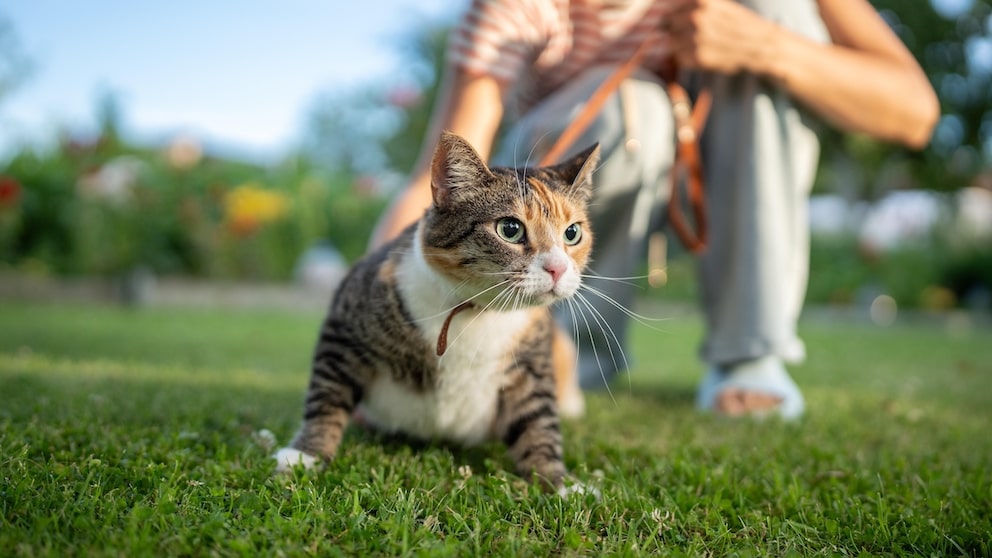
She sniffs curiously at the blade of grass, peers into the bushes with wide eyes–but just a crack in the underbrush is enough, and the cat crouches down, uncertain. A walk on a leash sounds exciting, but not every animal is made for it. For some indoor cats, controlled outdoor access can be enriching–if certain conditions are met. However, animal welfare advocates and PETBOOK editor Louisa Stoeffler view walking a cat on a leash with skepticism.
Not Every Cat Is Suited for Walks
Cats are considered independent and freedom-loving–traits that hardly seem to fit with walks, harnesses, and a leash at first glance. Nevertheless, some owners choose to take their cat outside. Whether this makes sense depends heavily on the individual animal.
“Unlike dogs, who enjoy going on explorations with their owners, cats are very independent animals that prefer to roam on their own,” says Nadia Wattad from the German Animal Welfare Federation. Anyone who wants to walk a cat on a leash and harness must carefully consider this–and only attempt outdoor access under certain conditions.
Especially indoor cats can benefit from controlled outings. “If outdoor access is not possible due to traffic or other dangers, a walk on a leash can support their natural exploratory drive,” says Wattad.
The prerequisite is that the cat feels comfortable during the walk. “Fearful or skittish animals are not suitable for leash walks.” Even outdoor cats that usually roam their territory independently do not benefit from it.
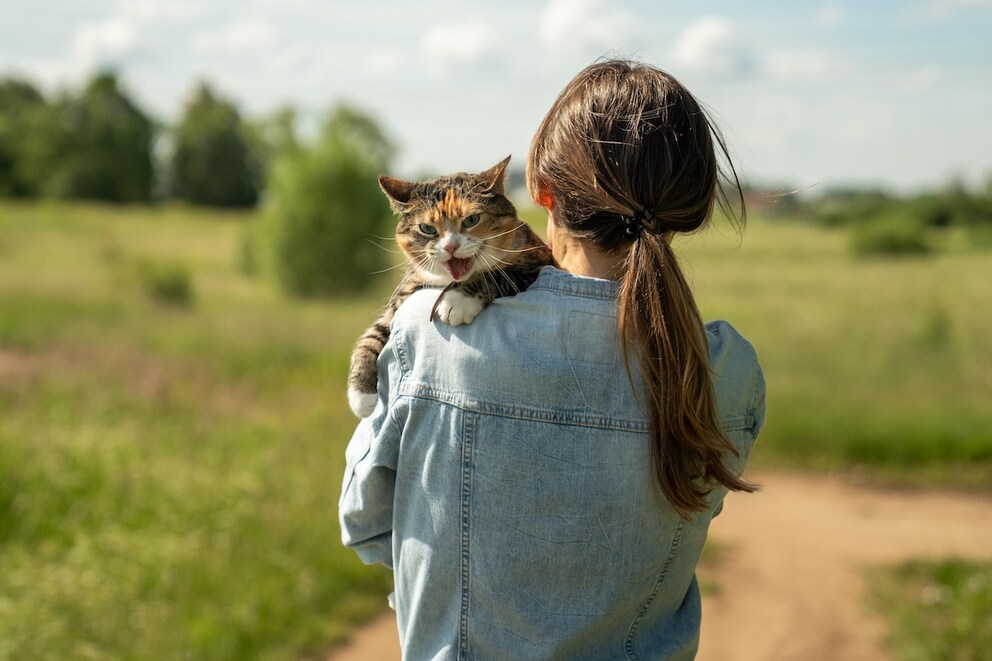
Signs of being overwhelmed are clear: If the cat stands still, barely moves, or tries to get rid of the harness, the outing should be ended immediately. “That is a clear stress signal,” says Wattad.
Preparation Is Key for a Successful Outing
For a walk to be a positive experience for the cat, it requires time and training. The harness should fit well–neither too loose nor too tight–and be introduced slowly in a familiar environment. “The leash should be short; retractable leashes are unsuitable,” explains Nadia Wattad. Collars are off-limits, as cats can easily injure themselves or even strangle.
The first outdoor excursion should take place in a safe, familiar environment, such as a fenced garden. Keeping a distance from trees is important to prevent the leash from getting caught in branches. “Cats should also not be walked in areas where many dogs are present,” warns Wattad. Encounters with dogs often lead to stress on both sides.
A carrier can provide additional security. “In unclear situations, it offers protection and prevents the cat from escaping.” However, an escape can never be completely ruled out. Therefore, cats should always be vaccinated, neutered, identified, and registered with a pet registry.
Walks Are No Substitute for True Outdoor Access
Despite careful preparation, a walk on a leash is always a compromise. “True outdoor access cannot be replaced by it,” emphasizes Wattad. Cats appreciate being able to decide for themselves where to go.
Leash walks can enrich the daily life of an indoor cat, “but they always remain a compromise.” The German Animal Welfare Federation views the concept “rather critically,” but considers it acceptable in calm environments or on private property.
Sabrina Karl from the animal welfare organization Four Paws also advises closely observing whether the animal enjoys it. Whether a cat enjoys walks depends, in her experience, on personality, history, health condition, and the need for movement. “Based on these factors, one should decide whether the walk is a welcome and practical activity for the cat.”

Pay Attention Not Only to Dogs but Also to Children!
“I tried walking with my cat Remo myself–and quickly realized it just wasn’t for him. Even when putting on the harness, he was extremely restless and seemed tense, crouched for a long time, and jumped into the air to get rid of the unfamiliar weight on his back.
Outside, the situation worsened: When we went into the backyard, he barely moved, was visibly scared, and wanted to be picked up, which he usually only allows very grudgingly. When a child approached during the third walk and wanted to pet him, even though he was already terrified on my arm, he completely lost control. He wriggled out of the harness and quickly disappeared under a parked car.
In the time it took me to secure him, I probably died as many deaths as he did. Since then, it’s clear: Walks on a leash are not an option for Remo and me.”

Often Underestimated: These Dangers Lurk for Cats in the Garden

Adopting a Blind Cat: Tips for Harmonious Coexistence
Gradually Acclimate the Cat to the Harness
It is important to gradually and positively acclimate the animal to the harness and leash. Sabrina Karl advises breaking down the process of putting on the harness into many small steps. Depending on motivation and learning speed, the training can take days or weeks. Rewards such as food, petting, or play breaks help build trust and encourage motivation.
Only when the cat feels secure with the harness should it take its first steps outside–preferably on the terrace or balcony before moving to the garden. “Then you can gradually increase the intensity of distractions and external stimuli.”
Pay Attention to the Cat’s Body Language
Whether the cat truly enjoys the adventure is shown by its body language: A relaxed posture, curious sniffing, or soft meowing are good signs. If the animal appears tense, panicked, or withdraws, owners should react immediately and end the outing. “It’s better to start over and proceed in smaller steps,” advises Sabrina Karl.
In the long term, it’s always about trust. “Reliability and loving support are the foundation of every human-cat relationship,” says Karl. Recognizing the needs of your cat and patiently responding to them strengthens the bond–even outside on a leash.
With material from dpa