

February 13, 2026, 5:17 am | Read time: 7 minutes
Many think of tag or hide-and-seek as children’s games. But cats also love to stalk, dash off, and suddenly disappear. The question is: What is truly play—and what is already stress? PETBOOK editor Louisa Stoeffler knows this dynamic not only from her cat Remo but also from her work as a cat sitter—and she knows how to turn wild sprints into a need-based ritual.
When the Hallway Becomes a Hunting Ground
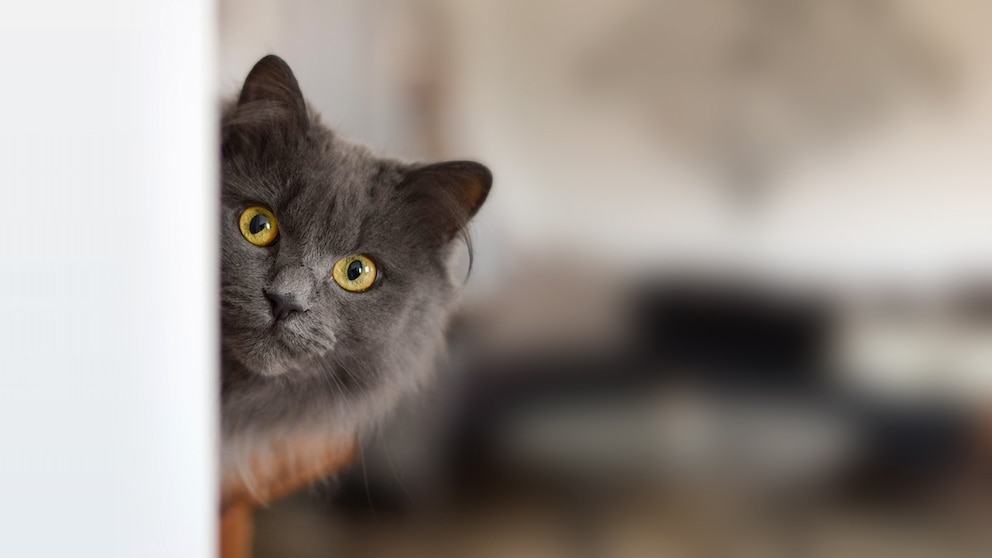
Remo and I regularly play a very unique version of hide-and-seek and tag. We usually position ourselves strategically in the living room and hallway—each at our post. Then the stalking begins. I peek around the corner. He peeks back. Dead silence. You could hear a pin drop.
And then—bam. Remo takes off. Crouched, with that slightly dramatic “I’m coming to get you” look that cats have perfected in play. I run away, suddenly confront him, he flees theatrically—only to turn around two seconds later and stare at me as if he had planned it all. Sometimes I’m the one being chased, sometimes he is. The roles switch in a split second, and neither of us sticks strictly to the rules.
When he’s had enough, he flops dramatically onto his back and presents his belly. At this point, we immediately end the game and preserve his “dignity”—even though with this gesture, he has effectively given up, and I could really “catch” him now. But I don’t, because I know: This is not an invitation to pet, but his very clear “I’m done.”
What Really Happens During “Tag”
What probably looks like two slightly overzealous living room sprinters from the outside is a pretty serious ritual for Remo. Just with a lot of speed. Cats don’t play out of boredom but instinct. Their play follows a clear pattern:
- Fixate
- Stalk
- Sprint
- Mock attack
- Retreat
- Role reversal
As long as both sides participate voluntarily and the roles switch, it’s social play—not a threat.
It’s important: Cats prefer to hunt rather than be hunted. Anyone who constantly chases their cat risks causing stress. An ideal game involves taking turns—sometimes the human runs away, sometimes the cat does.
How to Tell if the Cat is Having Fun
Tag and hide-and-seek can enrich a cat’s daily life if they feel good and have fun. Typical play signals are:
- Forward-facing ears
- Large, alert eyes
- Crouched stalking posture
- Quick but smooth movements
- Sideways hopping or abrupt stopping
- Exaggerated movements
Warning signals, on the other hand, are:
- Pinned-back ears
- Growling or hissing
- Whipping tail
- Sudden serious biting
- Stiffness
If any of these signs appear, the game should be stopped immediately.
Showing the Belly Doesn’t Mean “Pet Me!”
Because it’s so important, it must be mentioned again: When a cat throws itself onto its back during play, it’s a clear signal: I’m done. At the same time, it’s also a sign of trust: The cat offers its sensitive belly because it’s clearly communicating that it’s enough.
If a person crosses this boundary, trust is quickly lost. And for an inattentive belly rub, there’s often a—from the cat’s perspective, well-deserved—swat or bite. It’s better to accept this moment as the end of the game and give the cat space.
Why a Treat Perfectly Completes the Game
An often underestimated point: For the cat, it’s all about hunting. And in nature, hunting always follows a set sequence: Stalk → Chase → Capture → Eat → Groom → Rest.
When playing with humans, the sequence often ends abruptly. The success is missing. Especially highly prey-driven cats can become subtly frustrated by this.
A small treat or a few bites of food right after the play session symbolically completes the hunt for the cat. This provides a sense of achievement, reduces tension, increases satisfaction, and also reduces displacement activities. Often, with Remo, this is followed by grooming, lying down, and sleeping. A sign that the hunt is truly over.
Which Cats is This Suitable For?
Whether your cat will enjoy such a mix of tag and hide-and-seek is very individual. Not every cat understands that a game is being offered and may initially react uncertainly. In my experience, it works particularly well with:
- Young or very active cats
- Indoor cats with lots of energy
- Highly human-oriented animals
Older or shy cats usually prefer quieter hunting games with a play wand or prey decoys, which they can capture without disturbance after a short chase sequence.
Ideal as an Evening Ritual–Especially After Stressful Phases
Such hide-and-seek and tag games are also excellent when cats have received less attention during the day, for example, because their owners were on vacation, heavily occupied with work, or spent several days mostly out of the house. In such phases, many indoor cats build up energy. Some then react with nighttime running around, increased meowing, “mischief” like pushing objects off tables, or playful attacks on feet and hands.
A consciously established evening ritual can help here. Planning a short, intense play session every day—with stalking, running, role reversal, and a subsequent treat—provides a clear balance for your cat. With Remo, I’ve observed that just five minutes before bed can create physical exertion, mental stimulation, daily structure, and often quieter nights.
Regularity is important. Cats love predictability. If the game takes place around the same time every evening, a fixed routine develops—almost like a shared hunting time.
How to Introduce the Game–Even with Two Cats
Even in a multi-cat household, you can play hide-and-seek and tag—but it requires some structure. Especially with foster cats or animals that don’t know each other well, it helps to consciously manage the game. Ideally, the cats should initially be in two different areas, such as the living room and hallway. This automatically creates distance—and thus tension.
Before it really starts, both must first understand: Now it’s time to move. You can help by initially throwing small treats in both directions. This gets both cats active and creates positive anticipation.
Then the role-play begins:
- Briefly interact with the cat—approach, stalk, retreat, reward.
- With two: Then consciously switch to the other cat.
- Run back and forth, making eye contact repeatedly.
- Reward in between.
It’s important that no cat is consistently left out. By consciously switching, there’s no competitive pressure, but a shared, dynamic game. I like to use it with energetic foster cats that I visit only once a day and who have correspondingly little human interaction while their owners are on vacation. This back-and-forth game can help dissipate excess energy without the animals escalating each other.

Why Cats Lie on the Ground to Greet You

Are Cats Really Cuddlier in Winter?
What to Pay Attention to with Two Cats
Particularly important with two animals are the following points:
- Avoid creating food competition
- Throw treats separately if possible
- Keep an eye on both animals’ body language
- End the game before it escalates
Ideally, everything ends here with a small hunting success—a final reward for both—followed by rest. Especially with foster cats or sensitive animals, such a ritual can provide additional security.
Conclusion: Tag and Hide-and-Seek with Cats? Yes–But on Their Terms
Playing hide-and-seek and tag with cats is possible—and can even strengthen the bond. The key is that the game remains voluntary, roles switch, and body language is respected. Those who ensure a successful hunting conclusion turn a wild sprint through the living room into a well-rounded, need-based cat ritual.
And incidentally, such a little hunt through the living room is also good for us humans. A few quick sprints, a bit of laughter, a conscious break from everyday life—it’s not just cat entertainment, but also stress relief for owners. Sometimes it’s exactly what both need: to burn off a little energy together—and then come to rest contentedly.