

August 14, 2026, 7:08 am | Read time: 4 minutes
Cat tree, scratching cardboard, food bowls–and your home is cat-friendly, right? Unfortunately, it’s not that simple. PETBOOK reveals what you really need to consider for a cat-friendly home.
These Basics Are Essential
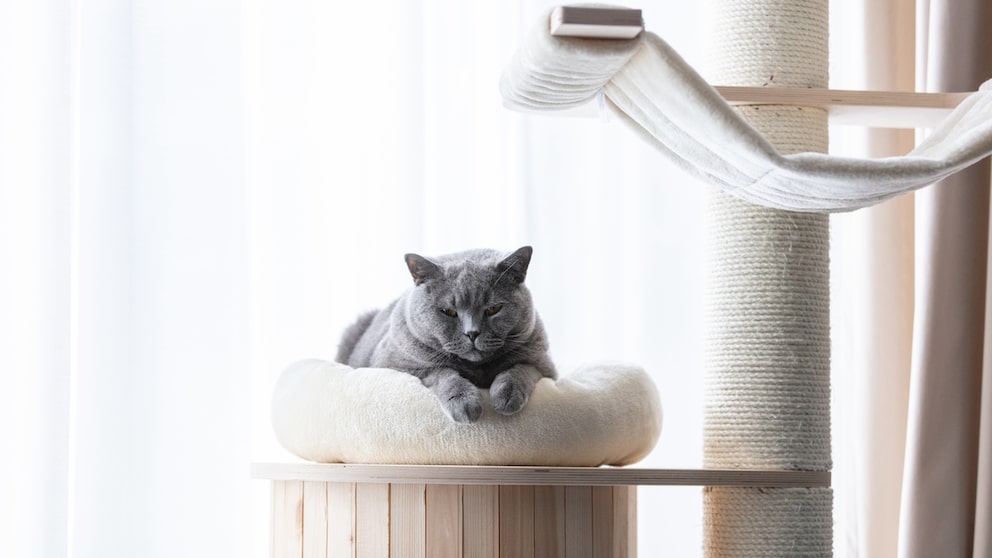
Before a kitten moves in, future owners need to go on a shopping spree. The basic equipment includes a sturdy, stable cat tree where the cat can sharpen its claws. Additionally, you can set up scratching cardboard and hang scratching boards. The more exciting options the cat has to sharpen its claws “legally,” the more likely it is to spare the sofa and wallpaper. Although many cat trees already have a sleeping cave integrated, cats appreciate additional retreats like cozy caves, cushions, and baskets.1
Of course, one of the most important basics is the litter box. Ideally, you should have several available. The rule of thumb for the number of litter boxes is: always one more than the number of cats in the household. The cat’s litter boxes should be placed in the most secluded spots in the home so the cats can do their business in peace. If there’s too much commotion near the litter box, accidents might happen.
So the Cat Can Play
Especially indoor cats need a lot of variety to prevent boredom in their small territory. Particularly popular as substitute prey:
- Play fishing rods
- Felt mice
- Mini-cushions filled with dried catnip
Puzzle boards, sniffing mats, and similar intelligence toys also provide fun in the home.
Once the basic equipment is secured, pet lovers should consider what else they can do to make their home cat-friendly. Since cats like to look over their territory from elevated positions, it’s advisable to create additional seating and walking areas on the wall. You can attach sturdy, empty shelves so the cat can easily jump up and walk on them–a real catwalk!
Many cats enjoy looking out the window, watching birds or the hustle and bustle on the street. Therefore, it’s sensible to set up a cozy spot on the windowsill for the cat. Simply clearing it of flower pots, picture frames, and other decorations can make room for the curious animal. With a cozy cushion on the windowsill, it might even become the cat’s favorite spot.
Also interesting: When can a landlord forbid a cat?

How to cat-proof your balcony and keep it varied

Adopting a Blind Cat: Tips for Harmonious Coexistence
Ensure Safety
When setting up a cat-friendly home, safety is, of course, a crucial factor. Toxic plants like poinsettias, daffodils, and ivy should not be in rooms accessible to the cat. Instead, cat owners can place plants that the animals are allowed–and encouraged–to nibble on. Cat grass helps cats get rid of swallowed hair: They eat the blades of barley, wheat, or Cyprus grass as a natural emetic to better regurgitate the hair from their stomach.
Other sources of toxins like cleaning agents and medications should be securely stored in cabinets. Since young kittens, in particular, might chew on power cords, these should be safely laid and ideally hidden in a cable tunnel. Tilted windows can become deadly traps for cats. Therefore, cat owners should secure their windows with nets.
Make the Balcony Cat-Safe
A cat-friendly home also includes the balcony. If possible, you should allow your cat to enjoy a few relaxing hours in the sun on the balcony. The animals love feeling the warm rays on their fur and observing their surroundings. To ensure the cat is always safe during its outdoor adventure, a cat net or grid should be installed on the balcony. If it’s a rental apartment, you should ask the landlord for permission beforehand–as not everyone appreciates the “decoration” of the building facade with a cat grid.2