

October 29, 2026, 3:41 pm | Read time: 8 minutes
With the autumn bird migration, the risk of bird flu rises again in Germany. The Friedrich Loeffler Institute expects an increase in H5 detections in wild birds and poultry. Dogs and cats can also become infected in rare cases, especially through contact with infected birds or raw animal products. PETBOOK explains how owners can protect their pets and which symptoms they should take seriously.
Overview
Bird flu is now detected year-round
Avian influenza is no longer solely a problem of the cold season. The viruses are now detected year-round in wild birds, although most cases still occur in the fall and winter. Bird migration and the formation of larger bird gatherings can promote the spread.1
In the summer of 2026, the infection situation in Europe was initially at a seasonally low level. Between June 5 and August 28, 110 H5N1 detections were reported in birds across twelve European countries. Of these, 103 involved wild birds and seven involved kept birds. However, with the start of the autumn migration, the risk increases again.2
For October 2026, the Friedrich Loeffler Institute expected a further increase in H5 detections in wild birds and poultry. The risk of spread within the German wild bird population was assessed as moderate. The authority also points out that the further course cannot be reliably predicted. Anyone who finds several dead birds should inform the local veterinary office and not touch the animals.
Can dogs and cats contract bird flu?
When birds are freshly infected with the virus, they usually live only a few more days. During this time, they excrete the bird flu pathogens with their droppings. However, the amount of virus in the droppings is rather low, and the pathogens die quickly, as explained by the “Nature Conservation Union Germany.” After 24 hours under cloudy skies, the virus amount decreases so much that the droppings no longer pose an infection risk. If the sun is shining, it happens even faster. Sunlight ensures that the droppings of infected animals are no longer contagious after just a few hours.
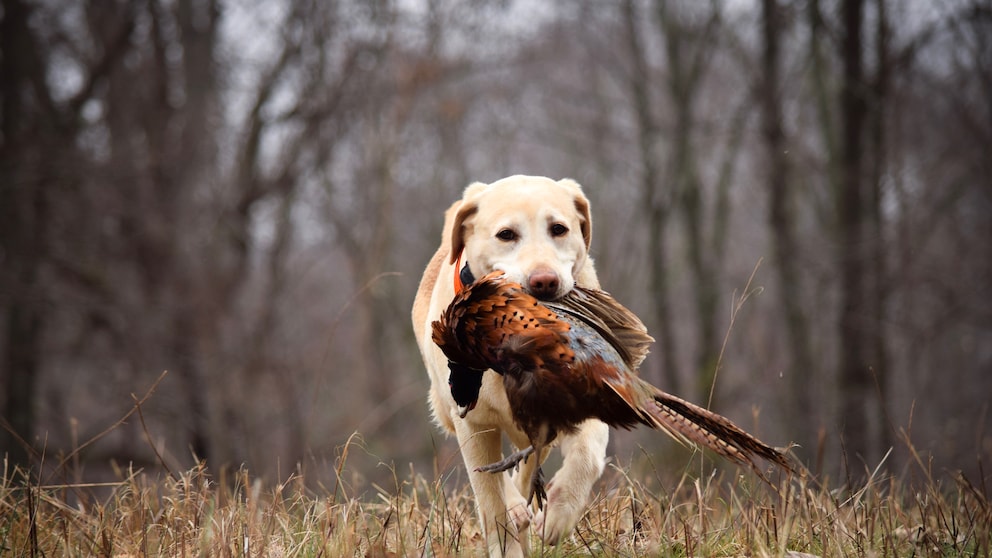
If cats or dogs eat very fresh, infected droppings, the transmission of the viruses is more likely. However, infected droppings are not the only source of danger. If pets eat sick birds, this can also lead to infection with the bird flu virus. Additionally, animals that carry infected birds with them can further spread the viruses.
Also interesting: 10 foods that are toxic to dogs
Symptoms in dogs and cats infected with bird flu
When a dog or cat becomes infected with bird flu viruses, the first symptoms appear after a short incubation period: loss of appetite, conjunctivitis, lethargy, or apathy. Typical flu symptoms follow, such as fever, body aches, or diarrhea. The respiratory tract of infected dogs and cats is severely affected, leading to breathing problems and shortness of breath. In the worst case, the infection can result in irreversible lung damage and death.
Vaccination of pets is not yet planned. Although a vaccine for animals is already available, it is still being worked on, as officially stated by the “German government.” Martin Rümmler from the “Nature Conservation Union Germany” currently sees no need for pet vaccination. “Under the given circumstances, namely a rather low risk of infection, vaccination is not an option for pets.”
European authority recommends precautions for dog and cat owners
The European Food Safety Authority (EFSA) now recommends increased surveillance of free-roaming, carnivorous pets in a statement. Cats and dogs living in a risk area should not roam freely to prevent contact with infected birds or mammals. The reason is that most bird flu infections occur in animals that hunt wild birds as carnivores and can thus come into contact with the virus.
This recommendation is also triggered by the fact that the virus has been detected in cats and dogs in Europe. In Poland, 24 house cats and a captive desert lynx were infected with the H5N1 virus. Some animals developed severe symptoms of the disease, resulting in their death. According to the EFSA, an infection source has not yet been clearly identified. The veterinary portal “Vetline” reports on a genetic investigation suggesting a singular infection source. Not all sick cats were outdoor cats, and the cases occurred simultaneously in various Polish cities. A possible transmission through raw turkey as food is therefore being discussed.
The EFSA also refers to the infection of five dogs and a cat on an Italian poultry farm in its statement. The animals showed no symptoms, but a blood test confirmed the bird flu infection through existing antibodies.

New Cases of Rabbit Plague in Germany! Pets Also at Risk

Rabies in Bats–How Big Is the Risk for Dogs and Cats?
For these pets, bird flu can become dangerous
Bird flu in dogs
So far, no case is known in Germany, but in South Korea, a dog tested positive for the bird flu virus in 2014. A ministry employee commented on this to the “Korea Times.” Infected meat had been fed to dogs, leading to the infection. In the Canadian city of Oshawa, in the southeastern part of Ontario, an infection occurred in a dog this year–the dog died in July, as reported by the “Canadian Broadcasting Corporation” in a statement.
Bird flu in cats
Cases of infected house cats from Pocheon, in Gyeonggi Province, South Korea, where several house cats died from the virus in 2007, confirm the danger for cats. The dead cats were found near a poultry farm where a particularly severe bird flu outbreak had previously occurred. Authorities suspected eating infected animals or carrion as the transmission route and cause of death for the cats, according to the “Korea Times.” In Germany, only one death due to bird flu in a cat on Rügen in 2006 has been documented, reported the magazine “Stern.”
Martin Rümmler, bird protection officer at the German Nature Conservation Union, explains to PETBOOK that the infection probability is generally higher on the coast than inland. “Infected birds are more likely to be found on the beach than in other places,” says the expert. This is because seabirds are particularly affected by the virus.
Bird flu in pet birds
The transmission of bird flu viruses mainly occurs among birds. In addition to wild birds and poultry, pet birds can also be affected. To prevent virus transmission, they should be shielded from wild birds. Birds that live exclusively indoors have little risk of contracting bird flu.
Also interesting: 5 common diseases in dogs
How to protect your pet from bird flu
A pet that is kept only indoors cannot contract bird flu. The “Nature Conservation Union Germany” points this out. For bird and many cat owners, this may be good news. Dog owners, however, cannot avoid daily walks, even for virus protection. Additionally, outdoor cats are at risk.
Avoid restricted areas, keep cats indoors
To minimize the risk of infection, cities have established restricted areas in the past when infected wild birds were found. Dog owners should avoid these areas, and cat owners should keep their pets indoors.
Also interesting: Bird flu is also deadly for cats! These are the symptoms
Watch for dead or sick birds in the garden
To protect pets from bird flu, owners should keep a close eye on their garden. Before letting the dog or cat outside, it’s worth checking the area. If there are dead or sick birds, it’s better to keep the pets indoors.
Keep dogs on a leash
Keeping the dog on a leash serves as protection, as it can best limit contact with birds. Dog owners should watch what the dog sniffs to prevent it from eating or retrieving dead animals. The same applies to the droppings of wild animals. To limit the spread of the bird flu virus in Hamburg in 2016, authorities ordered a 21-day leash requirement, as reported by the newspaper “WELT.” Martin Rümmler from the “Nature Conservation Union Germany” also confirms that dog owners who keep an eye on their pets during walks can significantly reduce the risk of virus infection.
Do not feed raw poultry meat and eggs
The “Friedrich Loeffler Institute” also recommends not feeding pets raw poultry meat or eggs. The meat can also transmit the pathogens. For food with poultry content prepared at home, the meat should be heated to over 70 degrees Celsius. Heating kills the viruses. No viruses can be present in purchased pet food, as the manufacturing standards of the German pet food industry exclude this.