

August 4, 2025, 3:29 pm | Read time: 4 minutes
After rabies was detected in several bats in Germany in recent weeks, more and more pet owners are wondering what danger this poses to their dogs and cats. An infection with the virus can be fatal. PETBOOK consulted experts on this matter.
In recent weeks, the media reported several cases of dead bats in Germany that tested positive for rabies. Just a few days ago, the virus was detected in a dead bat in Berlin.1 The discovery of an infected bat on a daycare center’s grounds in Bad Lauchstädt, Saxony-Anhalt, also caused a stir. As a precaution, 65 children were vaccinated. So far, none of the boys and girls show symptoms of infection, according to MDR.2
What Exactly Is Rabies?
Rabies is a viral infection of the brain transmitted through the saliva of infected animals, causing inflammation of the brain and spinal cord. Once the virus reaches the spinal cord and brain, rabies is usually fatal. The infection can be prevented by immediately cleaning the wound and injecting a rabies vaccine. However, quick action is necessary to help the affected person. 3
Rabies is primarily transmitted by mammals, especially carnivores such as dogs, foxes, badgers, raccoons, skunks, and cats. Bats can also transmit rabies, though they carry different virus types. “Classical rabies has never been detected in a native European bat species,” explains Christian Giese from the NRW Bat Protection Committee at NABU, in response to a PETBOOK inquiry. Bat rabies is a form of rabies caused by so-called bat lyssaviruses.4
“Rabies is one of the oldest known zoonoses, meaning diseases that can be transmitted from animals to humans. The disease is caused by several lyssaviruses,” Giese explains. Lyssa, by the way, is the Greek goddess of madness, the expert adds in passing.
Bat Rabies Detected in Six Fatal Human Cases
However, the virus that causes bat rabies is relatively rare, as the Teltow-Fläming district informed the public in a leaflet in April 2025. There are about five registered cases annually in Berlin. Brandenburg also has isolated cases. However, this does not reliably indicate the actual spread of the virus in the local bat population.
“Fortunately, the risk of infection for humans is extremely low,” explains veterinarian Dr. Marco Antonio Fragoso in response to a PETBOOK inquiry. “In Germany, there are, on average, only about 15 to 20 confirmed cases in bats per year.” Human or pet infections have so far only been observed in rare isolated cases, explains bat expert Christian Giese. “In all previous rabies investigations in Europe, bat rabies was detected in six fatal human cases.”
“A Bite from an Infected Bat Can Be Fatal for Dogs or Cats”
There remains a certain risk for pets that roam freely to potentially contract the virus from an infected animal. “A bite from an infected bat can be fatal for dogs or cats—rabies is nearly 100 percent fatal once symptoms appear,” says Dr. Fragoso.
There is a particular danger that pets might come into contact with weakened or unusual bats while playing, out of curiosity, or due to hunting instincts. “Therefore, a rabies vaccination for free-roaming cats and hunting dogs is absolutely recommended—it reliably protects against infection,” says Dr. Fragoso.

How Pet Owners Can Save Lives with a Visit to the Vet

How Dangerous Is the Fox Tapeworm for Dogs and Humans?
A Bite Doesn’t Have to Be Bloody to Pose an Infection Risk
However, there is no reason to panic, Giese explains in a conversation with PETBOOK. “Unlike the classical rabies virus, which according to the World Health Organization (WHO) causes over 50,000 deaths annually (mostly from dog bites), cases of bat lyssavirus diseases in other animal species than bats are known to be quite rare.” Specifically, he shares that the virus has so far been detected in four domestic cats, a stone marten, and some sheep.
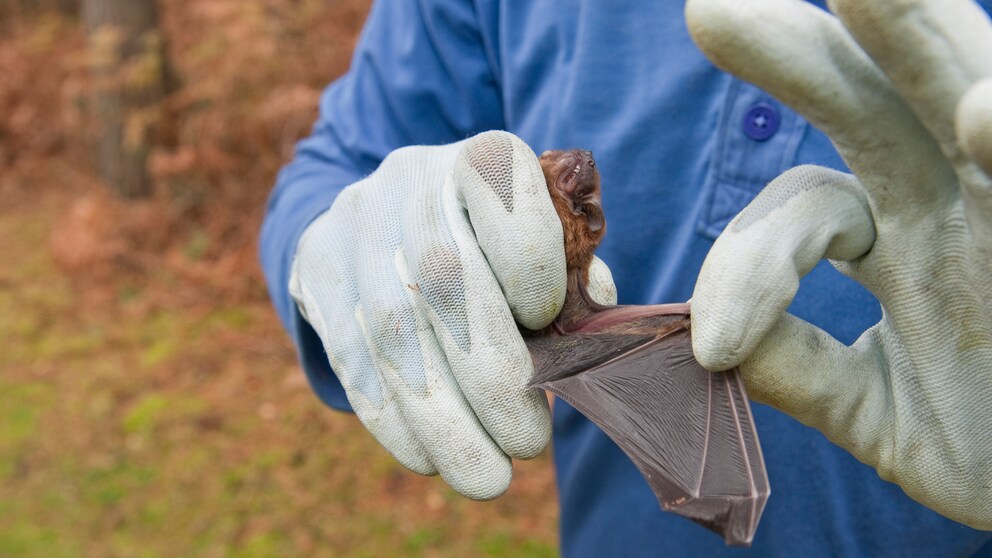
While a bite doesn’t have to be bloody to pose an infection risk, the expert notes. Nonetheless, wild animals should never be handled with bare hands, Giese advises. “When dealing with wild animals, gloves should generally be worn that are thick enough to protect the skin from possible bites, yet flexible enough to safely handle a bat, for example.”
What Owners Should Watch for in a Bat Encounter
But what should be done if a pet comes into contact with a bat? “The owner should immediately contact a veterinarian to have the pet vaccinated against rabies if it is not already vaccinated,” advises Christian Giese. “For vaccinated pets, a booster shot may be recommended.”
A suspected contact between a pet and a bat is no reason to euthanize the pet, Giese emphasizes. “If a bat is injured, cannot fly, or cannot be released, it should be taken to a bat care center. If the bat has died, it can be sent to the appropriate authority or laboratory for rabies testing.”