


November 16, 2026, 1:05 pm | Read time: 10 minutes
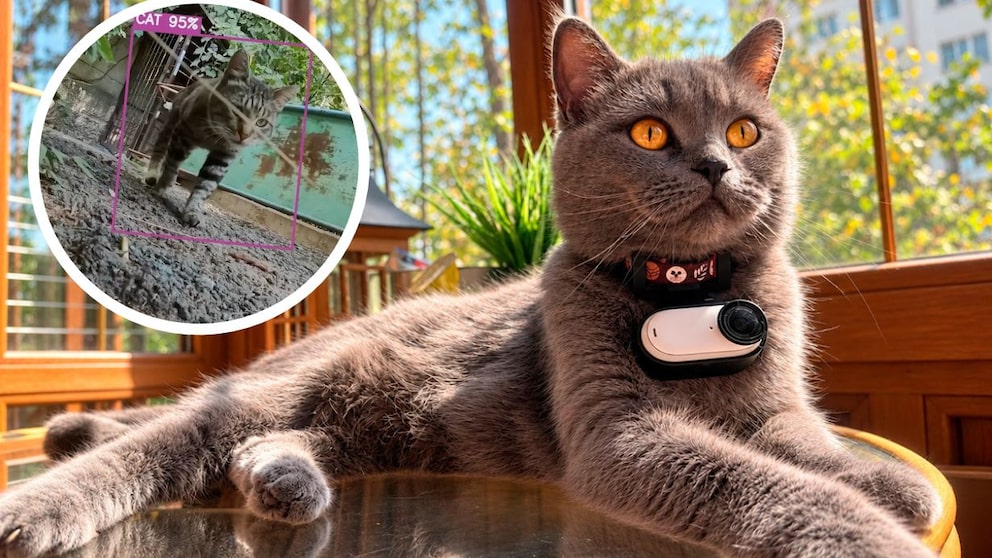
A camera around the neck, a GPS tracker added, and a free-roaming cat becomes a feline detective. In Kazakhstan, cats are being enlisted to help locate missing fellow felines. However, these animal detectives sometimes prove to be quite headstrong. PETBOOK spoke with project initiator Alexey Leybovich about what the cats actually captured on their patrols and whether this unusual search method works.
Owners often search in the wrong places
Anyone with a free-roaming cat likely knows this moment: The cat should have been home by now. You open the door, call its name. Nothing. An hour later, you try again. Eventually, you walk through the neighborhood, look under cars and in bushes, ask neighbors, and listen for any rustling.
But what if other cats could help in this search? After all, they reach places where humans can hardly look. They roam through backyards, disappear under bushes, climb walls, and move in a world that even their owners often know little about.
Cats find cats thanks to AI
This is precisely the idea behind an unusual project in Kazakhstan. In the so-called “CATectives,” free-roaming cats are equipped with small cameras and GPS trackers. Other cats they encounter on their patrols are recorded. Then, artificial intelligence analyzes the video footage and matches the discovered animals with cats reported missing.
At least, that’s the plan. Because anyone who lives with cats probably already suspects: Not all of them adhere to human ideas of successful detective work.

Some feline detectives preferred to lie in the sun
The campaign is part of GdeKotBot (Whiskas loCATor), an AI-supported platform from Kazakhstan for searching for missing cats. Twenty-six cats participated in the first phase of the project. And they quickly showed the human initiators how differently free-roaming cats spend their time outside the house. While some actually set off, explored their territory, and looked into all sorts of corners, others apparently had less interest in their new task.
“Only a relatively small portion of our CATectives were ready to immediately set off and explore the surroundings,” project initiator Alexey Leybovich tells PETBOOK. Most initially stayed close to their homes. Some went to their favorite sunny spot after just five to ten minutes.
Naps instead of detective work
“There they lay comfortably, cleaned their paws, and practically waited for the camera battery to run out,” says Leybovich. Other cats climbed into attics or disappeared into dark corners to sleep. The hoped-for major detective work was thus quickly sacrificed to the next nap for some feline detectives.
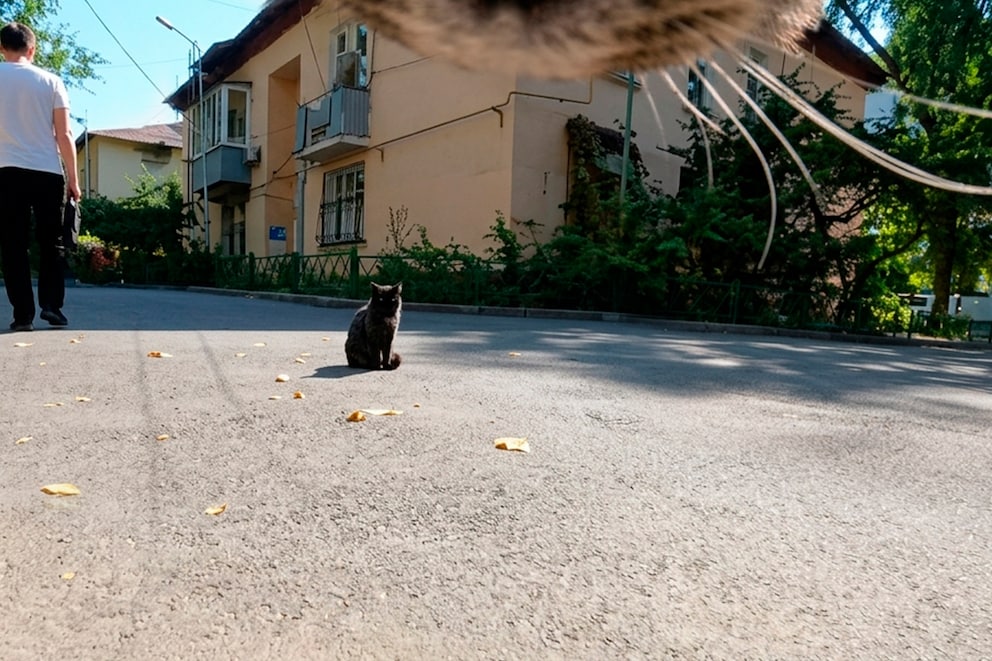
But therein lies a fascinating side effect of the project: The recordings offer a glimpse into the fascinating world of free-roaming cats, which usually remains hidden from their owners.
Also interesting: When should I worry if my cat is missing?
How free-roaming cats become feline detectives
For the project, only cats that were already regularly outdoors were selected. Through the GdeKotBot chatbot, the team was able to find volunteers whose animals were suitable for the experiment. An important factor was the location. Cats from areas where many animals were missing at the time were particularly interesting. However, it was also crucial whether the animal accepted the equipment at all.
Not every cat wanted to be a detective
Before a cat was allowed to go outside as a feline detective for the first time, the team initially put the camera and collar on it at home for about ten to 15 minutes and observed its reaction. There is usually no longer acclimatization period. “Cats that regularly roam freely are usually already accustomed to a collar,” Leybovich explains to PETBOOK. Therefore, there are generally no problems later on. However, not every cat participated. Some animals refused to wear the camera. They were not sent on their supposed mission.
The cats were not sent outside specifically for the project. All participating animals were already free-roaming and knew their territory. Therefore, the team did not set any special routes. “All the cats we work with are already free-roaming and have their own familiar routes,” Leybovich explains.
Project offers exciting insights into cat life
Interestingly, the team is quite critical of uncontrolled free-roaming itself. However, the additional GPS tracker had a side effect for the owners of the participating animals: Some could track where their cat actually roamed for the first time.
For cat owners, this can be particularly intriguing. Knowing the paths their pet usually takes and the places it regularly visits provides at least a clue where to start searching in an emergency.
How heavy is the camera for a cat?
The camera and GPS tracker together weigh about 60 grams. This includes the lightweight camera mount and a safety collar. For an adult cat, this is not a particularly high additional weight. For comparison: A newborn kitten weighs about 100 grams. For a healthy, adult cat, this additional weight seems quite acceptable for a limited time.
However, weight is not the only important factor. The equipment must not hinder the cat when walking, jumping, and climbing, and above all, it must not cause the cat to get stuck somewhere. Therefore, the team used a collar with a safety clasp. If the cat gets caught, it should open with relatively little force.
Also interesting: What you should do immediately if your cat runs away
Each cat was allowed to investigate only twice
Even if a cat tolerated the camera and collar without issue, it was not constantly sent outside with them. Normally, each CATective completed only two tours. This is based on an interesting observation about free-roaming cats: “We found that cats usually use the same paths,” says Leybovich. If a cat did not encounter any fellow felines on two outings, the team’s experience suggested that further patrols were unlikely to yield significantly more material. Then, the next CATective was deployed instead.
Anyway, technology also sets limits. The cameras can film for about 60 to 80 minutes. A longer battery life would have been possible, according to Leybovich, but would have required significantly heavier devices.
The real detective work begins after the return
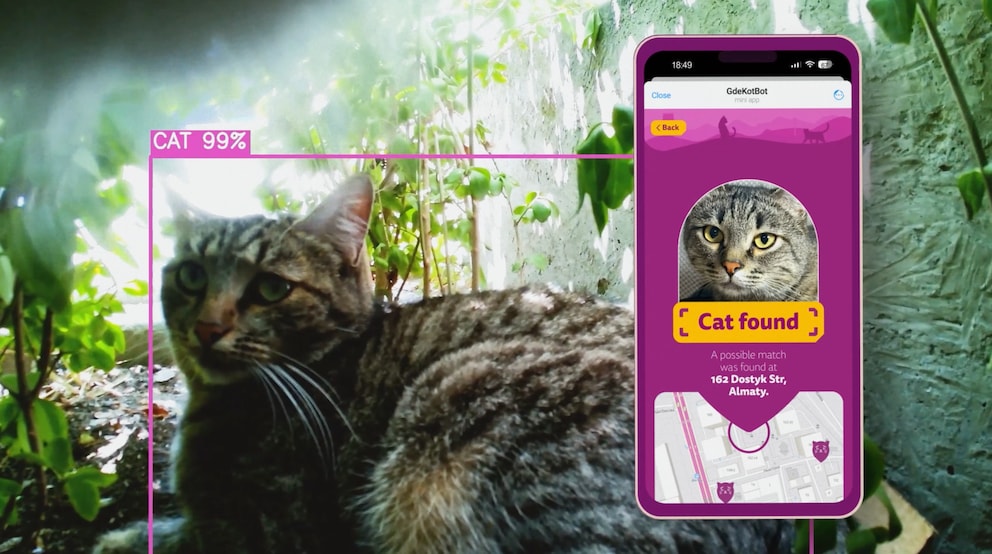
Once the CATective is back home, the recorded video material is evaluated. And only then does the artificial intelligence take over the actual search. The system recognizes cats in the video material, extracts images of them, and matches these with the GdeKotBot database. There, owners can report their missing cat with a photo and location.
The AI does not claim to have definitively identified a sought-after cat. Instead, it suggests animals to the owners that resemble their cat. The system considers factors such as fur color, pattern, coat, ears, and other external features.
Even AI has its limits
With a match of 70 percent, owners can receive a corresponding notification. According to Leybovich, the AI simultaneously sorts out up to 90 percent of the cats that clearly do not match the sought-after cat. Nevertheless, even artificial intelligence reaches its limits with some animals.
“With cats that have very common fur patterns, such as black-and-white cats or tabby cats, there can naturally be many similar results,” Leybovich explains. “Sometimes it is practically impossible for the AI to clearly distinguish these animals from one another.” Therefore, the owner always decides in the end whether a suggested match could actually be their missing cat.
Have the feline detectives actually found a cat?
This is probably the most exciting question of the entire project. And here, the results are less spectacular than the idea of animal detectives initially suggests. The CATectives were in action for nearly two months. According to the team, the first three weeks were mainly used to optimize the technology and camera settings. In total, about 50 to 55 hours of video material were collected. Around 20 cats were captured by the cameras and recorded as sighted animals in the database.
No clearly documented cases so far
The recordings also led to notifications to owners of missing cats whose animals resembled the recorded fellow felines. But whether any of the animal detectives actually found a missing cat, the team cannot yet say. “We cannot confirm whether they were actually their animals, as our system does not track the further course of each individual report,” says Leybovich.
There is thus no documented case where a CATective recorded a missing cat and it subsequently returned home.
More than 400 missing cats have already been found
However, this does not mean that the underlying search system cannot boast any successes. The CATectives are just one of several ways to feed new sightings into GdeKotBot. People can also help. Anyone who spots a cat on the street can photograph it and upload the image via the Telegram chatbot. The AI then compares the photo with animals reported missing within a five-kilometer radius.
According to Leybovich, more than 400 cats have been found in Kazakhstan using the platform. However, not by the feline detectives themselves, but by a human. And perhaps this story shows where the real strength of the animal detectives lies.
Also interesting: In these months, particularly many cats go missing in Germany
More attention for missing cats
During the CATectives campaign, there was also a case that would likely catch the attention of anyone who has ever lost a pet: A user discovered a cat on the street that its owners had been searching for over a year.
While the success rate of the camera cats remained modest, something remarkable happened elsewhere: According to Leybovich, more than 8,200 new users registered with GdeKotBot within two months. At the same time, activity around missing and sighted cats increased significantly.

Dog Trainer Tracks Stray Dogs: “Puppy Books Need to Be Rewritten!”

How We Perceive Cats and Their Emotions
Chances increase through the project
The cats with cameras may not have solved spectacular missing cases, but they ensured that people talked about the problem and perhaps looked more closely at cats on the street.
Anyone who has ever desperately waited for a missing cat knows how valuable this can be. When hundreds of people know that an animal is missing, look under cars, pay closer attention in backyards, or photograph a strange cat, the chances increase that someone will be in the right place at the right time.
Will there soon be feline detectives in Germany?
Initially, this is a pilot project. Whether this method is truly suitable and worth applying in other regions remains to be seen. Additionally, there is another problem. In larger cities with many street cats, the system could reach its limits, admits Alexey Leybovich. “We would definitely conduct several test runs and observe how free-roaming cats interact with the existing population of street cats.” Only then could a suitable model for the respective city be developed.
And the feline detectives in Kazakhstan? They are allowed to continue investigating by their own rules. Even if these sometimes mainly consist of lying in the sun after five minutes, cleaning their paws, and waiting for the camera battery to run out.