

April 7, 2026, 6:07 am | Read time: 9 minutes
The misconception persists that only dogs miss their owners. Cats, on the other hand, are thought to be indifferent to whether their “can opener” is around or if they spend the whole day alone. PETBOOK editor and cat owner Louisa Stoeffler disagrees. She shares her experiences and what studies reveal.
Dogs are very attached to their owners. I’ve experienced this personally many times. In a shared apartment where I lived, my roommate’s dog was unimpressed by my presence. He lay on the bed continuously and only reacted when I took him for a walk if his owner was running late. Cats, however, are said not to miss their owners as much as dogs—some even say they don’t care if their “can openers” are there or not.
Lived Experience Is Quite Different
However, I can’t confirm this at all. My cats always knew exactly when I would come home. My cat Minka waited at the front door for me when I came home from school in the afternoon (she was an outdoor cat). Whether it was after the sixth, seventh, or even tenth period, my cat knew my schedule better than I did. Her motivation for returning wasn’t that she was fed immediately. No, she wanted to spend time with me—and if I wasn’t around, she didn’t want to be in the house where we lived either.
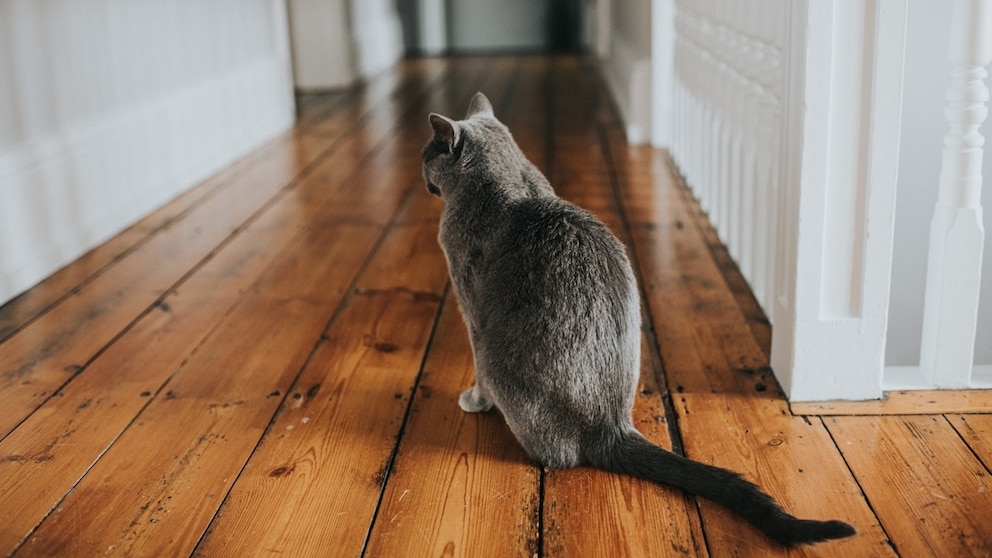
My cat Remo also knows when I’m absent and behaves differently when I work from home. On days when I go to the office, he lies in bed and sleeps almost continuously. A few minutes before I usually come home, he lies on the hallway runner and waits for me. Sometimes he even brings toys there, as if hoping his loud meow would make me arrive faster.
As for my personal experience, I can definitely say: Yes, my cats miss their owner—or at least they know when I leave and when I return. They also enjoy spending time with me, whether it’s cuddling or playing. But what about other cats? I wanted to find out and took a closer look at the current research on the subject.
Do Cats Even Form a Relationship With Humans?
First of all, research had to clarify that the same standards cannot be applied to cats as to dogs or young children. Cat research was long considered secondary. Cats are less easily trained than dogs, and they have long been seen as animals that live more independently. The first step was to determine whether the human-cat relationship is comparable to those with dogs or young children.
Alice Potter and Prof. Daniel Simon Mills from the University of Lincoln compared the behavior of cats and dogs in 2015. The goal was to test, using an experimental design, whether house cats—similar to dogs or children—form a so-called “secure attachment” to their owners. This can be observed in the Strange Situation Test (SST) for young children and dogs. But does it also apply to cats?
This secure attachment is expressed, among other things, in seeking closeness in stressful situations, the need for contact, visible joy at reunions, and increased activity when the caregiver is present. This attachment behavior has been proven many times in dogs. Some studies have found similar results in cats, but Potter and Mills reached a different conclusion.
The cats they tested did not show consistent behavior that would indicate a secure attachment to humans. Although separation from the owner elicited more vocalizations from the cats than separation from a stranger, there were no significant differences in other areas. There was neither a clear preference for the owner as a “safe haven” in an unfamiliar environment nor increased exploration or play behavior in their presence.
Do Cats Really Not Care About Us–or Do We Just Not Understand Them Yet?
While cats do seem to develop social preferences and behave differently toward their owners than toward strangers, Potter and Mills suggest this points more to a habit-based social relationship than a deeper psychological bond associated with a sense of security. A more nuanced testing method is needed to truly capture the psychological depth of the human-cat relationship.
However, there are certain limitations. It cannot be ruled out that individual cats can indeed form a secure attachment—just not the majority. The study mainly shows that existing methods cannot be easily transferred to other species—and cat relationships are more complex and less comparable than often assumed. 1
More Habit Than Love?
The behavior upon reunion with the owner was also no different than when the stranger returned. Physical contact, proximity behavior, and rubbing proved to be inconsistent, temporally unstable measures. Overall, many behavioral parameters were too variable to draw conclusions about stable attachment patterns. The results clearly speak against a bond with the owner in the classical sense—at least not a dependency relationship as documented with children or dogs.
In 2019, Prof. Mills and his colleagues revisited the topic and found clear parallels in parent-child and human-cat relationships. An online study examined 3,331 cat owners to see how the personality of the owners affects their cats’ lives.
Using the internationally recognized Big Five personality dimensions (such as neuroticism, extraversion, conscientiousness), connections between human personality, cat behavior, and health were analyzed—with some surprising results.
Bonding With Cats Also Depends on the Owner
Many owners now care for their cats similarly to children—including care, control, and bonding. Therefore, researchers suspected that the owner’s personality might also play a central role here. A stable, empathetic, and structured personality can positively influence the well-being and bond with the pet. However, neuroticism—associated with emotional instability in psychology—seems to have negative effects on cat well-being, comparable to overprotection or unstable parenting in children.
So does the bond with the pet play a role in how much cats miss their owners? The parallel discovered by researchers to parent-child research seems to suggest this. Overall, the study provides robust evidence of psychological parallels between cat ownership and human parenting. 2
Cats Manage Well on Their Own
Matilda Eriksson, Linda J. Keeling, and Therese Rehn from the Swedish University of Agricultural Sciences have also addressed the topic. This first major study on whether cats miss their owners was published in 2017.
The researchers aimed to analyze the behavior of house cats during and after periods of separation from their owners. Fourteen indoor cats from private households in Sweden (nine female, five male) were studied. Each cat participated in two trials: once left alone for 30 minutes, once for four hours. The experiments took place in the familiar home environment.
Cameras recorded the cats’ behavior five minutes before and after separation, as well as during the alone time. Additionally, the owners’ behavior upon return was documented. The cats were not fed or rewarded to minimize external influences. In both trials, the cats showed no different behaviors during separation. They lay down more during longer separations, but there were no signs of stress or discomfort.
More Purring After Long Separation
The behavior only became noticeable upon reunion: After four hours of separation, the cats purred significantly more and stretched more than after just 30 minutes. The owners also showed a change: They talked more to their cats after longer separations. An important finding was that the cats showed the behavior first, as participants were instructed not to react when they came through the door.
The data suggest that cats have an increased need for contact after longer separations. Cats manage quite well on their own but still react sensitively to the absence of their caregivers. The increased purring and stretching could be seen as an attempt to renew the social bond or gain attention. 3

All Dogs Have at Least One Behavioral roblem

Did You Know? Cats Meow More at Men
Cats Even Experience Separation Anxiety
A study published in 2020 shows that one in eight cats even exhibits separation anxiety and related behavioral issues. This was demonstrated by a Brazilian research team led by Daiana de Souza Machado from the Universidade Federal de Juiz de Fora in a systematic study on separation-related problems (SRP) in house cats.
The goal was to use a specially developed questionnaire to capture typical behaviors that might indicate SRP. These include urinating outside the litter box, destruction, and excessive vocalizations. Emotional states such as apathy, aggression, and restlessness are also considered signs that a cat is experiencing stress.
Possible connections with the home environment and living conditions were also examined. A total of 130 owners with 223 cats participated in the study. Overall, 13.45 percent of the cats studied (30 out of 223) exhibited at least one separation-related behavior according to the defined criteria. The most common issues in this group were:
- Destructive behavior: 66.67 percent
- Excessive meowing: 63.33 percent
- Urinating outside the litter box: 60 percent
- Apathy/depression: 53.33 percent
- Aggression and restlessness: 36.67 percent each
- Inappropriate defecation: 23.33 percent
Cats Have (Underestimated) Social Needs
These behaviors occurred exclusively or more frequently during the absence of the caregiver. Significant correlations were found with:
- the absence of toys
- living alone without other animals in the household
- the number of female household members
Additionally, correlations with the age of the owners (18–35 years) and the frequency of being alone (more than 6 hours daily, 5–7 times a week) were found. The results show that cats are not only social beings but can suffer from stress during prolonged absence of their caregivers, with sometimes problematic behavioral consequences.
At the same time, the study points to risk factors such as a lack of environmental enrichment or social interactions. Separation-related behavioral issues clearly indicate the social needs of cats. 4
Research shows that cats, especially when frequently and long left alone, miss their owners. Yes, they even suffer from stress and attachment anxiety. More attention and play opportunities, social contacts, and limiting the duration of being alone can help prevent this. They miss their owners, but they show it differently than a dog would.