

March 24, 2026, 10:09 am | Read time: 7 minutes
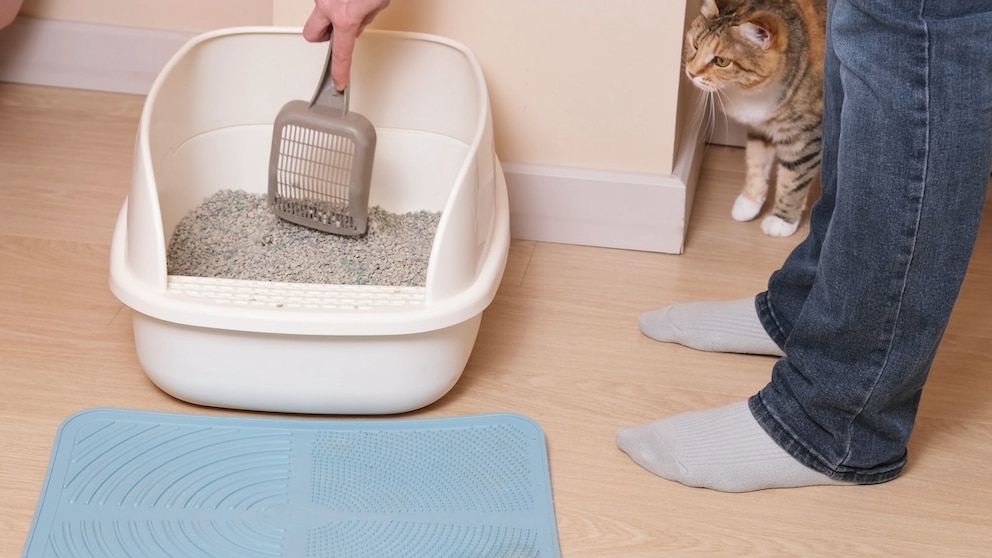
A freshly cleaned litter box, everything tidy, everything smells nice—and as soon as you put the scoop aside, the cat is ready. It leisurely steps in, scratches briefly, and gets to work. A moment that brings both a smile and frustration to many cat owners. Why cats do this is something PETBOOK editor and cat owner Louisa Stoeffler knows from her own experience with her cat Remo.
Remo’s Evening Ritual: When the Clean Litter Box Doesn’t Stay Clean for Long
Every evening before I go to bed, I thoroughly clean Remo’s litter box. It’s part of my evening routine. First, brush my teeth, tie up my hair, add a little cat soup to the water bowl, and clean the litter box one last time before bed.
As soon as I’m done, the gentleman leisurely strolls over, looks inside with scrutiny—and either audibly leaves a large puddle or a few nuggets. Almost as if to say, “Thanks for setting it up—now it’s really ready for me.”
To me, it feels like a slight affront when my cat goes directly into the freshly cleaned litter box. For Remo, it seems completely natural. And indeed, almost every cat owner knows this behavior. But what’s behind it?
The Freshly Cleaned Litter Box–Irresistible for Cats
Cats are cleanliness fanatics. A freshly cleaned litter box is as attractive to them as a freshly cleaned toilet is to us. When the litter box is freshly cleaned, it removes all the odors that had accumulated before. Let’s be honest, we also prefer a clean public restroom over a dirty one.
Additionally, cats can’t properly bury their waste in dirty or strongly scented litter—an important part of their instinct. Cleaning literally creates “free space” for them to feel comfortable again. For some animals, the smell of freshly filled litter is enough to trigger the urge to urinate.
The Too-Clean Litter Box–A Problem for the Nose
What smells pleasantly fresh to us is often too sterile for some cats. Their urine and feces contain pheromones with which they mark their territory. When you completely clean the litter box, this “scent signature” is removed. By using it immediately again, the cat reclaims its territory on “foreign ground” as its own quiet spot.
Just one of the reasons why you shouldn’t be too meticulous with a complete cleaning of the litter box.
Communication in Cat Style
Many cats seem to wait for the perfect moment. There are also reports that they go to the toilet just when you’re still busy cleaning. With one clump still on the scoop, a new one is already being produced.
This behavior is not meant to say, “I’m the boss here—and you’re the cleaning staff,” but rather that they are closely observing us as owners. Perhaps you’ve also noticed that cats “run to the toilet like little kids” when they’re actually busy eating? As if they suddenly realized they needed to go.
This is the root of the behavior. We, humans, have learned to suppress our needs because “you don’t get up during meals.” But this is not ingrained in animals. They notice a need and act on it. Without ulterior motives or cultural conditioning. So the thought, “Just wait a moment” or “Great, just when I’m done,” is deeply human but doesn’t align with a cat’s thinking.
When the Cat Shows Frequent Litter Box Urges
As long as there’s nothing unusual in the litter—no blood, no mucus, no strong urine odor—the behavior is completely harmless. It just shows that the ideas of order between humans and cats differ.
However, if the cat suddenly goes to the toilet very frequently or conspicuously often, it could also indicate health problems. Especially if she repeatedly visits the litter box, only passes tiny amounts of urine, or visibly strains when crouching. The following serious conditions could be behind this:
- Bladder infection (cystitis): Common in indoor cats, often stress-related. Typical symptoms include small amounts of urine, frequent urge to urinate, vocalizations of pain, or pink-stained litter.
- Bladder stones or crystals: These can irritate or block the urethra. Male cats are particularly at risk because their urethra is very narrow. An acute blockage is an emergency!
- Chronic kidney problems: In older cats, increased urination and drinking can indicate kidney disease.
- Hormonal or metabolic causes: Conditions like diabetes mellitus cause cats to drink excessively and urinate more frequently.
Behavioral stress can also play a role—for example, if routines change, new animals are introduced, or the litter box is moved to a different location. The cat may then react with so-called idiopathic cystitis, a stress-related bladder infection without a bacterial cause.
If you notice that the cat suddenly urinates more frequently, with effort, or outside the litter box, you should definitely have the behavior checked by a veterinarian. The sooner the cause is found, the better the chances of recovery.

How to Remove Cat Urine Correctly

Biokat’s “Diamond Care Fresh” – What Can This Best-Selling Cat Litter Do?
Litter Box Etiquette: Keeping It Stress-Free
After all the considerations about scent, instinct, and timing, the most important insight remains: To ensure the litter box doesn’t become a stress factor for both sides, proper care and design are key. Even though cats are extremely clean animals, they can be very sensitive to the slightest changes or unpleasant odors. A poorly placed box, infrequently cleaned litter, or harsh cleaners can cause the cat to suddenly avoid the litter box.
To keep things harmonious in the “bathroom,” a few simple but crucial rules help:
- One box per cat—plus one extra: This prevents stress, especially in multi-cat households. If two animals need to go at the same time, it can quickly lead to territorial conflicts.
- Daily cleaning: Urine and feces clumps should be removed at least once a day. This keeps the litter fresh and prevents unpleasant odors from settling in.
- Complete cleaning: Depending on the type of litter, every few weeks, but not too often: Empty the box completely, wash it out with hot water, and refill with new litter. This prevents bacteria and ammonia odors.
- Gentle cleaners: Avoid products with ammonia, citrus, or strong scents—they can irritate or even repel cats. Neutral, mild agents or simply hot water are best.
- Self-cleaning toilets: They are convenient if you have little time, but still need to be regularly emptied and thoroughly cleaned—otherwise, odors accumulate inside. Important: Look for safety certifications like TÜV!
The location also plays a role: The litter box should be quiet, easily accessible, and far enough from the feeding area. A spot next to the washing machine or right by the door can unsettle the cat—and in doubt, stress leads it to seek alternatives. Some animals like covered toilets, others don’t. Here, it’s about trying and observing. If the cat likes to use the litter box, that’s the best proof that everything is right.
Conclusion: Not Defiance, but Instinct
Since I’ve taken a closer look at Remo’s behavior, I can only smile when my cat leaves a foul-smelling nugget in the freshly cleaned litter box just before bedtime. He’s not trying to “get back at me,” but is following his instinct: the need for cleanliness, security, and control over his territory. And perhaps simply the desire not to go to sleep with a full bladder.