

September 4, 2026, 6:50 am | Read time: 6 minutes
Many cats initially greet strangers with skepticism. When meeting a friend’s or family member’s cat, or when cat-sitting for the first time, the wrong behavior can quickly leave a bad impression. PETBOOK editor and cat sitter Louisa Stoeffler reveals common mistakes people make when first meeting a cat and how to make the introduction as pleasant as possible for the animal.
When to “Introduce” Yourself to a Cat
Even if you don’t meet new cats every few weeks, as I do, there are situations where you should properly greet an animal. Whether you’re considering adopting a new cat yourself or a pet has been acquired in your close circle, these are situations you might occasionally face, especially during family gatherings when a new pet is introduced.
With the right approach, trust can be quickly established–even when adopting a shelter animal. Cats often react cautiously to unfamiliar people, even if they’re curious about who the new person is. When approaching them for the first time, it’s important to follow some basic rules to avoid stress for both the animal and everyone involved.
How to Successfully Meet a New Cat
While dogs often actively seek human companionship, many cats prefer to develop new relationships independently and cautiously. Rushing toward the animal with outstretched arms and loudly exclaiming, “Oh, what a sweetie! Come here, cutie!” is entirely inappropriate in this situation.
Therefore, a respectful and patient approach is crucial during the first meeting. A poor start often lingers in a cat’s memory, making it all the more important to behave correctly. Here are some of my tips that have proven effective over the years.
Kneel Down and Make Yourself Small
Of course, we’re not bowing down to the cat. However, by reducing our body size, we become less intimidating to the animals. The cat can now approach us almost at eye level and become familiar with our scent. In my work as a cat sitter, this is always the first step when approaching a new cat. Ninety percent of all animals come directly to me with this gesture, eager to get to know me.
Wait Instead of Approaching
The most important principle is: The cat determines the timing of the approach. Many prefer to observe their surroundings from a safe distance at first. Therefore, one should remain calm, avoid sudden movements, and refrain from making loud noises.
A Calm Voice Builds Trust
Cats are very attuned to the mood of their environment. If a person behaves stressed, it often transfers to the animal. A calm, friendly voice–and softly calling the cat’s name–can help reduce initial uncertainty and foster trust.
Introduce Your Scent and Offer Your Hand
We’re not shaking the animal’s paw, of course, but it’s beneficial to offer your hand to cats. If the cat approaches on its own, you can gently extend your hand for it to sniff. Important: If you have pets yourself, wash your hands before greeting the new cat. Foreign animal scents can be perceived as disturbing.
I pay particular attention not to present an open palm–unlike with dogs. The palm is large enough to cover the animal’s entire head, which could be intimidating for fearful cats.
Therefore, I offer my fingers in a relaxed posture, such as a loosely formed but open fist. During this phase of the introduction ritual, every cat has come to take in my scent, and almost all have immediately rubbed their face against my knuckles. A cat’s sense of smell is extremely sensitive–they can detect food from over forty meters away. If the cat rubs against your hand or starts purring, it’s a good sign.
Pet Only with Permission
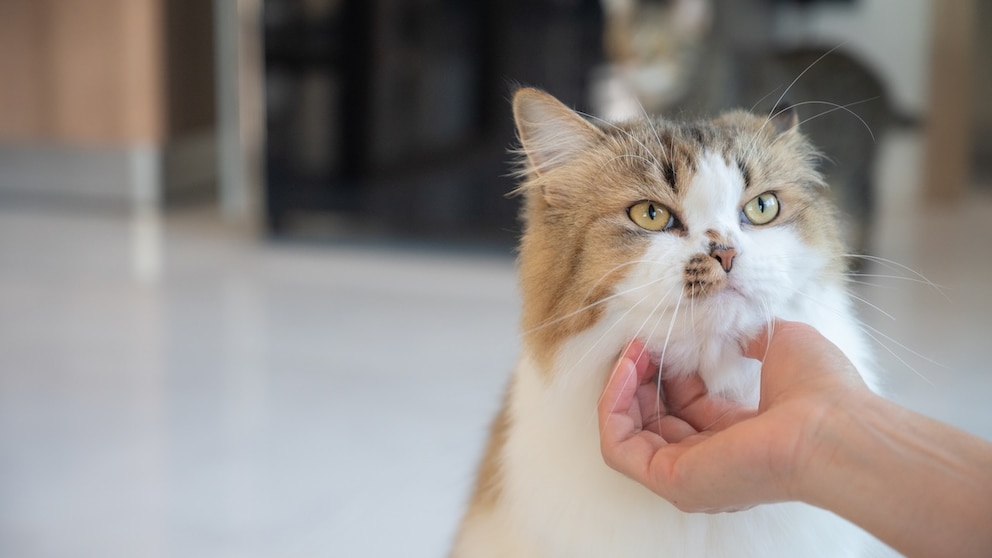
Only when the cat appears relaxed and seeks contact on its own should you begin to pet it gently. I first move my hand toward the cat’s face and start to gently scratch its nose bridge if it allows. If the cat backs away as I approach, the introduction ritual is temporarily over.
Be cautious: When petting for the first time, avoid touching the sensitive whiskers and try to prevent static electricity from scarves or hats. If the cat’s sensitive nose or whiskers tingle, the introduction can quickly end.
Pay Attention to Body Language
The belly and tail are particularly sensitive areas for many cats and should be avoided during introductions, even if the cat rolls onto its back. In cat language, this can signal various moods. Either the cat has accepted the visitor and can relax, or it wants to play. In this case, it’s more likely the former. It’s not an invitation to pet the belly directly!
Cats clearly show how they feel. Flattened ears, a lashing tail, or hissing are signs that contact should be broken off. If the cat exhibits behaviors like purring, head-butting, rubbing against legs, or following the person, the interaction can continue.

How to get cats to like you

How to Recognize a Good Cat Sitter
When the Cat Remains Reserved Upon Approach
Even if you’ve done everything right during the first introduction, the new cat in the environment may still remain reserved. Not every cat is quickly approachable. Some need significantly more time to get used to new people. It’s important not to take this personally and not to pressure the animal. Every cat has its own pace. However, I also have some tips for dealing with reserved cats.
Tips for Dealing with Shy Cats
Stay calmly in the same room and ignore the animal. For cats, this is a clear sign that we pose no threat to them. Yes, cats are more likely to approach people who ignore them or aren’t particularly interested in them. Engaging with a book or smartphone can ease the adjustment.
You can also motivate shy cats with play and treats. Small rewards or playing together can help build trust. Prerequisite: The owners have agreed beforehand–some cats have special diets or health restrictions.
But the cat’s retreat spots are also crucial. If the cat retreats to these specific places, interaction is off-limits. The cat needs time to calm down and observe the visitor from a safe distance.
Common Mistakes When Greeting Cats
This brings us to behaviors that should be avoided when introducing yourself to a cat or in general.
If the cat is lying relaxed in its favorite spots, you should never approach it. These retreat areas are zones of peace. If a stranger intrudes into these areas, the cat might perceive it as an absolute violation. Never use force.
Direct eye contact should also be avoided. In cat body language and facial expressions, this is perceived as a threat. Instead, slightly avert your gaze or look at the cat with a slow–for us, exaggerated–blink.
Trust cannot be forced–especially not immediately. Instead, observe the animal closely and respond to its signals. Good bonding work at the beginning pays off, even if building the relationship takes time.
Those who take cats’ behavior seriously and respect their boundaries lay the foundation for a trusting relationship. With patience, attention, and the right intuition, even a good relationship can be built with reserved animals.