


November 17, 2026, 3:55 pm | Read time: 8 minutes
Their folded ears make Scottish Fold cats distinctive and are the reason for their popularity. However, this feature is due to a genetic defect that can cause lifelong pain for the animals. Two cats from the Munich animal shelter show how severe the consequences can be. In Bremen, the responsible authority is now taking decisive action against the breeding of these folded-ear cats.
Popular Breed on Social Media
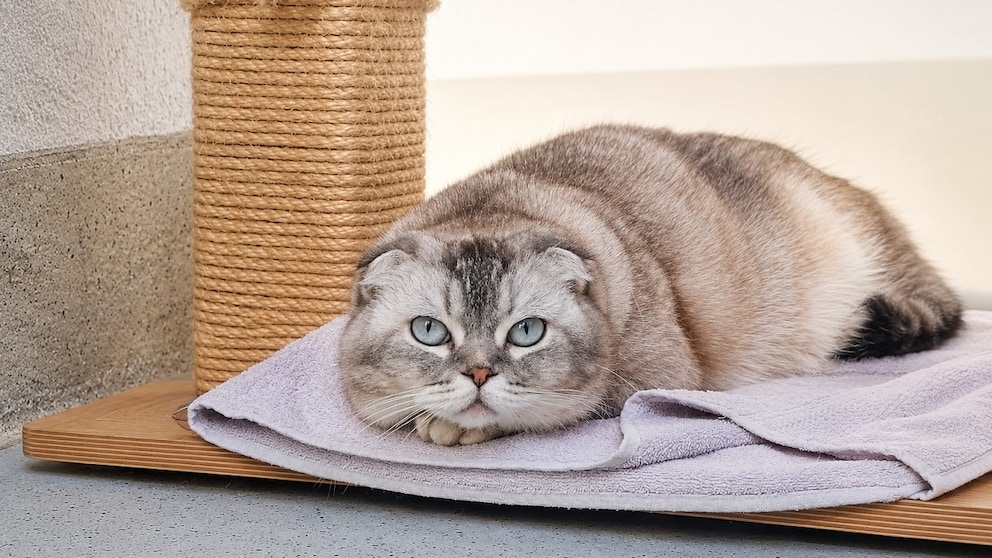
Scottish Fold cats, with their small folded ears and round faces, almost resemble plush toys. This childlike appearance has made the breed a social media star in recent years. Even celebrities like Taylor Swift and Claudia Schiffer own Scottish Folds. But what looks cute has a serious background: The characteristic ears are caused by a genetic defect. This defect affects not only the ears but also the cartilage and bones throughout the body.
Young and Still Dependent on Strong Painkillers
Cat Inci was born in July 2020. The silver Scottish Fold came to the Munich animal shelter after showing aggressive behavior in her previous home. This highlights that noticeable behavior in a cat can also be due to pain or physical limitations. Inci’s health problems are severe: According to the shelter, she requires strong painkillers permanently due to breed-related joint problems caused by cartilage damage.
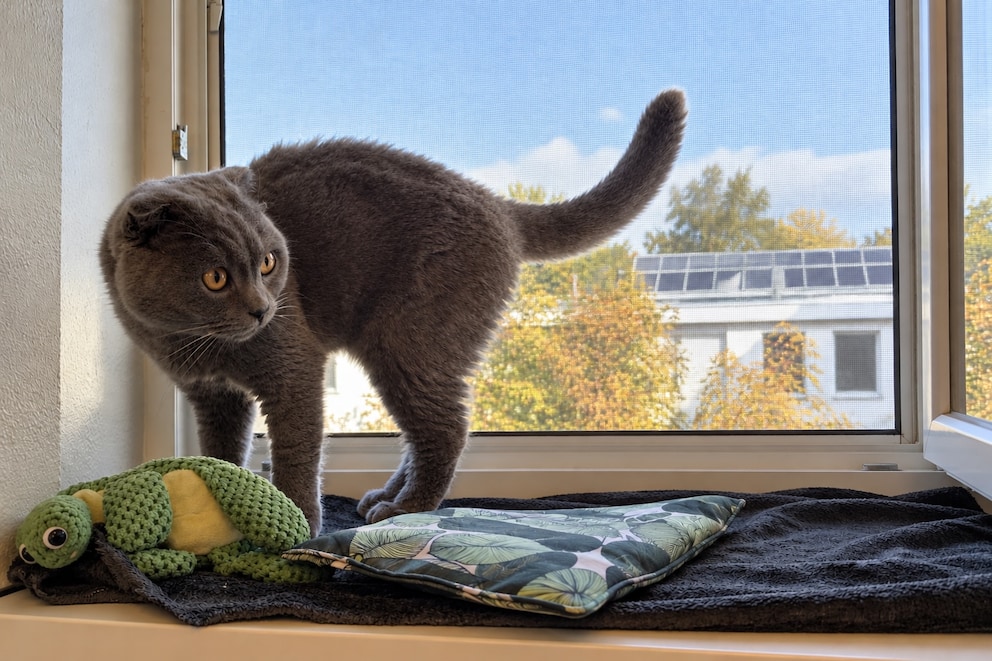
The extent of the disease is even more striking in the second case from the Munich animal shelter: Tomcat Duman is only three years old and also permanently dependent on strong painkillers. Kristina Berchtold, spokesperson for the Munich Animal Protection Association, describes his condition dramatically: The young tomcat, who should actually be a “young, agile jumper,” already has “the body of a 13-/14-year-old cat.”
These are not diseases that randomly occur more frequently in Scottish Folds. The problem lies in the trait for which the animals are specifically bred.
Why Scottish Folds Suffer from Their Folded Ears
The folded ears are caused by a condition known as osteochondrodysplasia (OCD). This is a genetically determined disorder of bone and cartilage growth.
Behind the breed’s typical folded ears is a genetically determined disease: the so-called osteochondrodysplasia, or OCD, explains veterinarian Lisa Hoth-Zimak, a consultant for pets at the German Animal Welfare Federation. The disorder is not limited to the ears but affects the entire body–especially the tail and legs.1
The insidious part: Newborn Scottish Folds initially have normal-looking ears. Only about three to four weeks after birth does the progressive change in cartilage create the characteristic appearance.
What many people find particularly cute is ultimately the visible sign of a disease.
Also interesting: Claudia Schiffer faces harsh criticism for appearance with cat “Chip”
Lameness, Stiff Gait, and Chronic Pain
Later in life, the consequences can become visible in entirely different parts of the body. According to the German Animal Welfare Federation, typical symptoms include:
- Lameness
- A stiff or stilted gait
- Swollen or deformed limbs
- A stiff or immobile tail
- Difficulty jumping, climbing, and playing
- Increasing pain
The disease is incurable. Only the symptoms, especially the pain, can be treated. “The cats suffer from increasingly severe pain throughout their lives and can hardly perform their natural behaviors,” says Hoth-Zimak. In particularly severe cases, the symptoms are so severe in young animals that they must be euthanized.1
The Bremen veterinary authority also points to other health problems described in the breed, including respiratory, eye, and dental diseases, as well as hereditary kidney diseases.2
Not Just the Musculoskeletal System Is Affected
The folded ears can restrict the cats in another way. Normally, cats can move their ears independently. This helps them not only to locate sounds very precisely. The ears are also an important part of body language.
A cat can, for example, signal fear, attention, or aggression through the position of its ears. In Scottish Folds, this form of communication is limited. An immobile tail due to the disease can also no longer fulfill its function as a means of communication and balance. The German Animal Welfare Federation warns that affected animals are unable to lead a normal cat life without painkillers and, in some cases, surgeries.
Also interesting: The worst breeding defects in cats
Bremen Takes Action Against the Breeding of Scottish Folds
This is where Bremen is now taking action. The Food Monitoring, Animal Protection, and Veterinary Service of the State of Bremen (LMTVet) classifies the breeding of Scottish Folds as torture breeding under Section 11b of the Animal Welfare Act and orders the prohibition of breeding with Scottish Fold cats, including relevant crossbreeds.
This is an important legal distinction: It is not about banning the keeping of existing Scottish Folds. The focus is on their further reproduction.
According to Section 11b of the Animal Welfare Act, the breeding of vertebrates is prohibited if it is expected that the offspring will have hereditary body parts or organs that are missing, unsuitable for their natural use, or altered, causing the animals pain, suffering, or harm. Under certain conditions, the responsible authority can also order sterilization.
Crossbreeds Can Also Be Problematic
One important point remains: The problem cannot simply be circumvented by crossing Scottish Folds with another cat breed.
The Bremen authority explicitly points out that the breeding ban also includes relevant crossbreeds. As an example, they mention the British Shorthair. Even cats from such pairings that have upright ears can carry and pass on the genetic trait.
So, the decisive factor is not just whether a cat has the typical folded ears.
Also interesting: Why many Scottish Straights are “sorted out”
More and More Scottish Folds End Up in Animal Shelters
The health problems eventually become a burden for some owners. The German Animal Welfare Federation reports that animal shelters are increasingly caring for animals from torture breeding. Owners are sometimes overwhelmed by the diseases or cannot afford the high costs of veterinary care in the long term. In addition, there is illegal animal trade: As a sought-after breed, Scottish Folds are also bred abroad and sold through dubious online providers, according to the Animal Welfare Federation.
Inci and Duman thus represent a problem that does not end at the doors of the Munich animal shelter.
What to Do If You Already Have a Scottish Fold?
If you already live with a Scottish Fold, you don’t need to feel guilty. What matters now is to take health changes seriously and have the animal properly cared for.
Owners should pay particular attention to these signs:
- The cat jumps less or avoids elevated places.
- It walks stiffly or begins to limp.
- It moves less or no longer plays as before.
- Joints or limbs appear thickened or deformed.
- The tail is unusually stiff or sensitive to touch.
- Touches are suddenly rejected.
- Behavior changes significantly.
Cats often do not show pain obviously. Therefore, a seemingly quieter or less active cat should not be hastily labeled as “cozy” or “lazy.” If there are any abnormalities, it should be examined by a veterinarian. While OCD itself cannot be cured, pain and accompanying diseases can be treated, improving the quality of life. [lmtvet.bremen.de], [tierschutzbund.de]
9 cat breeds that are considered to be bred in a cruel manner

Sweet and Overbred–Why Harmful Breeding Practices Are Gaining Public Attention
Scottish Fold Only from Animal Welfare
The situation is different if you are considering getting a cat. The German Animal Welfare Federation explicitly advises against the targeted purchase of a Scottish Fold from a breeder or dealer. Because with demand, the further breeding of animals is ultimately supported, whose desired external feature is directly linked to a genetic defect.
If you have fallen in love with the breed, you can instead inquire about existing Scottish Folds at animal shelters and animal welfare organizations. However, it should be clear from the start: An affected animal may require long-term medical care. Painkillers, regular veterinary check-ups, and possibly further treatments can accompany it throughout its life.
Inci and Duman Are Looking for a Home
Inci, for example, is already waiting for just such a home. For people who want her not because of her folded ears, but despite the disease behind them.
Because Duman shows particularly clearly how high the price for the supposedly cute appearance can be: At just three years old, he should be jumping, frolicking, and climbing. Instead, he needs strong painkillers permanently and, according to his caregivers, already has the body of a cat more than ten years older.
Inci is a people-oriented cat who, despite her initial shyness, greatly enjoys the company of familiar people. At the same time, she is lively, playful, and very talkative. New situations and strangers initially unsettle her, so she needs some time to adjust.
Inci is looking for a quiet home without children, where she is given the necessary patience and security. She is rather incompatible with other cats, so she will be placed as a single cat. A home with indoor living and a screened balcony is sought.
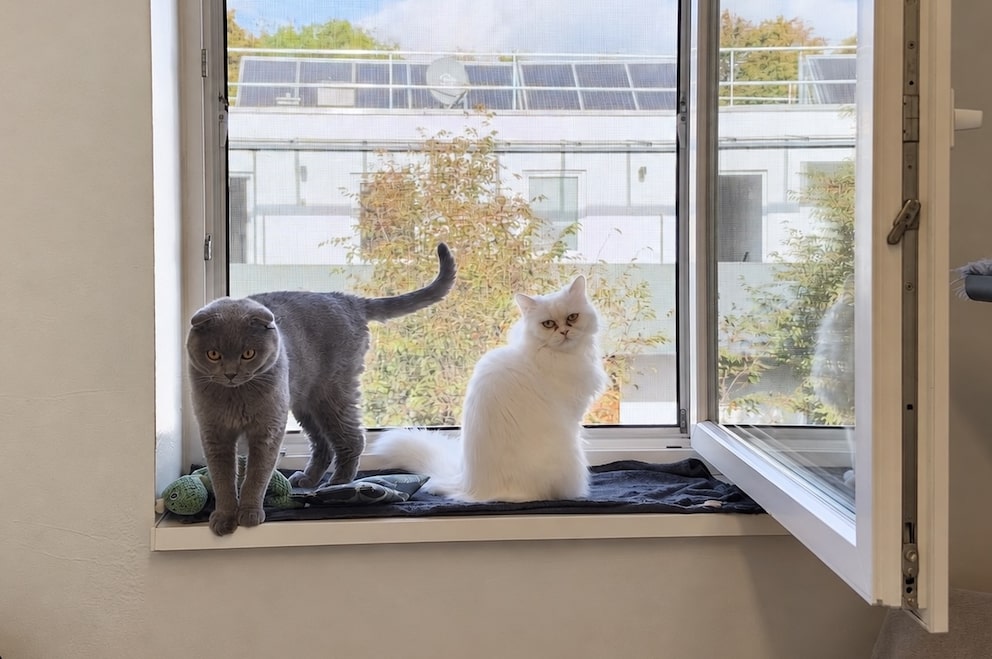
Duman came to the shelter together with Persian mix lady Pamuk due to their previous owners’ allergies. Both are loving, cuddly, and playful cats looking for a suitable home with indoor living and a screened balcony.
Contact: Katzenhaus OG, 089 921 000 – 360