

November 17, 2025, 1:08 pm | Read time: 7 minutes
Jumping, hunting, climbing–cats are true movement talents. It’s all the more noticeable when a cat suddenly limps or favors a leg. What sometimes seems harmless can be a warning sign. Here, you’ll learn how to recognize lameness, what causes might be involved, and when veterinary help is needed.
Did your cat just effortlessly jump onto the windowsill, and now it’s hesitantly putting down a paw or avoiding jumps altogether? Such changes are quickly noticeable in everyday life–yet often underestimated. Especially outdoor cats often return limping from their territory checks. Limping can look harmless and be temporary, but it can also indicate injuries or illnesses that should be examined by a veterinarian.
What’s Behind a Cat’s Limping
When a cat limps, there’s almost always a physical cause–from a harmless misstep to a serious illness. Often, it’s small injuries to the paws or joints that suddenly cause pain. Sometimes the pain develops gradually, such as from age-related wear or inflammation.
Typical Triggers for a Limping Cat
- Bruises or strains: after a jump or awkward landing
- Bite injuries: inflamed wounds after encounters with other cats
- Bone fractures or ligament tears: result of a fall or accident
- Claw issues: broken, torn, or ingrown claws
- Foreign objects: thorns, splinters, or spikes in the pads or between the toes
- Insect stings: painful swelling after bee or wasp stings
- Cut or tear injuries: split skin from sharp edges or snagging
- Joint diseases: arthritis and other signs of wear in old age
- Skin problems or burns: inflamed or irritated paw skin
- Neurological disorders: damage to nerves or spinal cord
- Saddle thrombus: blood clot in the aorta that paralyzes the hind legs–an acute emergency
Take a Limping Cat Seriously
Anyone who knows their cat well will quickly notice when something is wrong–especially with changes in movement. Lameness is usually obvious: The cat puts down a leg only briefly or not at all, walks stiffly, or avoids jumps. Such abnormalities should never be taken lightly. Also, watch for the following accompanying signs:
- Your cat moves less overall or lies down more often.
- Shows pain reactions when touched, such as hissing or flinching
- Visible injuries, blood traces, swelling, or redness on paws or legs
- Frequent licking of a specific spot
- General changes: loss of appetite, fever, or withdrawal can indicate more severe issues
The timeline is also crucial: How long has the cat been limping? Was there a triggering event, such as a jump or fall? Does the limping occur constantly or only in certain situations? This information is important for the veterinarian to narrow down the cause.
First Aid for Lameness: How to Support Your Cat at Home
First, create a calm and safe environment. Your cat should not overexert itself or continue jumping on the affected leg. Carefully check the paws, pads, and claws for visible injuries, foreign objects, or bleeding, if it allows. You can gently remove small splinters or stones and then clean the area. Ensure the cat does not lick the affected area raw–a light bandage or a collar can help.
Note: A cat in severe pain may react unpredictably. Approach calmly and avoid sudden movements.
When to See a Veterinarian?
Our family cat Jerry often roamed in nature. Behind our garden was a large forest he loved to explore. As adventurous as he was, he was also clumsy–so it wasn’t uncommon for him to limp relatively often. Although he recovered quickly, we often took him to the vet for this reason. A vet visit is especially advisable if:
- the lameness is severe or sudden
- the cat no longer puts weight on the leg
- there are significant pain, swelling, or open wounds
- fever, loss of appetite, or a general deterioration occurs
- the lameness does not improve after one to two days
If your cat suddenly cannot move one or both hind legs and shows severe pain, seek veterinary care immediately.
Also interesting: Feeding Your Cat Twice a Day? That Could Harm the Animal
How the Examination at the Vet Proceeds
If your cat is limping, a thorough examination at the vet’s office is the most important step to find the cause. First, the vet will take a detailed history: How long has the cat been limping, was there a fall or noticeable behavior change? Then, the vet will palpate the affected limbs, check mobility and pain sensitivity, and examine pads and spaces between toes for injuries or foreign objects.
Depending on the suspicion, further examinations may follow–such as X-rays to assess bones and joints, ultrasound for soft tissues, blood tests to clarify inflammation or metabolic disorders, and skin tests if a paw disease is suspected. This way, the cause of the lameness can be precisely determined, and the necessary treatment can be identified.

Some Cats Never Learn
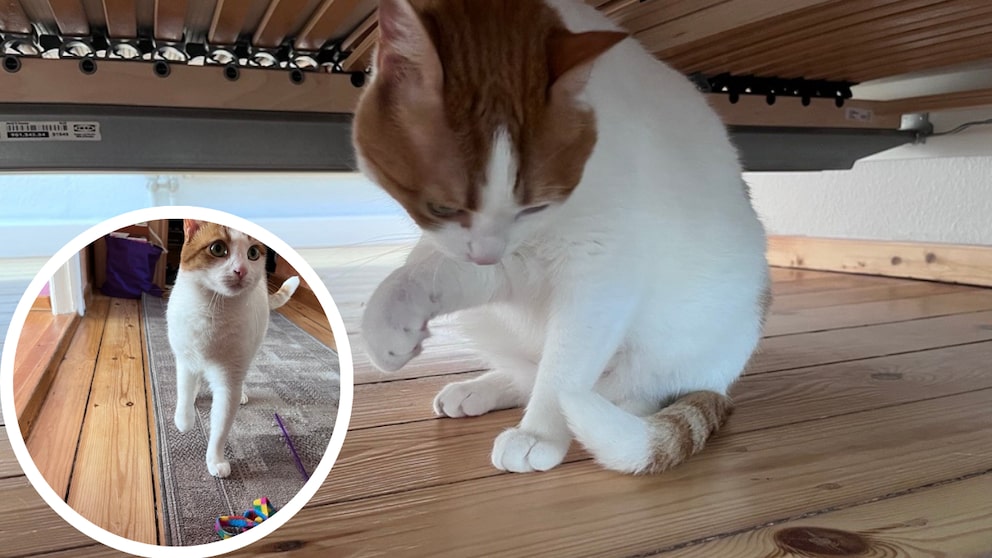
“Recently, my cat Remo proved again that he’s a great fighter–at least in his own mind. A wasp had strayed into the kitchen window, and before I could intervene, Remo launched into his personal wrestling match. The opponent struck, and the proud hunter retreated under the bed with a swollen, painful paw. Then the big drama began: 24 hours of theatrical limping, pitiful meowing, and extensive licking of the painful spot included. Fortunately, the ‘patient’ was back on his feet the next day–but he hasn’t learned. He keeps trying to take on wasps, even though he loses every time.”
Targeted Treatment Helps When the Cat Limps
The therapy depends on the cause. Often, it’s enough to rest the affected leg so the injury can heal. During this time, your cat should not go outside and should avoid jumps. Wounds or bite injuries are cleaned, and antibiotics are useful for infections.
To relieve pain, the cat may receive anti-inflammatory medication. Bone fractures or ligament tears may require surgery, while neurological causes or a saddle thrombus are treated individually.
After the vet visit, your cat should stay in a quiet, cushioned environment. Soft resting places and limited movement promote healing and prevent new injuries.

Why Is My Horse Lame?

Overangulation in Dogs: Here’s What Could Be Behind It
Preventing Your Cat from Limping in the First Place
Lameness in cats can’t be completely prevented–small injuries or missteps happen. However, with a few simple measures, you can significantly reduce the risk and better protect your cat in everyday life. Being attentive early on can often prevent the cat from limping or getting seriously injured.
- Regularly check paws: Inspect pads and spaces between toes for foreign objects, ticks, or small injuries
- Maintain claws: Long or torn claws should be regularly trimmed to prevent pain while walking
- Create a safe environment: Ensure non-slip surfaces and avoid hot grounds. Jumps from great heights should be prevented as much as possible
- Visit the vet early: If your cat repeatedly limps or its gait changes, have the cause clarified promptly to avoid consequential damage
Awareness Protects Against Suffering
Lameness in cats is not a symptom to postpone–even if the cause seems harmless. Even if your cat limps more often, you should become aware of each limping situation anew.
By observing your cat closely and taking changes in behavior seriously, you not only contribute to early treatment but also to overall animal welfare. Often, it’s the small signs that can indicate larger health problems. Sensitivity and timely action are the best protection for a pain-free and active future for your cat.