


April 29, 2026, 3:01 pm | Read time: 4 minutes
More and more videos under the hashtag “Cat Spanking” show cats being hit on their hindquarters—supposedly because they enjoy it. But a closer look at the animals raises doubts. PETBOOK editor and biologist Saskia Schneider is an expert in cat behavior and explains why the trend is concerning.
What the “Cat Spanking” Trend Is About
If the term “Cat Spanking” makes you pause and think of practices from the BDSM scene, you’re not entirely wrong. The videos indeed involve repeatedly hitting cats on their hindquarters—usually with a flat hand, sometimes with objects or even cords used like a whip.
The clips sometimes garner tens of thousands of views. In the comments, you read statements like, “My cat loves this” or “I can’t believe she enjoys it.” But this impression is often misleading.
Many Cats Show Clear Signs of Stress
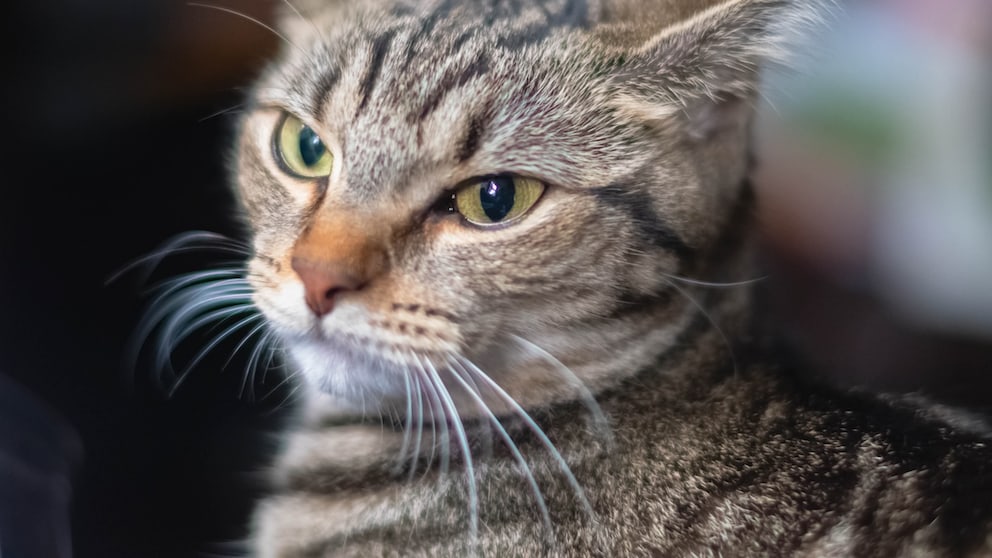
Looking more closely at the animals, it becomes apparent: Many cats appear tense or even uncertain. Typical signals include:
- ears pointed backward
- a stiff body
- dilated eyes
- twitching, meowing, or turning away
From a behavioral biology perspective, these are clear signs of discomfort. Some cats remain in a sort of freeze. Others turn around or “respond” to their human with a meow. All of this indicates stress, not enjoyment.
Of course, there are exceptions: Some cats appear relaxed or actively seek interaction. But this is not the norm—and this is often misrepresented in the videos.

Why the Rear Area Is So Sensitive
A possible reason why some owners believe their cat likes it lies in a real behavior: Many cats are sensitive to touches at the base of the tail.
There are particularly many nerve endings there. For some animals, this is a very pleasant stimulation—they even actively push their hindquarters toward it. Others, however, find it unpleasant or quickly too much. You can learn more about this behavior in our article “Why Many Cats Like Being Tapped on the Rear.”
And even with cats that like this spot, the mood can quickly change. What initially feels good can become overstimulation within seconds.
Overstimulation: When It Suddenly Becomes Too Much
You can think of it like a balloon that keeps getting inflated. Eventually, it reaches a point where it bursts.
Many cats initially show comfort behavior but then become increasingly tense. Some meow, others turn around or fixate on their human’s hand. If ignored, it can lead to scratching or biting.
The problem: These subtle signals are often overlooked or simply ignored in the videos.
“She Could Just Walk Away”—Is That Really True?
A common argument is: If the cat didn’t like it, she would just leave. But it’s not that simple.
Cats have different strategies for dealing with unpleasant situations. Besides fleeing or attacking, there are also less obvious reactions:
- appeasement behavior (“fiddle”)
- or the so-called freezing
The latter, in particular, is often misunderstood. The cat sits still, appears calm—but is actually just enduring the situation. Especially anxious or insecure animals choose this strategy.
Why “Cat Spanking” Is Problematic
Not every cat immediately suffers physical harm from such situations. Nevertheless, the trend is concerning.
Because: For many animals, hitting the hindquarters is an assault—especially when their signals are ignored. Over time, “Cat Spanking” can damage the trust between the cat and the human.
There’s also another problem: Social media conveys a distorted image. When it’s repeatedly claimed that cats “typically” like this, it creates the impression that the behavior is normal, even though many animals clearly show otherwise.

Millions Laugh While the Dogs Suffer

Cat Puts Toy in Bowl–Is It Really Trying to “Feed” It?
How Owners Can Tell What Their Cat Really Wants
A cat that enjoys something shows it clearly and actively:
- She seeks contact on her own
- She presses against the hand
- She rubs her head or body
- She actively demands interaction
A simple but effective trick: Take breaks. If the cat actively approaches the hand again or demands more, that’s a good sign. If she remains tense or turns away, you should stop.
Conclusion: Please Don’t Imitate
The trend around “Cat Spanking” shows one thing above all: how easily cat behavior can be misunderstood.
Just because some animals tolerate or even enjoy certain stimuli doesn’t mean it applies to all. On the contrary, many cats in the videos clearly show that they are uncomfortable.
Anyone who knows their cat well and takes their body language seriously will quickly realize: A cat that truly likes something doesn’t need to be hit to show it.