


October 22, 2025, 4:29 am | Read time: 6 minutes
Even though this behavior is typically associated with dogs, cats can also be afraid of men. Most people assume the animal has had bad experiences in the past. However, that might not be the case, as PETBOOK editor and cat behavior expert Saskia Schneider explains. There are many other reasons why cats–not just with men–might be fearful.
Whether male or female, our cats generally don’t care. Still, some people feel their pet dislikes men or is even afraid of them. This assumption is often made with shelter cats whose past is unknown, leading to the belief that it stems from bad experiences. Indeed, cats can develop fear of certain types or individuals for this reason. In behavioral biology, this is called generalization: The cat has a bad experience with a specific person (sometimes just once) and then develops a general fear of all other people with similar traits.
In rare cases, this can even relate to gender, although it’s more commonly observed in dogs. With cats, there are usually entirely different reasons why they (seemingly) fear men.
Body Language
It’s usually not about gender itself but rather how people move. Approaching a cat head-on and making oneself appear larger sends the signal: “I want trouble.” Especially cats with little human contact in their lives will quickly flee. Kittens raised with various people can learn that such human movement patterns don’t signify danger or provocation.
Without claiming that men, in particular, move in ways that scare cats, body language can indeed play a role here–exceptions prove the rule, of course.
Deep Voices
Cats primarily respond to high-pitched voices, as a 2022 study showed. This doesn’t necessarily mean that deep voices cause fear, but cats often react with caution or skepticism, especially if a certain volume is exceeded.
When observing how cats communicate with each other, vocalizations are rare–at least among adult cats. They greet each other with a melodic “murr.” Otherwise, it gets loud mainly during mating or territorial disputes. Then, voices deepen and mix with growling. From a cat’s perspective, a deep tone signifies aggression.
But differentiation is key: Cats are very adaptable. Just because their humans have deep voices doesn’t mean they can’t recognize that there’s no threat. Studies show cats can even identify their caregivers by voice (PETBOOK reported). However, animals with little exposure to different people might be intimidated or even frightened by deep, loud voices–this applies equally to deep, loud female voices.
Behavior
Behavior also plays a role. Approaching a cat with large, sweeping movements and direct eye contact will likely scare any animal. Approaching cautiously and calmly signals: I’m not a threat. Again, it would be presumptuous to claim that men behave this way while women float around like elves. But it can be one of the factors contributing to the impression that cats fear men.
True Generalization is Rare
Unlike dogs, where generalized fear of men (sometimes women) is more common, cats tend to show defensive behavior toward certain people for other reasons. It’s often surprising when people who think their cat fears men see the animal suddenly jump onto a new boyfriend’s lap. It’s usually about body language and behavior–less about gender or associated scents and pheromones.
If you think your pet has an issue with certain people–it’s not always men, often it’s: “My cat hates kids”–you should instruct them on how to behave when meeting the cat. If the animal hasn’t developed a long-term fear, this can help defuse or completely change the situation, and the cat might initiate contact on its own. After all, cats are primarily curious.

Common Mistakes Everyone Makes When Greeting Cats

Birds Flee Sooner From Women Than Men
What to Do if the Cat is Afraid of Men?
If you notice that the cat is afraid when mainly male individuals enter the room, there are several things you can do to teach the cat that these people pose no threat. This works best with positive associations. How this looks depends on the cat. Little gourmets can be quickly convinced with their favorite snack. Others prefer a shared playtime.
It’s important to start as small as possible. People the cat fears–whether men, women, or children–should initially avoid direct eye contact and speaking. If the cat flees at the sight of the person, it might help to simply stay in the same room for a while, calmly reading to the animal or occasionally tossing treats near the cat.
Only when the animal seeks contact on its own can direct giving of snacks or food occur. Games should always be played at a distance, using a play wand or something thrown to the cat. Never use your hand to play and establish contact.
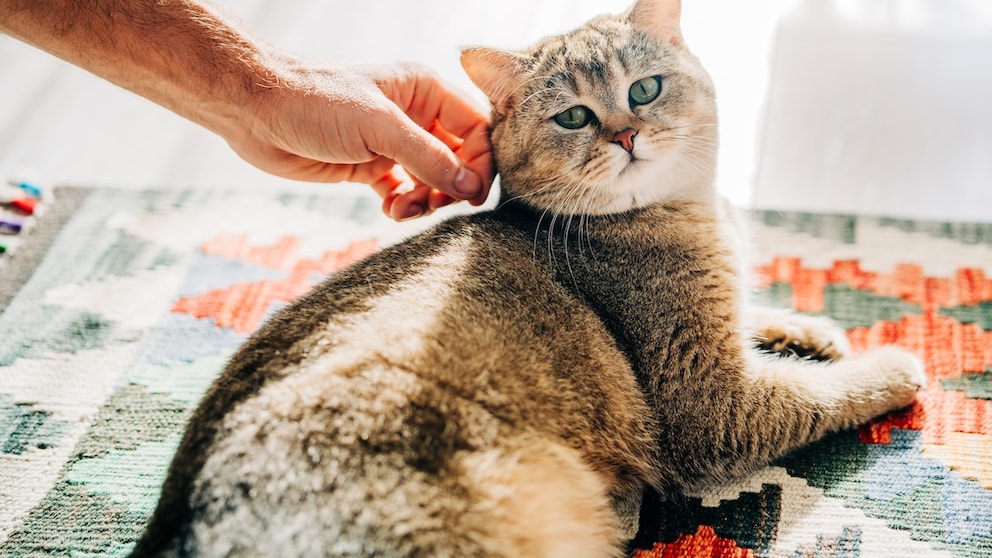
The first petting should also be initiated by the cat. Offer the animal physical contact by making yourself small and slightly turning to the side. Only when the cat rubs its body or head against your hands or body should you gently try to pet the animal–preferably on the side of the head, as many cats particularly enjoy that. Petting on the head or rear is not ideal for the first contact. Read more here: These Mistakes Almost Everyone Makes When Petting Cats.
Conclusion: Fears Can Usually Be Reduced Through Gentle Behavior
Cats rarely have a targeted fear of men–rather, body language, voice, and behavior play a crucial role. Deeper voices, loud movements, or direct eye contact are often perceived as threatening by cats. Such reactions are less about bad experiences and more about instinctive interpretations, as known from communication among their peers.
A generalized fear, more common in dogs, is rather the exception in cats. Uncertainties can usually be reduced through gentle behavior, positive experiences, and patience. In the end, cats are primarily curious animals–and if given the opportunity to initiate contact themselves, they often shed their fear faster than expected.
About the Author
Dr. Saskia Schneider is a biologist with a Ph.D. During her studies at the Free University of Berlin, she focused on zoology and animal behavior. In addition to training as an editor, she completed training as a behavior consultant specializing in cats.