

March 18, 2026, 12:49 pm | Read time: 6 minutes
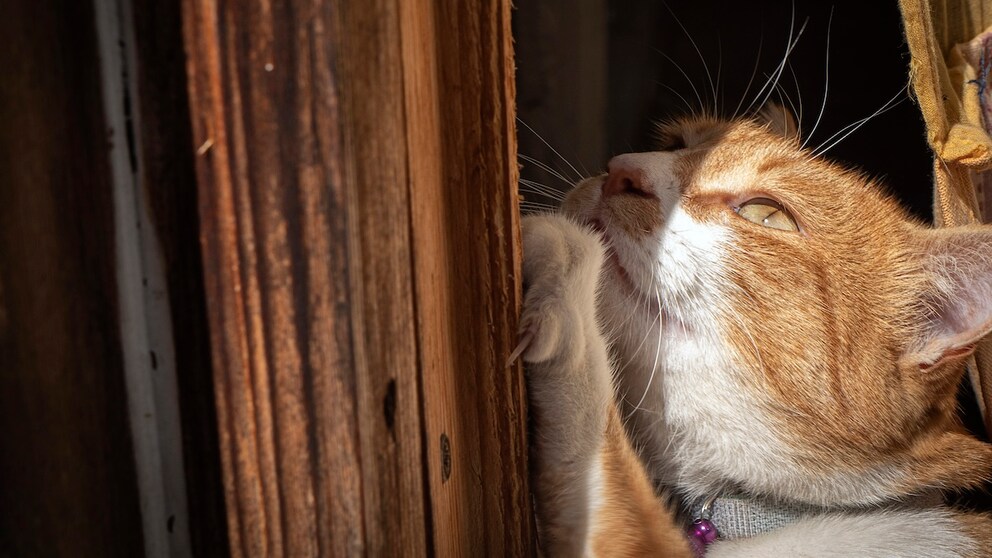
The sound is all too familiar to cat owners: that rhythmic, slightly aggressive scratching on the sofa, the carpet, or—a particular favorite—the door frame. The obvious question often is: Can’t you just train cats to stop this annoying scratching? PETBOOK editor and cat expert Louisa Stoeffler explains why you should quickly abandon this thought.
Overview
My Cat Scratches the Carpet–and That’s Okay!
I know the topic all too well from everyday life. My cat Remo has very clear ideas about where it’s good to scratch–and unfortunately, they don’t align at all with what I offer him. Scratching post? Ignored since day one. Scratching cardboard? Briefly tested, deemed unworthy, and eventually even chewed up. Instead, he chose a carpet runner in the hallway–and that’s exactly where he scratches extensively. And yes: I’ve decided that’s perfectly fine.
The carpet obviously meets all his criteria: It offers just the right resistance, is stable, and is located in a central spot in the apartment. Something is always happening in the hallway, Remo is right in the middle of it—and can keep an eye on everything at the same time. This is no coincidence. Cats scratch not only to care for their claws or mark their territory, but they also do it where it can be seen. Scratching is always a little statement. And Remo consciously puts himself in the spotlight.
So instead of fighting this behavior, I’ve accepted it and essentially “approved” the carpet runner. This takes the pressure off—and at the same time ensures that other furniture is much less interesting. The short answer to the common question from owners: “Can I train my cat to stop scratching?” is quite simply: no. And you shouldn’t even try. To understand why, you need to look at why cats scratch in the first place.
Why Cats Need to Scratch
Scratching is a deeply ingrained, instinctive behavior in cats—and above all, a means of communication. Through scent glands in their paws, they release pheromones when scratching, marking their territory. These invisible scent trails signal safety and belonging (“This is my home”). That’s precisely why scratching can’t simply be “trained away”: It serves a central function in a cat’s well-being.
Additionally, the visible marks from scratching enhance the effect. Cats prefer to choose places that are socially relevant to them—such as central pathways or furniture that strongly smells of their caregivers.
At the same time, scratching serves claw care. By removing old layers of keratin, the claws remain sharp and healthy. Physically, the behavior also has a function: Cats stretch their bodies, activate muscles, and relieve tension—often after waking up or in exciting situations.
Lastly, scratching is self-rewarding. If a surface feels good and “works,” it will be used repeatedly. This creates strong preferences—and that’s why many cats return to the same spots over and over.
Why You Can’t–and Shouldn’t–Stop Cats from Scratching
“Training a cat to stop scratching” is neither realistic nor sensible—especially because it’s a fundamental need, not an unwanted behavior in the traditional sense. If you try to stop it, it often leads to frustration rather than a real learning effect.
Cats don’t understand prohibitions or punishments the way we wish they would. Instead of associating that scratching in a certain spot is undesirable, they are more likely to associate negative reactions with the situation or even the person, which can, in the worst case, affect trust.
Moreover, the need to scratch doesn’t disappear. If a spot is “forbidden,” the cat will simply find another one or continue scratching in the same place when no one is watching. The behavior isn’t stopped; it’s merely relocated. At the same time, restricting such a central behavior can lead to stress, which can manifest in various ways—such as restlessness, increased scratching in other places, or even uncleanliness. In the end, scratching isn’t a problem that needs solving but a natural part of cat behavior that should be managed sensibly.
Why the Sofa Is So Attractive
Many cats also prefer furniture like sofas. This isn’t malice, where one of the most expensive pieces of furniture is chosen, but rather for several reasons:
- The surface often offers just the right resistance
- The sofa is usually centrally located in a room where a lot of time is spent
- It is strongly associated with the scent of the caregivers
Again, the crucial factor of self-rewarding or reinforcement comes into play: Once the cat has scratched there, pheromones have already been left behind. These scent marks act like an invitation to continue scratching there. The routine reinforces itself—with each additional scratch mark.

Why Cats and Dogs Vomit on the Carpet

Why Cats Steal Our Seats
How to Redirect Scratching Behavior
To prevent this from happening on the expensive couch, the behavior should be deliberately redirected. The goal is not “less scratching,” but “proper scratching.”
1. Offer the Right Scratching Options
Not every scratching post is automatically attractive to cats. The key is that it is stable and doesn’t wobble, tall enough for the cat to fully stretch, and made of a material that appeals to them—such as sisal, wood, or corrugated cardboard.
A look at nature helps: Outside, cats prefer to sharpen their claws on trees. A good scratching post should mimic this natural condition as closely as possible—offering a firm, “tree-like” surface and being constructed so that the cat can scratch vertically and fully stretch. Many cats also appreciate horizontal scratching surfaces like cardboard or boards, depending on individual preference.
2. Strategic Placement
Scratching options should be placed exactly where the cat already wants to scratch:
- near sleeping areas
- in high-traffic areas
- right next to the sofa as an “alternative”
3. Make It Attractive
You can make scratching furniture more interesting, for example, by:
- using catnip or valerian
- playing together nearby
- praising or giving small rewards when the cat uses them—must be done promptly, not minutes later!
4. Make Other Spots Unattractive
At the same time, you can make unwanted spots less attractive:
- special protective films for furniture
- covering the spot with other materials
- Scents that cats avoid (use cautiously!)
Important: never punish, never yell.
5. “Neutralize” Scent Marks
Since cats repeatedly return to already marked spots, it can help to clean them thoroughly with enzyme cleaners. This reduces the pheromones—and thus the “incentive” to continue scratching there.
Conclusion
Training cats to stop scratching is neither possible nor sensible. It’s part of their natural behavior and serves important functions for health, communication, and well-being. What works well: offering them suitable alternatives, deliberately redirecting scratching—and, if in doubt, sacrificing a runner or two.