

October 16, 2026, 9:05 am | Read time: 2 minutes
The house martin has been chosen as the Bird of the Year 2027. More than 67,000 people voted for the endangered summer messenger, who decisively beat out the pied flycatcher, common raven, dipper, and crane. However, the victory highlights a serious issue: the bird is increasingly struggling due to a lack of nesting sites and a decline in insects.
House Martin Wins by a Wide Margin
In the public vote for “Bird of the Year 2027,” the house martin clearly outperformed its four competitors. A total of 67,050 people voted for the endangered summer messenger, with 148,506 participants in the poll conducted by NABU and the Bavarian State Association for Bird and Nature Conservation (LBV). The pied flycatcher, common raven, dipper, and crane followed in the rankings. The house martin takes over the title from the partridge, the Bird of the Year 2026.1
A Masterpiece of 1,500 Clay Pellets
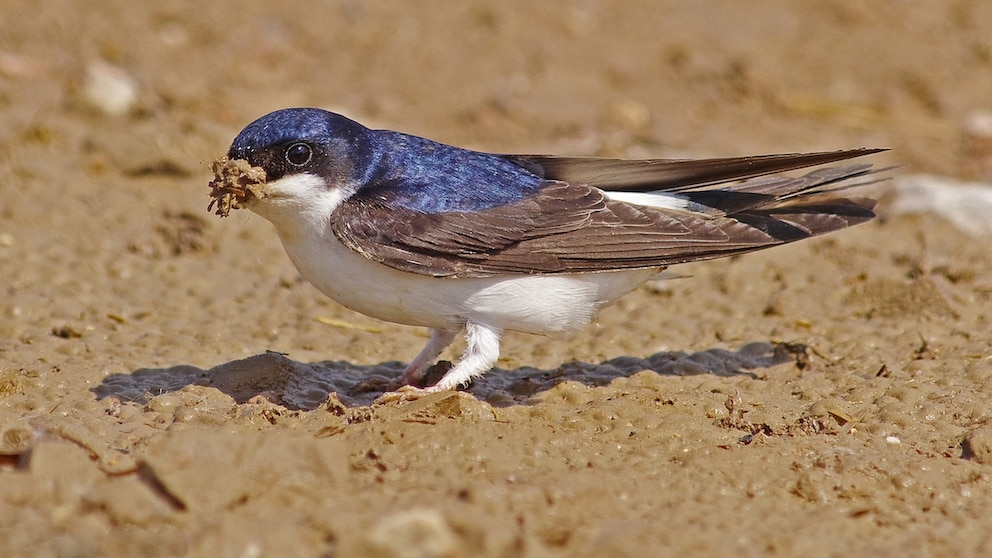
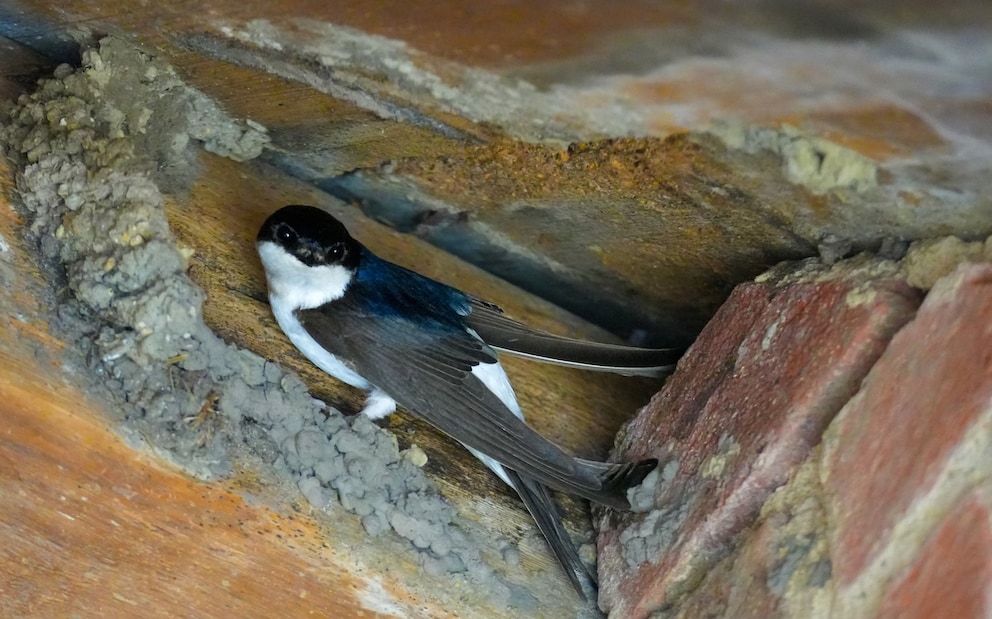
House martins build their nests directly on buildings, usually sheltered under eaves. They collect moist clay and patiently form up to 1,500 small pellets. This creates an almost enclosed nest, often used for years.
Yet, ironically, the house martin finds it increasingly difficult to find a suitable spot near humans. Smooth facades, energy-efficient renovations, and sealed grounds hinder nest building. At the same time, many flying insects, the birds’ main food source, are disappearing. In Germany, the house martin is therefore considered endangered.
The Nuthatch — European Native Wild Bird and Climbing Artist
Feeding Isn’t Enough: What Sparrows Really Need
White Belly, Dark Back
At about 14 centimeters, the house martin is smaller than a blackbird. Its strikingly white underside and light rump are particularly noticeable. In contrast, its head, back, and wings shine a metallic blue-black. In flight, it resembles a small black-and-white arrow.
House martins are social and often breed in colonies. In the fall, they embark on their long journey to Africa, returning to their breeding grounds in the spring.
A Board Protects Facade and Nest
Simple measures can help the house martin. Existing nests should be preserved and considered during facade work. Artificial nests provide additional space, a moist clay puddle supplies building material, and insect-friendly gardens ensure food.
There is also a simple solution to prevent soiling: A board placed at a sufficient distance below the nest keeps droppings off windowsills, doors, and walkways. This keeps the house facade and ground clean while allowing house martins to raise their young undisturbed.