

October 14, 2026, 3:32 pm | Read time: 4 minutes
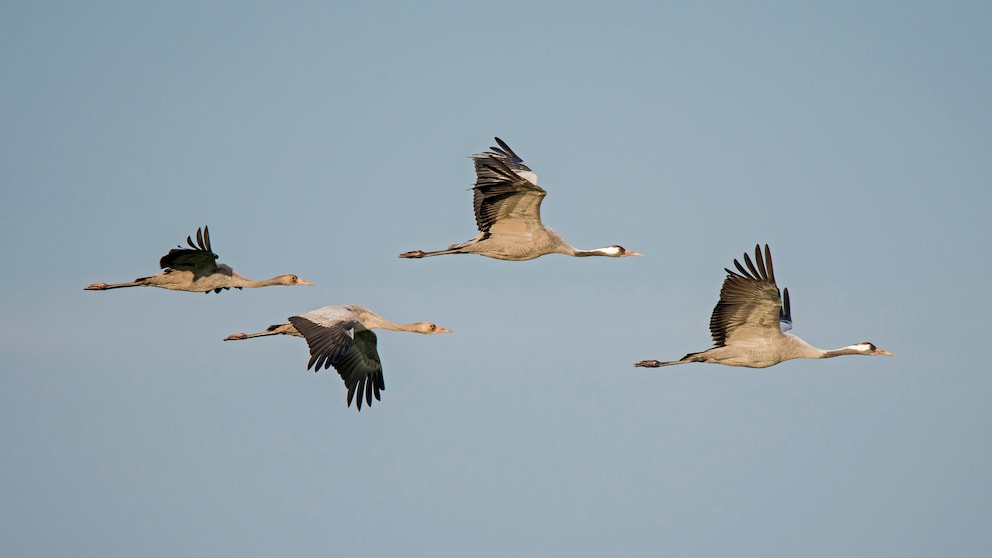
Anyone looking up these weeks often sees and hears them from afar: cranes, also known as Grus grus, flying in large formations over Germany heading south. The autumn migration is in full swing. But the birds have more to offer—they dance, trumpet, and often stay with the same partner for many years. PETBOOK asked Martin Rümmler, bird protection officer at NABU, about their behavior and the best places to observe them.
Where do the cranes migrate?
The cranes breeding in Germany use the Western European migration route. It leads through France to wintering grounds in southern France, Spain—especially Extremadura—and partly to Portugal. Some birds now also overwinter in France or even in Germany. On their way through Germany, cranes from Norway, Sweden, Poland, and the Baltic states join them. There is also the Baltic-Hungarian and Eastern European migration route.
How long does the migration take?
The autumn migration usually lasts from mid-September to November. The duration for an individual crane varies from a few days to several weeks. According to Martin Rümmler, bird protection officer at NABU, wind and weather are crucial: tailwinds and stable high-pressure weather help. Suitable resting places also play a role, as do the age and experience of the birds. Families with young birds often migrate more slowly.
Under good conditions, cranes can cover about 500 to over 1,000 kilometers at a stretch, especially when crossing seas or mountains or when resting and sleeping places are lacking. There is no training in the classical sense. “Preparation mainly involves building up energy reserves,” explains Rümmler. In late summer and fall, the birds consume large amounts of energy-rich food in fields and meadows, such as grains, corn, and other plant parts. The young birds learn the route and important resting places on the joint migration with their parents.
Also interesting: Over 10,000 kilometers! These migratory birds fly the farthest
Why do cranes call so often in flight?
The trumpeting calls have a practical reason. Cranes usually migrate as a family unit or in larger groups, and the calls serve, according to Rümmler, for communication within the group. This way, the birds maintain contact with each other, coordinate direction changes, and warn of dangers. “Especially in large formations or poor visibility, the calls help to maintain contact,” says the expert.
Why do cranes fly in a V-formation?
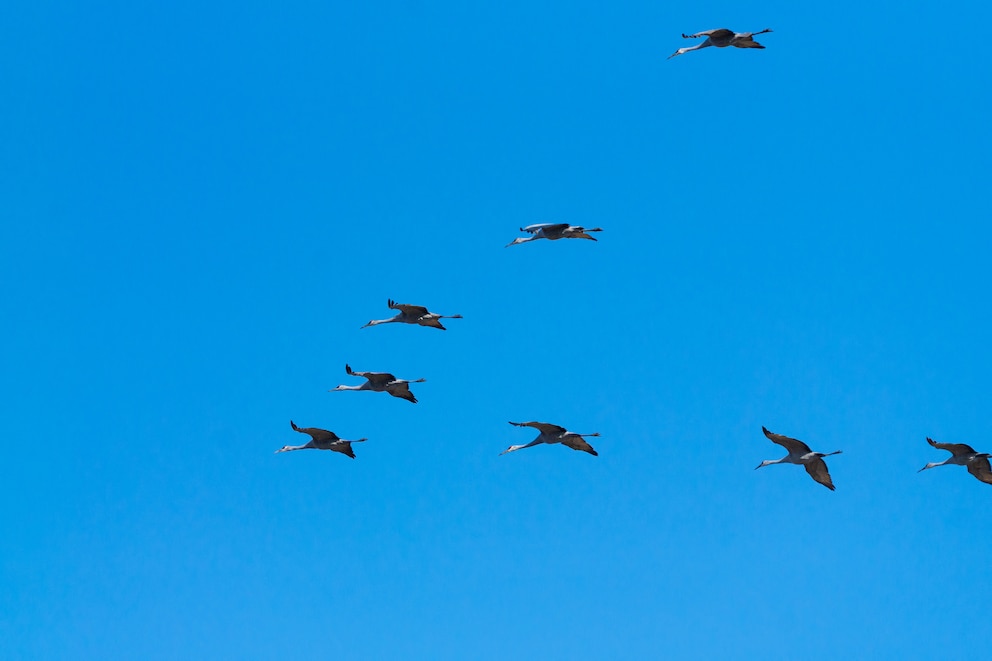
This also has to do with energy. “The V-formation primarily increases the energy efficiency of the flight,” says the NABU expert. Each bird uses the updraft created by the wings of the bird in front. This reduces energy consumption, allowing longer distances to be covered with less effort. The lead position is regularly changed. Additionally, the formation facilitates communication and cohesion within the group.
What is behind the crane dance?
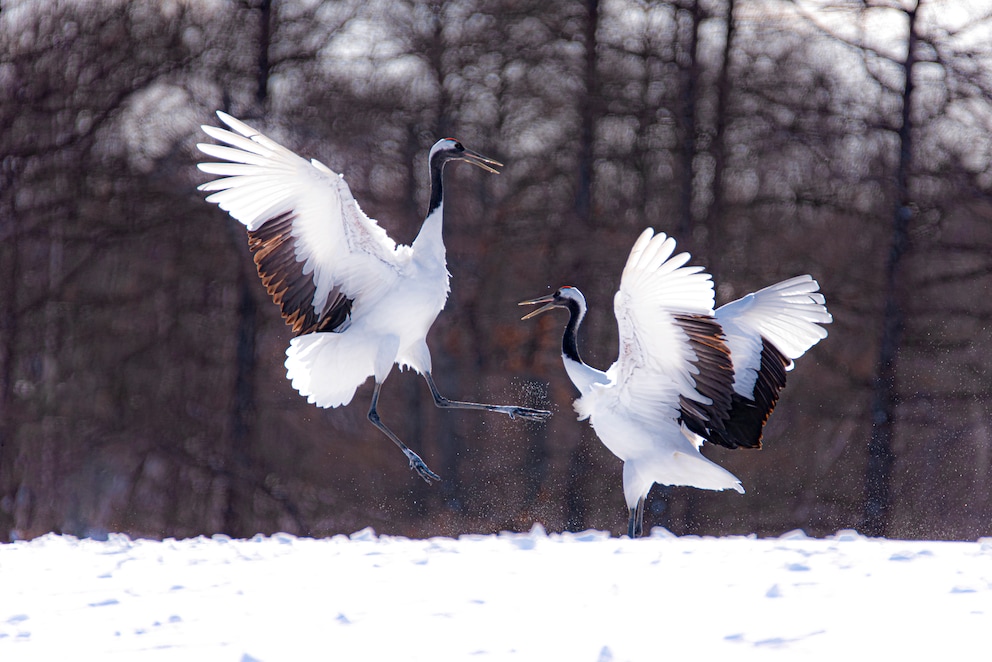
The famous crane dance is part of the courtship ritual. It includes jumps, bows, wing flapping, running, and tossing plant parts. According to Rümmler, it primarily expresses excitement and social interaction. Unpaired birds use it to find a partner, while existing pairs strengthen their bond. “Crane pairs often stay together for many years and can form lifelong partnerships,” says the expert.

Why Birds Disappear When It Rains

How high can birds actually fly?
How do cranes raise their young?
According to Rümmler, the first cranes return to their breeding grounds as early as February, with breeding usually starting in March or early April. They build nests in moors, marsh forests, and other wetlands that offer protection from ground predators. Typically, there are two eggs in the nest, which both parents incubate alternately for about 30 days.
The chicks are precocial and leave the nest shortly after hatching. Both parents guide and protect them, show them suitable food, and later accompany them to the wintering grounds. After about nine to ten weeks, the young birds are capable of flight.
Also interesting: Can you identify all 16 migratory birds in the quiz?
Where can you observe cranes in Germany?
According to Rümmler, the most important observation areas include the Bodden coast in Mecklenburg-Western Pomerania around Rügen, the Rhin and Havelluch near Linum, and the Lower Oder Valley National Park in Brandenburg, as well as the Diepholz Moor Depression in Lower Saxony. The best time is usually between late September and late October, when the large resting populations reach their peak. So it’s worth heading out now.
Those who want to observe wild cranes in peace can also visit the NABU Crane Worlds Experience Center in Groß Mohrdorf north of Stralsund. In addition to exhibition areas, it offers its own observation station, the “Kranorama.”