

April 30, 2023, 7:24 am | Read time: 4 minutes
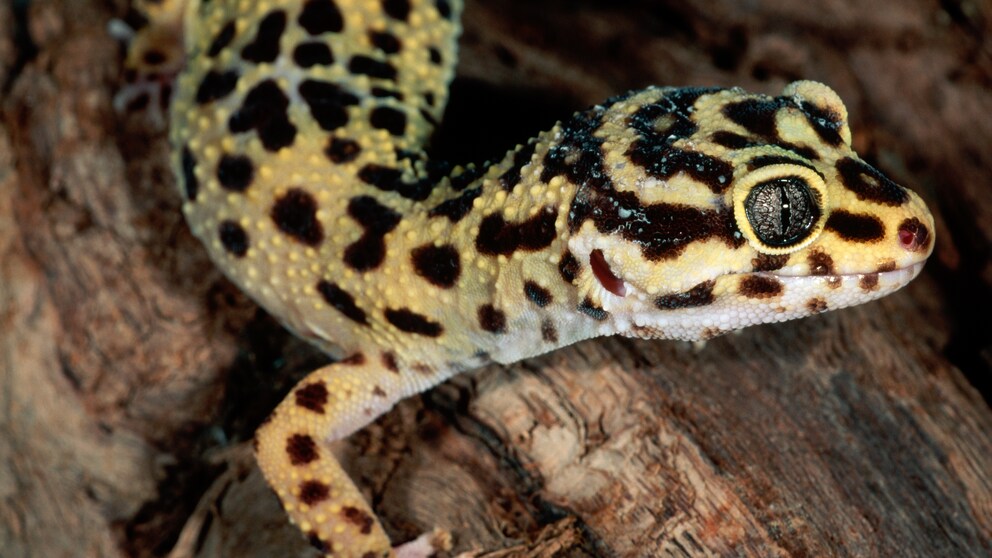
Leopard geckos are stunning eye-catchers in terrariums: The juveniles are yellow and dark brown striped. Only in adulthood do the lizards display the typical spot and rosette pattern that earned them the name leopard geckos. Originally, these spotted reptiles come from the steppes of Afghanistan, Pakistan, and northern India. However, the leopard geckos kept as exotic pets today are usually bred in captivity. Wild-caught specimens are to be avoided for animal welfare reasons.
Among terrarium enthusiasts, leopard geckos are among the most popular species. The beautiful lizards are considered calm, relatively easy to care for, and suitable for beginners. Good to know: Leopard geckos are not subject to species protection laws in Germany. However, acquiring them should be well-considered, as these members of the order of scaled reptiles can live over 20 years. PETBOOK reveals how to care for leopard geckos so they can lead a long, happy life.
Overview
How many leopard geckos should you keep?
Leopard geckos, also known as Pakistani fat-tailed geckos, thrive both alone and in groups. If you want to house multiple geckos, opt for a small harem with one male and several females. All-female groups are also possible. Males are often incompatible with each other, and keeping a pair is not recommended.
What do leopard geckos eat?
The diet of these terrarium dwellers includes insects such as crickets, locusts, and cockroaches. The live feeder insects should be dusted with a special mineral and vitamin supplement to prevent deficiencies. Adult geckos are fed only two to three times a week to avoid obesity. Energy-rich larvae like mealworms and superworms should be offered only occasionally for this reason. Fresh water must be available to the geckos at all times.
Also interesting: Proper care and maintenance of leopard geckos
What should a terrarium for proper leopard gecko care look like?
The German Animal Welfare Federation recommends a terrarium with minimum dimensions of 150 × 100 × 100 centimeters for a single leopard gecko. For each additional animal, the base area should be increased by 20 percent. Clay-rich sand is suitable for the substrate, which should always be slightly moist in one area. Suitable furnishings include branches, roots, and cork tubes, which serve as hiding places and climbing opportunities for the lizards. Additionally, the animals need a shallow water dish for bathing.
The temperature, humidity, and lighting of the terrarium are of great importance. Experts from the Clinic for Birds and Reptiles at the University of Leipzig recommend setting up different temperature zones between 79 and 95 degrees Fahrenheit. At night, the temperature should be reduced to 68 to 73 degrees. Humidity should be 40 to 50 percent during the day and increased to 60 percent at night. During the day, the gecko habitat should be illuminated for ten to twelve hours with a lamp that includes UVB.
Leopard geckos also undergo a winter rest. To prepare for overwintering, the lighting should be gradually reduced. The winter rest should occur at about 50 degrees Fahrenheit and last one to two months. The lizards typically do not need food during this phase.

Reptile owners want to get rid of their pets due to high energy costs
Feeding Reptiles Properly: These 5 Principles Protect Against Diseases
Costs of keeping exotics have risen
The current high energy prices make the proper care of leopard geckos an expensive hobby. Thomas Schröder, president of the German Animal Welfare Federation, points to the significant problems animal shelters face due to the increasing number of surrendered exotics: “Many people can no longer afford the energy costs for the demanding care of exotics and pass them on to shelters.” This point should also be considered before allowing geckos to move in, as pet ownership always means responsibility.
Sources
- Haustier-berater.de, “Leopardgecko” (accessed April 26, 2023)
- Vetmed.uni-leipzig.de, “Der Leopardgecko” (accessed April 26, 2023)
- Tierschutzbund.de, “Steckbrief Leopardgecko” (accessed April 26, 2023)
- Tierschutzbund.de, “Exotenhaltung verbieten: Tierschutzbund begrüßt den Vorschlag von Minister Özdemir” (accessed April 26, 2023)