

October 22, 2025, 8:52 am | Read time: 5 minutes
Reptiles often appear calm and docile, but beginners can quickly make serious mistakes when feeding them. Many diseases in snakes, turtles, or lizards can be traced back to improper nutrition. Anyone who keeps or wants to keep reptiles as pets should know the five essential rules in this PETBOOK article. These principles help ensure the long-term health of the animals.
Why Reptiles Easily Develop Metabolic Problems
Reptiles are low-maintenance and fascinating animal companions. However, their care is also demanding and should not be taken lightly. Many diseases diagnosed in these animals can be traced back to improper feeding.
Reptiles adjust their activity with their temperature and can essentially go into “low-power mode.” “Compared to mammals, reptiles have a significantly slower metabolism,” explains Jonas Liebhauser from the Federal Association for Proper Nature, Animal, and Species Protection in Hambrücken, according to a statement from the Pet Supplies Industry Association. This means reptiles use less energy—and can quickly become obese with too much food. The result is health damage that is often difficult to remedy.
The difference lies mainly in temperature regulation: Mammals maintain their body temperature through metabolism, which requires a lot of energy. “Cold-blooded reptiles, on the other hand, almost exclusively use the ambient temperature, such as basking in the sun, to achieve an optimal body temperature,” says Liebhauser. A 30-gram mouse needs about five grams of food daily—a leopard gecko of the same weight, however, gets by with one to two grams.
1. Adjust Food Quantity and Frequency to Needs
“Since reptiles in the terrarium always have the opportunity to warm up, they are always at operating temperature, meaning in the mood to eat,” says Liebhauser. This often leads to inexperienced reptile owners feeding their animals too frequently and in too large quantities.
Additionally, in nature, many reptile species undergo summer or winter dormancy, during which they do not eat and live off fat reserves. If these phases are not simulated in pet care, an imbalance occurs. “Too much food and lack of rest periods inevitably lead to obesity, which can have serious consequences,” warns the expert.
2. Prefer Plant-Based Diets
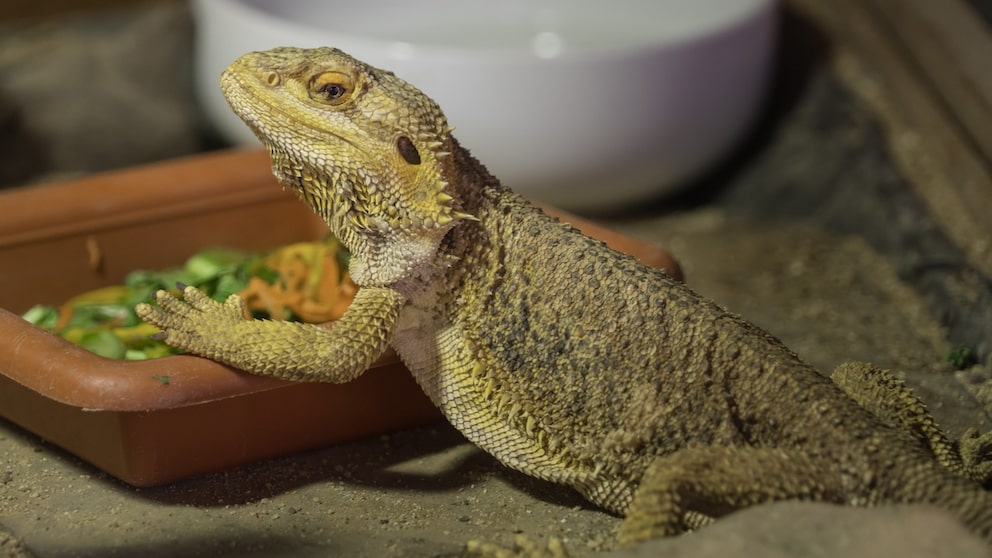
According to the expert, the right choice of food also plays an important role. Some reptiles, such as European tortoises or green iguanas, are specialized in low-energy plant diets. Herbs and leaves already provide much of what they need and can process well. Fruits or animal components should rarely be on the menu because they contain too much energy and are more likely to harm health in the long run.
Even for omnivores like bearded dragons or many aquatic turtles, the energy content can be sensibly reduced by a higher proportion of plant-based food. For example, it is sufficient if an adult aquatic turtle receives animal protein only every third day. The amount of food should not be larger than the animal’s head. Care should also be taken with snakes to ensure they do not receive too much food.
3. Opt for Low-Fat Feed Animals
For popular insect-eating species like the leopard gecko, the choice of feed animals is crucial. “There are some important points to consider, especially in their diet,” explains Liebhauser. “The feed insects available in stores are sometimes available as larval stages, such as mealworms or Zophobas. Since larval stages are generally very high in fat, they are only partially suitable for reptiles.”
More suitable are adult crickets, grasshoppers, locusts, or cockroaches. Again, do not feed too often. Young animals often need daily meals, but adult animals do well with two feedings per week. “Even if it may seem heartless from a human perspective to feed so little, it is necessary for the animals’ health,” emphasizes Liebhauser. If you still want to feed more often, you can offer smaller insects, such as medium instead of large crickets.
What to Consider When Keeping Leopard Geckos
Proper Care for the Painted Turtle Chrysemys picta and Its Four Subspecies
4. Supplement Calcium and Vitamins Strategically
Whether plant-based diets or feed insects, calcium is often lacking, or the calcium-phosphorus ratio is unfavorable. This can lead to dangerous calcium deficiency. “In both cases, the animal can suffer from a calcium deficiency with serious consequences for skeletal development, such as soft and deformable bones,” warns Liebhauser.
Therefore, dietary supplements like vitamin and mineral preparations are available in specialty stores. These can be used to dust feed insects or enhance plant-based feed—a simple and effective measure for healthy bones.
5. Separate Feeding for Multiple Animals
Reptiles are often solitary—feeding them together can lead to food envy, stress, or even bite injuries. If you still keep multiple animals in the same terrarium, you should closely observe how they react when eating. It may be advisable to feed dominant animals separately in a fauna box or offer different feeding spots.
It is important that each animal receives enough food. “Especially for beginners in terrarium keeping, it can initially be difficult to interpret the corresponding signals correctly,” reports Liebhauser, who therefore advises beginners to start with individual housing.