

September 17, 2026, 3:12 pm | Read time: 4 minutes
Many people know that dogs and cats often live in animal shelters for a long time. But what some forget is that snakes are also given to shelters and live there for several years without adoption. The Hamburg Animal Protection Association of 1841 e.V. explains why this might be the case.
Why Do Snakes End Up in Animal Shelters?
Like other animal species, many owners give up their snakes due to being overwhelmed. However, this is often not due to financial reasons. “The percentage of people who give up their animals for financial reasons is negligible in our area,” explains reptile specialist Thomas Türbl in a PETBOOK interview. It is more common for snakes to be left behind after moves or relocations.
How Quickly Can Snakes Be Adopted?
“Snakes often wait a very long time for a home, especially compared to other small animals, such as rabbits. Several years in a shelter are unfortunately not uncommon,” explains the Hamburg Animal Protection Association of 1841 e.V. upon PETBOOK’s inquiry. In 2025, the association took in 15 snakes, and the previous year, 17 snakes.
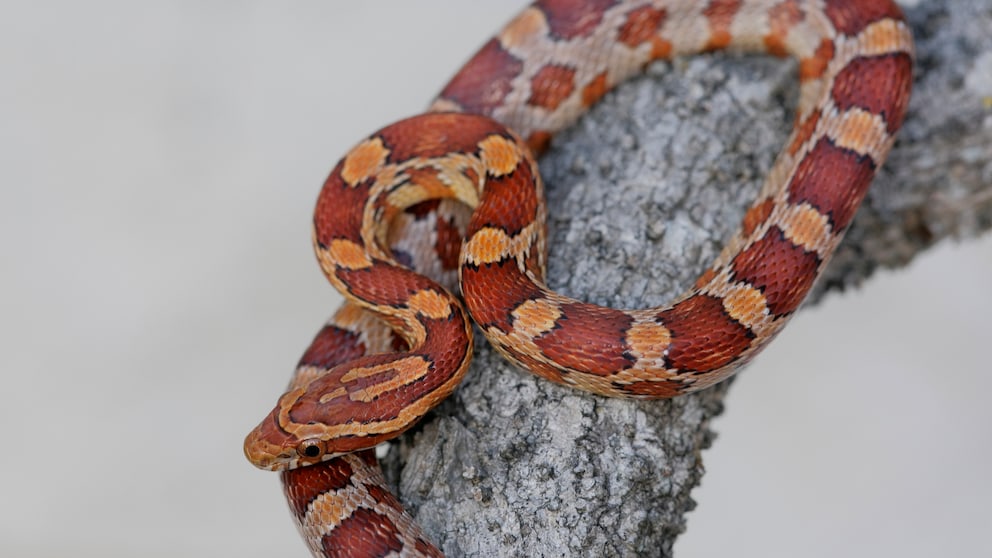
According to the animal protection organization, there is also a connection between the type of snake and the length of stay in the shelter: “Smaller snakes, like corn snakes, can generally be adopted more quickly than larger snakes, such as Boa Constrictor.” The association explains why this might be: “Especially the latter often wait much longer due to their special care requirements than their ‘shorter’ counterparts.”
What Are the Requirements If I Want to Adopt a Snake?
For those interested in adopting a snake from animal protection, the Hamburg Animal Protection Association of 1841 e.V. offers some helpful tips to meet the requirements for proper snake care. “The right equipment for the respective snake must, of course, be provided,” says the association.
This includes a terrarium that meets the minimum requirements for the specific species. Particularly important: “The terrarium must be at least as long as the snake that will live there–even for a corn snake, this can quickly be 170 cm.”
Additionally, the equipment and maintenance of the terrarium, including the correct humidity and temperature, are important. The load-bearing capacity of the terrarium’s location is also crucial, as it can become very heavy with the setup and snake. The association also points out that “for so-called ‘dangerous animals,’ such as the Boa constrictor, a government-issued certificate of expertise is required. Venomous snakes and snakes over three meters in length are automatically considered dangerous animals.”
Care and Maintenance of the Boa Constrictor

These Animals Stay in Shelters Forever and Here’s Why
Do Some Prospective Owners Have Prejudices Against Snakes?
The Hamburg Animal Protection Association of 1841 e.V. is not aware of any prejudices, only a misunderstanding of the needs. “Many people unfortunately underestimate the care requirements that snakes have, which can lead to poor care and animal suffering,” they explain. The age of snakes is also often underestimated, as many species can live up to 25 years. Therefore, the lifespan should be considered when acquiring a snake.
Chanty Waited 11 Years for a New Home–Until Her Death
“In early June, our ‘longest long-term resident,’ the Boa constrictor Chantal, lovingly called ‘Chanty’ by her caretaker, passed away,” the animal protection organization shares. Since 2015, the Boa constrictor had lived in the Hamburg animal shelter. Eleven more years followed until the animal died in the shelter. Reflecting, the Hamburg Animal Protection Association of 1841 e.V. says, “Her adoption was unfortunately complicated by Chantal’s inclusion body disease.”
Affected snakes suffer from neurological problems, such as coordination disorders or repeated vomiting. Due to the disease, Chantal also had to be regularly examined by a veterinarian, “which often required a five-person team for a snake of her size,” reports the association.
And although Chantal has already crossed the rainbow bridge, snakes continue to live in the shelter for several years: “Currently, Boa Constrictor Sophie holds the sad record among the snakes.” Since October 2020, she has been waiting in the care of the Hamburg Animal Protection Association of 1841 e.V. for a new home.