

January 3, 2026, 3:04 pm | Read time: 3 minutes
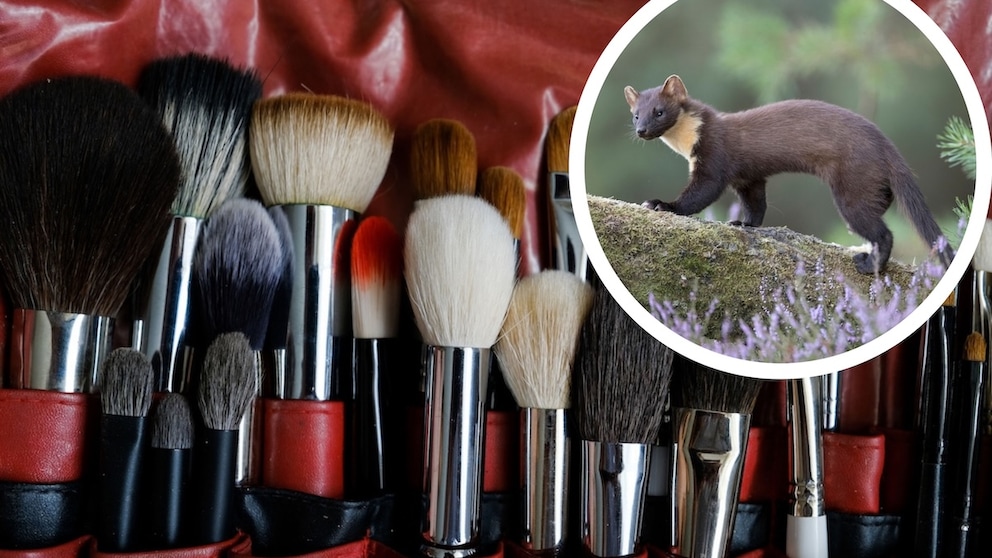
Whether in a makeup bag, studio, or while crafting with children, brushes are indispensable in many areas of life. However, while some models shine with soft bristles and elegant design, their core material often comes from a controversial source: the fur industry. Particularly, so-called sable hair brushes are considered high-quality—but they are based on animal suffering. This overview shows what alternatives exist and what conscious consumers should consider when purchasing.
“Sable Hair Brushes Always Come from the Fur Industry”
Brushes labeled as “sable hair” are not made from brushed-out hairs of native martens. On the contrary, they come from wild animals like the steppe polecat (Mustela eversmanii) or the Siberian weasel (Mustela sibirica). Both species belong to the marten family and originally live in Russia or China, where, according to the organization Aktion Tier, they are specifically hunted or kept on farms to process their fur. “Sable hair brushes always come from the fur industry,” explains biologist Ursula Bauer from Aktion Tier. Especially the tail hairs, which are hardly suitable for clothing, are used in brush production.
Animal welfare organizations sharply criticize the origin of the hairs: “Claims that the hairs are simply brushed out or shorn are simply false,” says Bauer. “No wild animal would tolerate that without anesthesia.”
The living conditions on fur farms are problematic from the perspective of animal rights activists. They speak of cramped wire cages where the animals live. Even manufacturers who focus on particularly high-quality brushes often avoid farm animals—not for animal welfare reasons, but because damaged fur can impair quality. Instead, they use hair from animals caught or killed in the wild. However, according to animal rights activists, the methods are also brutal—often using steel traps or neck snares.
What to Consider When Buying Down Jackets

How to Identify Sustainable Clothing Without Animal Cruelty
Synthetic Fibers as an Animal-Free Option
Those who want to avoid animal hair can find a variety of synthetic alternatives today. Synthetic fibers like nylon, silicone, acrylic, or polyester now convincingly mimic the properties of natural hair—they are durable, easy to clean, and often more affordable.
One downside: Synthetic bristles often absorb less color. Additionally, their production and disposal are not unproblematic from an ecological perspective, as they are based on fossil resources and are not biodegradable. Nevertheless, many manufacturers now use sustainable handles made from bamboo or coconut wood to improve the overall balance of vegan brushes.
For Home and Workshop: Plant Bristles as a Sustainable Solution
Not just for art or cosmetics—there are now eco-friendly alternatives in the kitchen and workshop as well. Many household and craft brushes are now made from plant fibers like sisal or agave. Combined with wooden handles from local birch or beech, they create completely animal-free products that are also biodegradable and compostable.
By paying attention to materials and origin when buying brushes, you can not only spare animals suffering but also protect the environment.
With material from dpa