

May 11, 2026, 9:30 am | Read time: 5 minutes
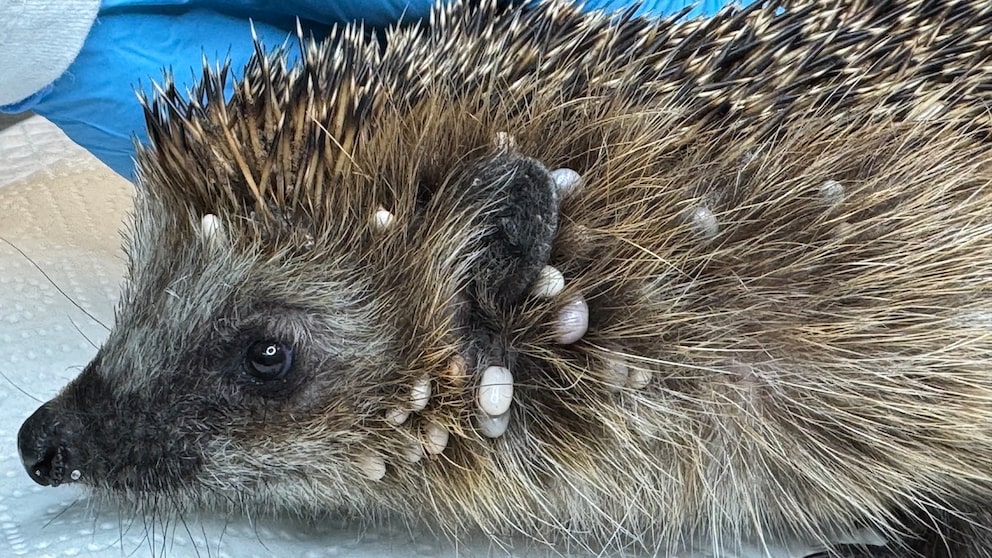
On March 25, 2026, hedgehog lady Uschi was found at a feeding station. The knowledgeable finders of the animal noticed Uschi for a reason: Her body was covered with large ticks. Her finders quickly took the hedgehog lady to the Hedgehog Care Station Rotenburg/Wümme e.V. PETBOOK inquired about how Uschi is doing today.
Hedgehog Lady “Uschi” Deliberately Made Herself Found
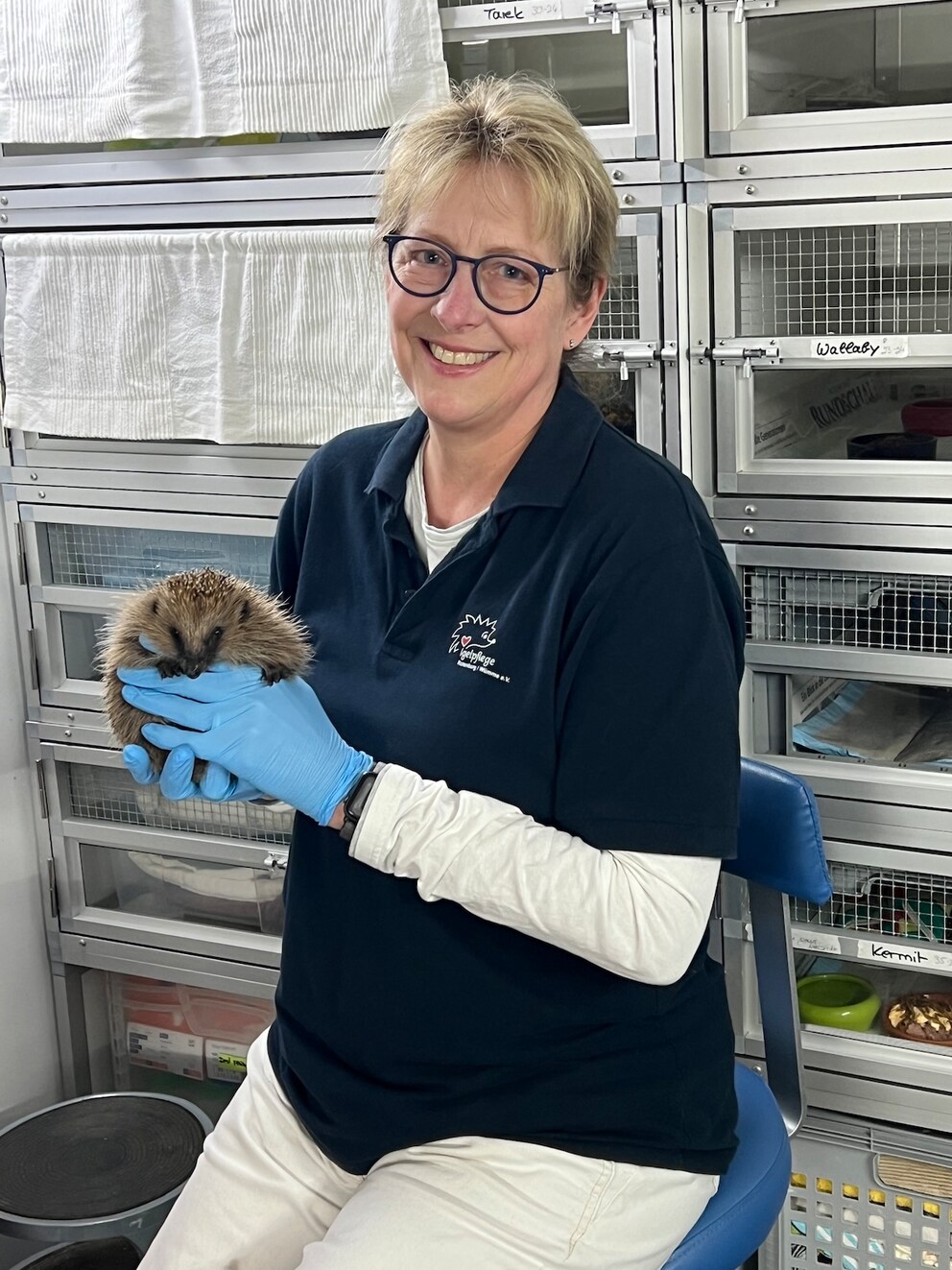
The hedgehog lady Uschi was sleeping in a hedgehog feeding house in Zeven–and apparently deliberately sought help. For Merwel Otto-Link, this is not an unusual case. She is the chairwoman of the Hedgehog Care Rotenburg/Wümme e.V. and runs the station. “She slept in it and obviously made herself found on purpose. This is not uncommon,” she explains. After the discovery, her finders quickly brought Uschi to the Hedgehog Care Rotenburg/Wümme association.
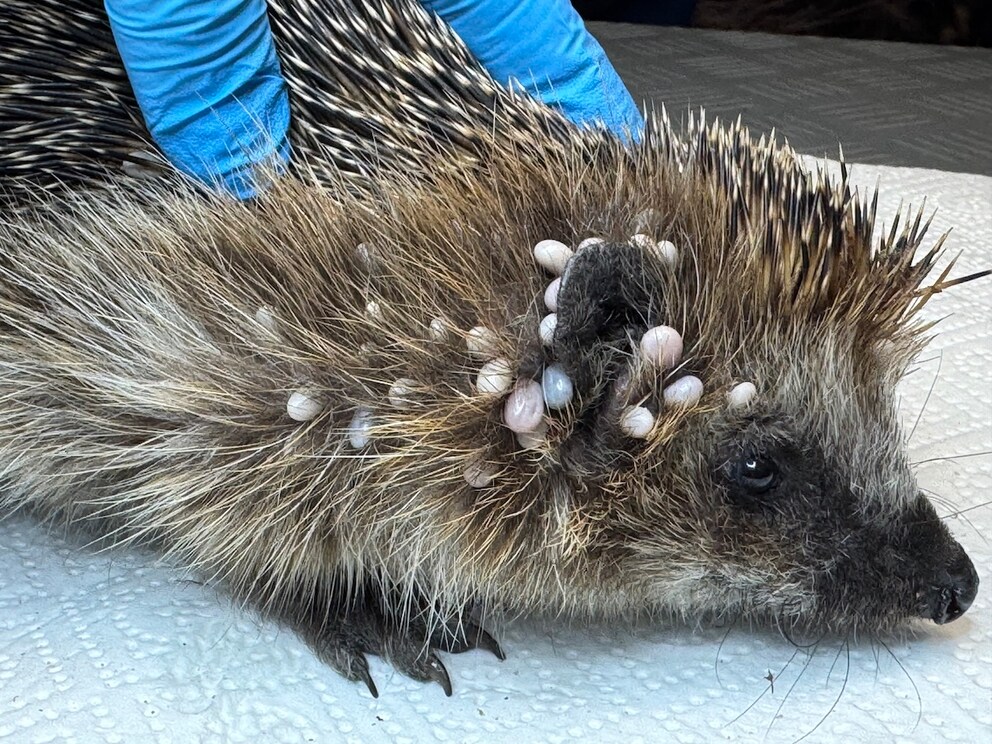
Upon her admission, the full extent was revealed: “Exactly 70 fat ticks, plus numerous tick nymphs and a small abscess on the forehead,” writes Hedgehog Care Rotenburg/Wümme in a Facebook post. And what happened next? PETBOOK asked Hedgehog Care Rotenburg/Wümme how they treated Uschi and how she is doing.
Otto-Link described the treatment as step-by-step: “Ticks are removed individually with special tweezers, we proceed systematically, first the largest ones, and then we assess whether the hedgehog needs a break or if we can continue.”
70 Ticks on a Single Hedgehog–and a Bigger Problem
Seventy ticks on a single hedgehog–what sounds like an extreme case is primarily a clear alarm signal. Such a heavy infestation is far from normal and usually indicates a deeper problem. Experts distinguish between so-called ectoparasites like ticks, which sit on the skin, and endoparasites, which live inside the body, such as in the intestines or lungs.
The hedgehog care station also points this out: “It is to be assumed–and our years of experience confirm this–that an excessive ectoparasite infestation is a sign of a treatable endoparasite infestation.” A stool examination confirmed this for Uschi–she is now being specifically treated for it. Expertise is crucial here, because: “Hedgehog knowledge is required here, as a hedgehog must never be dewormed indiscriminately; it must be treated very specifically and carefully.”
Parasites are fundamentally part of a hedgehog’s life. “Hedgehogs have lived with ectoparasites like fleas and ticks for millions of years, and a moderate infestation is completely normal.” However, it becomes problematic when the ecological balance is disrupted. Due to insect decline, hedgehogs increasingly lack natural food like ground beetles, which would help them keep parasites in check. Instead, they more often resort to earthworms and slugs–”these are the main carriers of sometimes deadly internal parasites.”

Shocking Images: More Hedgehogs Mutilated by Robotic Lawn Mowers
Found a Baby Hedgehog in Your Garden? Here’s What to Do
365 Days in Action: The Team Behind Uschi’s Rescue
Behind cases like Uschi is an association born from private commitment. Merwel Otto-Link began volunteering to care for hedgehogs in 2013. In 2019, ten hedgehog enthusiasts founded the Hedgehog Care Rotenburg/Wümme e.V. Otto-Link highlights how special the station’s work is: “We are the only hedgehog hospital in the north, caring for well over 1,000 hedgehogs annually, and are the only hedgehog station that is a member of the German Animal Welfare Association.”

The work is supported by a large, volunteer team: “Our team consists of about 35 active members, with 3 to 7 (depending on the season) working at the station daily.”
The effort is enormous–”365 days a year, all completely voluntary and entirely funded by donations.” The station is accordingly equipped: “Our station includes, among other things, an intensive care unit, a hospital ward, as well as an outdoor area with 50 hibernation boxes, outdoor enclosures, and training enclosures.”
Also interesting: Why a hedgehog gate in the garden fence can make a big difference
How We Can Help Hedgehogs
But not only hedgehog care stations play a crucial role–gardens and human behavior can also determine whether a hedgehog stays healthy or even survives. According to the station, Uschi’s access to a feeding spot positively affected her condition. However, the hedgehog expert emphasizes: “However, we should all be aware that feeding alone is not enough; it’s like placing an insect hotel in a walled stone garden.” Natural gardens, sufficient hiding places, and especially passages between properties are crucial.
The stations also provide guidance on proper feeding–as mistakes often occur here. “Bird food is completely unsuitable for hedgehogs, as hedgehogs cannot digest it and essentially starve with a full stomach.” Many commercial hedgehog foods are problematic as well. Instead, the station recommends, among other things, canned cat food without sauce and water.
Currently, Uschi is being specifically treated and cared for at the hedgehog hospital. Her case shows how closely health problems in hedgehogs are linked to external factors–especially food shortages and parasite infestations. At the same time, it highlights the importance of the work of specialized hedgehog care stations in providing affected animals with the necessary help in a timely manner.