

June 4, 2025, 4:43 am | Read time: 6 minutes
In the internet, they are promoted as an exciting leisure activity and an opportunity to escape daily life and slow down: alpaca hikes. But how animal-friendly are these events?
Alpaca walks have become a popular leisure trend in recent years–whether as a special experience in nature, a gift idea, or a relaxation program with animal companionship. They are advertised online as a leisure activity and a chance to escape and slow down from everyday life. But while the fluffy animals with their gentle eyes and calm demeanor enchant many people, a critical question is increasingly being raised: Are alpaca walks actually compatible with animal welfare?
What Are Alpaca Walks?
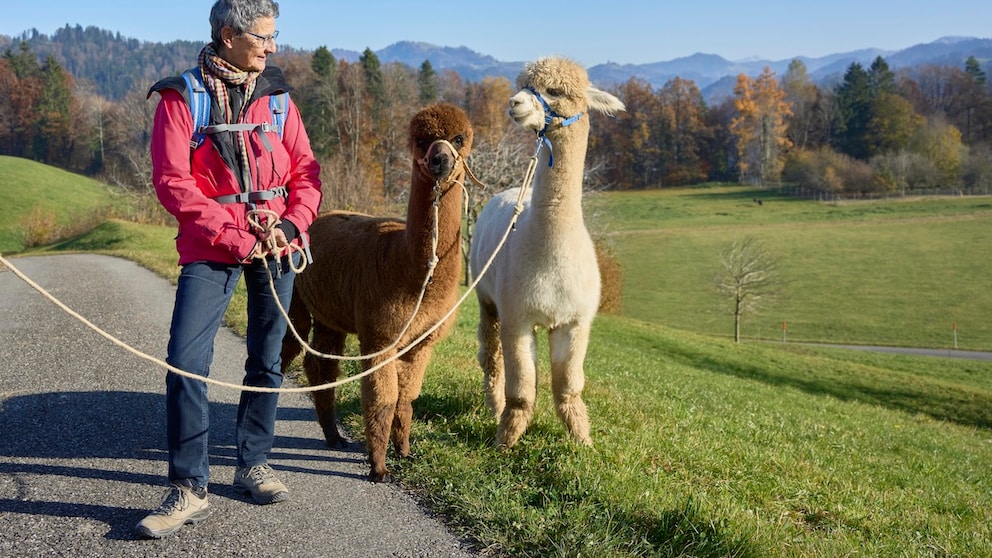
During an alpaca walk, participants lead an alpaca on a halter through forest and meadow paths, usually accompanied by an experienced animal handler. The tours typically last between one and two hours and often include information about the animals and their care. Most providers limit the tours to groups of up to 10 or 15 people, though some offer group sizes of up to 20. Depending on the provider, the minimum age varies between five and twelve years, with children under twelve usually required to be accompanied by a guardian.
The Appeal for People
Alpacas have a calming effect on many people. Their gentle nature, slow movement, and shy curiosity make them seem like ideal companions for nature-based relaxation. Many providers advertise “animal-assisted relaxation” or “mindfulness with alpacas.” Children, seniors, and people with disabilities are also said to benefit from the animals’ calm presence. Often, a slow introduction to the animals followed by a walk is promoted. But this is where the discussion begins.
Between Proper Care and Tourist Strain
Alpacas are originally flight and herd animals, not typical cuddle animals. Even if they seem tame, they often do not particularly like physical contact–petting is uncomfortable for many. They are also social herd animals with a strong need for security and clear structures. Constant contact with changing people, being touched, and being led through unfamiliar environments can–depending on temperament and training–cause them significant stress.
The animal rights organization PETA strongly advises against participating in alpaca walks. They emphasize that proximity to humans can lead to behavioral disorders in the animals, such as BLS (Berserk Llama Syndrome). This disorder is considered incurable, and affected animals are usually euthanized. Additionally, the animals can carry pathogens that are transmissible to humans, posing a higher health risk, especially for children and the elderly.
They also point out the leisurely nature of alpacas and that they are not suited for long walks. They need regular long breaks to eat and ruminate. Another argument against alpaca walks, according to PETA, is that alpacas in Germany are often not kept in a manner appropriate to their species. The animals, originally from the South American Andes, are not accustomed to temperatures warmer than 68 degrees Fahrenheit and actually live on hard, rocky ground. In Germany, they are often too warm, especially in summer, when they quickly suffer from the heat.1
Also interesting: How to Keep Alpacas Properly?
My Personal Experience
Years ago, I received a gift certificate for an alpaca walk and recently redeemed it. I must admit that I approached this experience with skepticism–mainly due to animal welfare concerns. But I wanted to see for myself.
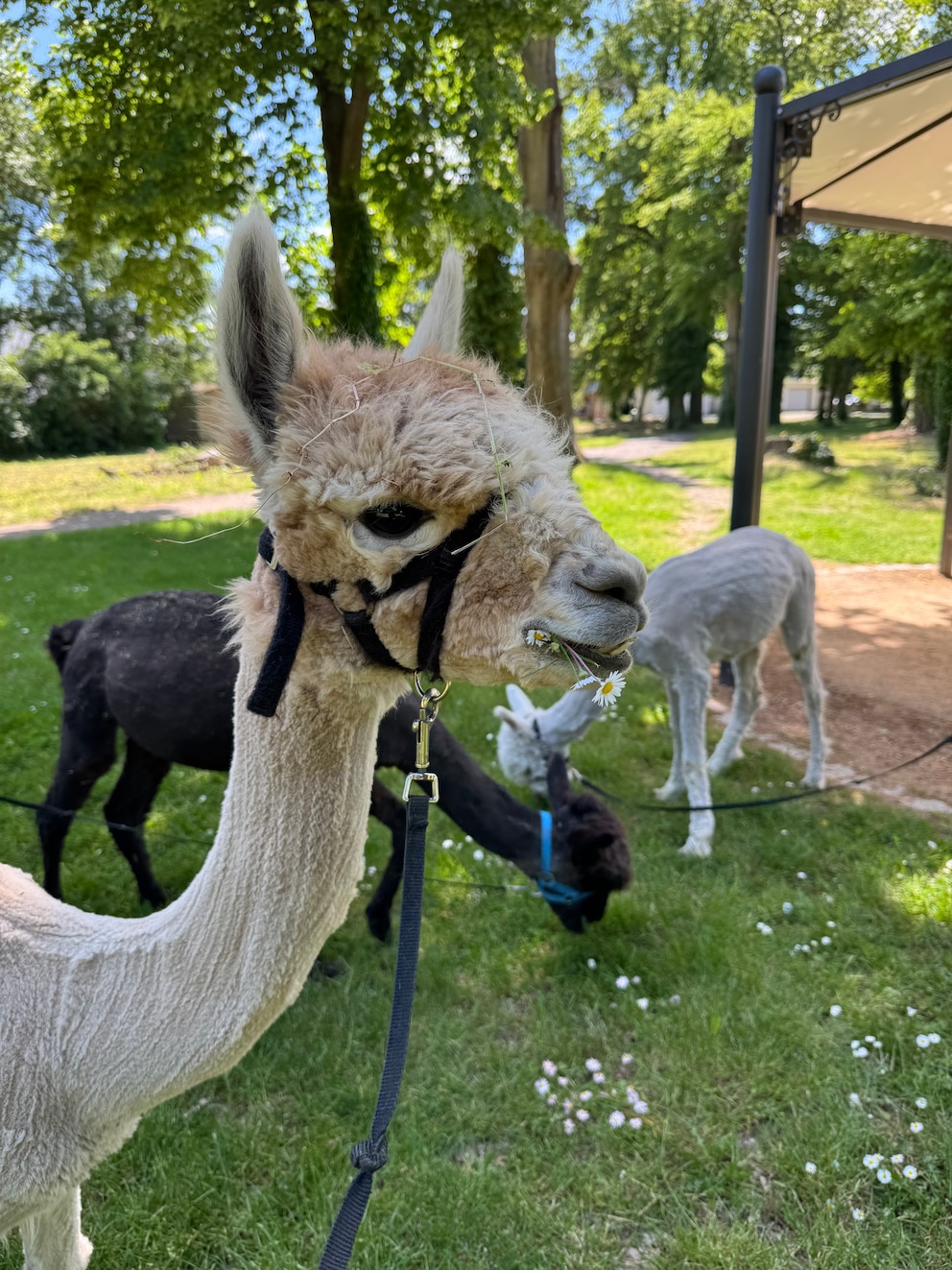
I want to emphasize that I cannot speak for all providers, only assess my experience. First of all: I had imagined something different under an alpaca walk. In my opinion, the term stroll would be more appropriate.
What might be seen as a disappointment is actually positive: My alpaca walk was not a multi-hour hike over rough terrain but rather a leisurely stroll interspersed with many extensive feeding breaks. Essentially, we walked with the alpacas from feeding spot to feeding spot, where the animals then grazed leisurely and extensively.
What I noticed positively was that the alpacas set the pace. When they felt like walking, the people moved too. But if they stopped and grazed for a long time, we were also forced to take a break. This is where the advertised deceleration factor came into play. Our guide repeatedly pointed out that we should follow the animals’ lead and never pull them to get going. Encouraging them would also be pointless–the animals have their own minds and will start moving when they want to.

Dog Psychologist Would Advise Everyone to Spend the Bight in Nature with Their Dog

Expert explains why you should freeze dog ticks after removing them
Unsuitable for Children?
Especially for children, an alpaca walk seems like the ideal leisure activity. They are in nature, moving in the fresh air, and can observe the animals up close. But often, it doesn’t stop at just observing. The temptation to pet the cute-looking animals with their soft fur is great.
During the walk I attended, I experienced it myself. Even though it was pointed out at the beginning that the animals are not cuddle animals and should not be petted, it didn’t take long before some children were petting the alpacas on the head and body. Also, the instruction to walk with the animals rather than lead them was difficult for the children. I often saw them trying to urge the alpacas to move on and tugging at their leashes. Here, the guide’s intervention would have been important.
Some providers specify a minimum age for participation in alpaca walks, which varies between five and twelve years depending on the provider. Children under twelve usually need to be accompanied by a guardian. Nevertheless, I consider this type of walk unsuitable for children. Many children, especially at a young age, are not yet able to meet the animals’ needs or pay attention to them while putting their own desires–such as petting and cuddling the animals–in the background.
If there is also a lack of thorough information about the animals, as was the case with my activity, such a walk can quickly become a disaster–mainly for the animals. And their well-being should ultimately be the focus.
What to Watch Out For
Before a walk, you can obtain information from the respective providers about the care of the alpacas. The most important question to ask yourself in advance is whether the alpacas are allowed to walk in their herd. If this is not the case, it is considered a violation of animal welfare, as the animals suffer greatly without the members of their group. If you really want to see the cute animals up close and participate in an alpaca walk, you should also pay attention to the following points:
- Where do they live?
- How are they cared for?
- What does their daily life look like?
- Do they have places to retreat?
- How often are they used for walks?
Additionally, you can inquire about the group size. The smaller the groups, the less stressful the activity can be for the animals.
On-site, you should pay attention to respectful interaction between people and animals. Ideally, trained staff should inform about the animals and their needs. The focus should always be on the well-being of the animals; they should be seen as living beings and not as event material, and the activity should in no way resemble a petting zoo.