

October 20, 2026, 3:20 pm | Read time: 6 minutes
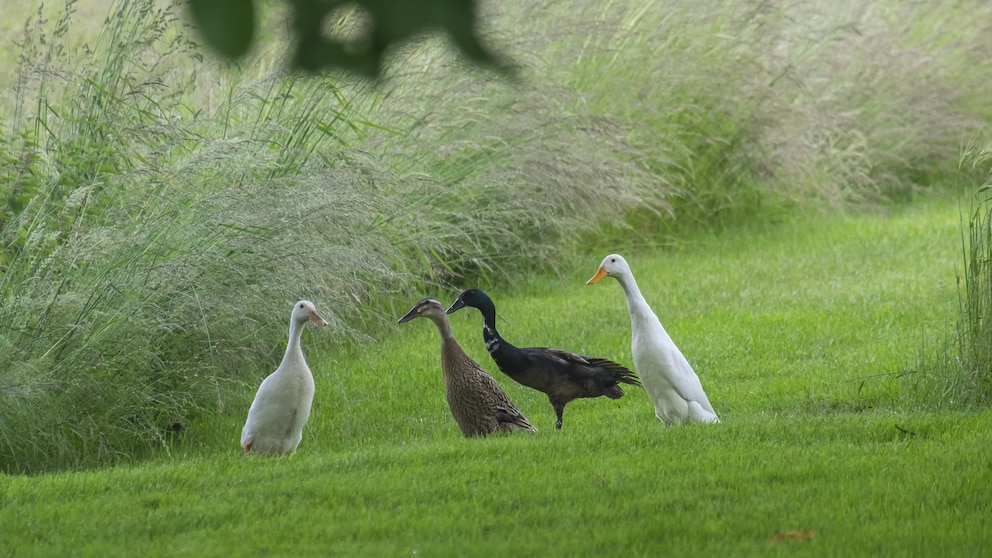
Upright like wine bottles, they waddle through the garden and are considered living snail traps–runner ducks remain popular with garden owners. However, just having a few ducks in the garden isn’t enough. The animals need space, water, a secure shelter, and registration with the veterinary office. PETBOOK explains what interested parties need to know before purchasing.
How Many Runner Ducks Should You Keep?
Runner ducks are herd animals and should not live alone. It’s recommended to keep at least a pair, preferably a small group. In the group, ducks should be in the majority, such as one drake with three to four ducks. This is because drakes can become quite assertive during mating season, so multiple females help distribute the attention. If you don’t want offspring, you can also keep a group of only drakes or ducks.1,2,3
How Much Space Do Runner Ducks Need?
Opinions vary widely here. While one person considers at least 500 square meters necessary for a pair in the garden, another suggests at least 100 square meters per animal. Others mention up to 1,000 square meters for a pair. The guideline is: the larger the area, the better. A small townhouse garden is unsuitable for runner ducks. Additionally, the animals should not be kept without a fence. The birds generally cannot fly; their wings are simply too small relative to their upright bodies.4
Do Runner Ducks Need a Pond?
Not necessarily, but they do need water for bathing. A pond is ideal but shouldn’t be too small, or it will quickly become a mud hole. As an alternative, tubs or kiddie pools are sufficient, as long as the animals can safely get in and out, for example, via a stone. Fresh drinking water should also be available at all times, as the animals use it to rinse snail slime from their beaks and throats.
Also interesting: 7 popular farm animals for the garden
How Loud Are Runner Ducks?
Runner ducks are not completely silent. The females, in particular, quack audibly, while drakes make only soft sounds. If you live close to neighbors, you should discuss the purchase with them beforehand. The local authorities can also clarify whether ducks are allowed on the property.5
What Should the Shelter Look Like?
At night, runner ducks need a lockable shelter to protect them from foxes, martens, and birds of prey. It should offer at least half a square meter per animal, with the floor covered in straw or dry meadow clippings. The fence is described very differently in guides, ranging from 80 centimeters to 1.5 meters to two meters, as startled ducks can flutter more than a meter. It should be tightly meshed, as ducks quickly find holes. A net with a mesh size of less than ten centimeters over the enclosure helps protect against birds of prey.6
What Do Runner Ducks Eat, and How Effective Are They Against Snails?
The animals find a large portion of their food themselves. Additionally, they receive grains, duck feed, or poultry feed about twice a day, along with greens like lettuce or nettles. Small stones or poultry grit aid digestion, and feed lime supports egg production. No bread and no avocado.
Runner ducks do eat slugs, including the Spanish slug. They rarely scratch the ground, but they are not a miracle solution. They eat lettuce, young vegetables, and seedlings, and they sometimes trample new plantings. Slug pellets and other pesticides are forbidden in the garden.
Also interesting: Slug pellets can be deadly for dogs and cats
On an area of about 1,000 square meters, a pair can largely rid the garden of slugs. For 5,000 square meters, ten to twelve ducks are recommended.
How Many Eggs Do Runner Ducks Lay, and How Long Do They Live?
Many runner ducks lay 150 eggs or more per year. However, they stop laying in winter. The eggs should be thoroughly cooked before eating. Their life expectancy is about 12 to 15 years. Those who acquire runner ducks take on a long-term responsibility.
What Do Runner Ducks Cost?
The initial cost is low: a one-year-old drake costs about 15 euros, while a one-year-old duck is around 20 euros. Chicks cost approximately five euros. Expenses increase with the shelter, fence, feed, bedding, water source, and veterinary costs. This includes deworming twice a year. Owners should also find a veterinarian early on who has experience with waterfowl.
How Do Runner Ducks Survive Winter?
Runner ducks are quite resilient. In winter, they mainly need a dry, straw-insulated shelter and access to fresh water. Supplementary feeding is especially important in the cold season, along with greens and grit. The shelter also protects the animals from predators and severe frost.
Also interesting: Chickens in the garden–what owners really need to know
Common Beginner Mistakes
- Keeping the animals individually
- Too little space or no fence
- A shelter that wild animals like foxes and martens can break into
- A water basin that’s too small and quickly becomes dirty
- Too high expectations for snail control
- Slug pellets and other poisons in the garden

Hedgehogs Need Year-Round Support–Here’s How to Help

Slug Bait Can Be Deadly for Dogs and Cats
What Are the Responsibilities of Owners?
Even a small hobby farm must be registered with the veterinary office. According to the state of Brandenburg, this explicitly applies to ducks. Additionally, a stock register must be maintained, listing arrivals and departures.7
Due to avian influenza, hygiene rules apply: feed, bedding, and water must be inaccessible to wild birds, dogs, and cats should be kept away, and new animals should be quarantined for a few days initially. If more than two percent of losses occur within 24 hours, owners must immediately contact a veterinarian or the veterinary office. Different authorities are responsible depending on the state. Additionally, owners should check with the local authorities whether ducks can be kept and with the building office whether the shelter requires a permit.
Where Can You Find Reputable Breeders?
One contact point is the Special Association of Runner Duck Breeders in Germany. It publishes a member directory on its website.8 The animals should not be purchased from markets, exchanges, or mobile vendors, as this is not recommended due to avian influenza. Fall is considered a good time when the animals are a few months old. Chicks should not be separated from their mother too early. Artificially raised animals should be at least six to eight weeks old.