

November 18, 2026, 3:47 pm | Read time: 3 minutes
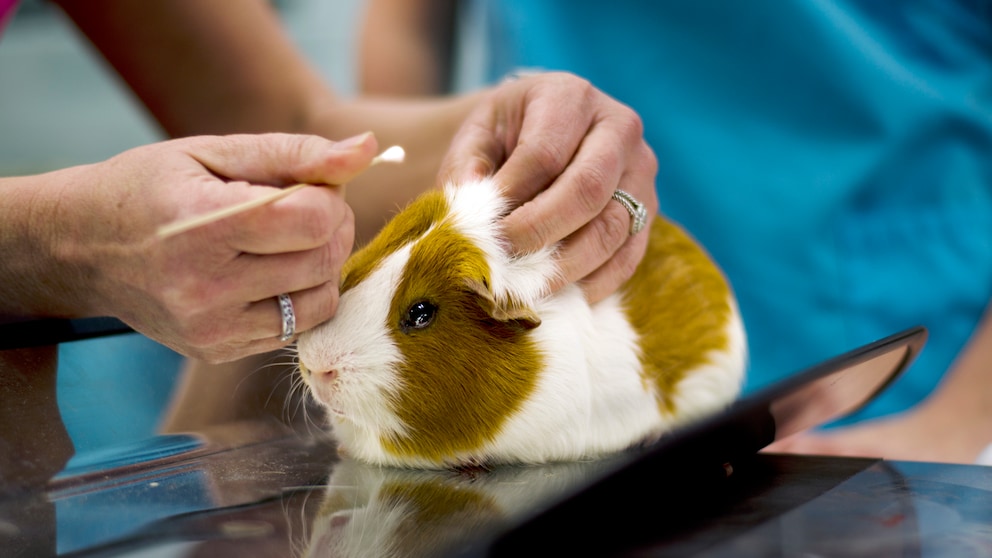
The guinea pig is constantly scratching, its fur appears dull, and there are bald spots on its head: Lice could be the culprit. These tiny parasites are harmless to humans but annoying and even dangerous to guinea pigs if heavily infested. PETBOOK explains how to identify them and what owners need to do.
What Are Lice?
Lice are small, wingless insects that live on a specific host. In guinea pigs, they are one to two millimeters in size. Known species include Gliricola porcelli, Gyropus ovalis, and Trimenopon hispidum. They do not suck blood but feed on skin flakes and sebaceous secretions.1,2
How Do Guinea Pigs Get Infected?
The parasites move from animal to animal, so other guinea pigs in the same enclosure can also become infected. According to the University of Missouri, this occurs through direct contact and mutual grooming. Outside the host, lice survive for at most about two weeks. However, eggs or larvae can enter the enclosure with hay.3
The risk increases with poor hygiene in the enclosure, too many animals in a small space, and poor fur care. Long-haired guinea pigs are more frequently and severely affected. Infestations also occur more often in outdoor housing and increase during the cold fall and winter months.
How Can You Identify Lice?
A sign is dull, unkempt fur. In severe infestations, itching, hair loss, and scaly or bloody skin patches occur, especially on the head and front body area. Veterinarian Julia Striegl also mentions flakes behind the ears, restlessness or apathy, and weight loss. In mild infestations, the animals often show no signs.
Also interesting: How to Recognize Pain in Small Animals
Lice and their eggs (nits) can usually be seen with the naked eye, but a magnifying glass provides a better view. They are mainly found on the head, back, and around the anus.
How Does the Veterinarian Diagnose It?
The veterinarian examines the skin and takes samples if necessary, such as with a transparent adhesive strip or by plucking hairs. Under a microscope, they can see if lice or nits are present. They take several samples from different body areas because even a few lice can cause severe itching.
Also interesting: How to Recognize a Good Veterinarian
How Fleas Differ Among Humans, Dogs, and Cats and Whether They Are Transmissible

The 7 Most Common Diseases in Guinea Pigs
How Are Lice Treated?
The veterinarian prescribes a remedy against the parasites, such as a spray or spot-on. The spray is not applied directly to the animal but is given to a gloved hand and massaged into the fur. The correct amount is important, as an overdose can harm the animal. The treatment lasts at least three weeks and usually needs to be repeated to kill the newly hatched lice from the nits.
Additionally, the following applies:
- Treat all guinea pigs and rabbits in the same enclosure.
- Replace all bedding.
- Thoroughly clean the enclosure and accessories such as sleeping houses, brushes, and combs.
- Only shear in severe cases; according to Striegl, this is rarely necessary.
Also interesting: What to Consider When Setting Up a Guinea Pig Enclosure
Untreated, the infestation can be fatal. With proper treatment of all animals and thorough cleaning, the prognosis is good, according to the veterinarian. And for those worried, rest assured: Lice are not contagious to humans.
How to Prevent It?
Owners should avoid overcrowding and regularly change water, bedding, and hay. Old food should be removed. The enclosure and accessories should be cleaned regularly, and long-haired guinea pigs need regular fur care.