


December 4, 2025, 9:58 am | Read time: 7 minutes
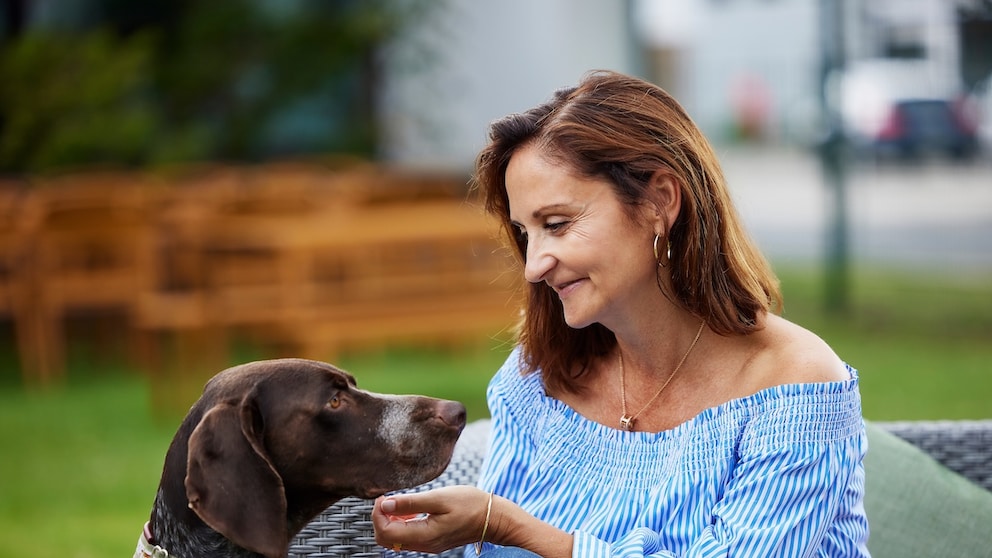
Carmen Borsche leads the DACH operations of Nestlé Purina PetCare, combining economic responsibility with genuine love for animals. In an interview with PETBOOK, she explains why research is essential for pet health, how Purina drives innovation and sustainability, and why animals are a personal passion for her, not just a professional one.
“I am an absolute animal freak”
PETBOOK: Ms. Borsche, how did you come to work for Purina?
Carmen Borsche: “I am truly a ‘Nestlé product.’ I started there as a trainee, originally planning to move on after two or three years. But Nestlé kept offering me exciting opportunities, so I stayed. Most recently, I was the managing director for the company’s chocolate business in Germany and Austria.
And because I am an absolute animal freak—I rescue every bee, every beetle—Purina has always been my dream. I’ve been living this dream job for two years now, and it is exactly what I had hoped for.”
Carmen Borsche: “My first ‘heart animal’ was Hobsi”
What excites you most about your work at Purina?
“The purpose. My work at Purina is closely aligned with my core interests. Our social commitment to people in difficult life situations is very important to me. Pets can be a great support, especially for mental health issues, and we advocate for that. I also enjoy the highly digital nature of our work; we collaborate a lot with start-ups and have our own digital platforms centered around life with pets. This makes my work very diverse and meaningful.”
You say you are an animal person. How did that start?
“Since my childhood. I grew up with hamsters, rabbits, and budgies—only a dog was never an option, as it would have been too much work for my parents. My first ‘heart animal’ was Hobsi, a supposed dwarf rabbit that turned out to be a giant farm rabbit. He escaped from his cage and ate all the cacti on the windowsill. Fortunately, nothing happened—except that we all had a good laugh.”
“We focus on long-term partnerships”
Do you have pets today?
“Until recently, I had two British Shorthair cats, brothers—unfortunately, one no longer lives. But I am neither a cat nor a dog person; I love both. As soon as my lifestyle allows it again, I will definitely have a dog.”
How much can you incorporate your passion for animals into your work?
“Very much. We develop our European strategy together with the managing directors of the individual countries and the European leadership team. Then we implement it in the DACH region—with our own projects. We decide locally what suits us: whether it’s partnerships with animal shelters, the ‘Animals Build Bridges’ initiative, or our long-standing partnership with Vita Assistance Dogs. To truly make a difference in the important relationship between pets and people, we focus on long-term partnerships.”
“We see a divide due to inflation and crises”
How has the pet market changed in recent years?
“Corona was the game changer. Suddenly, everyone wanted a pet—the markets were swept clean. After that, the situation stabilized; the market for cat products is still growing slightly, while the dog segment is stagnating.
At the same time, we see a divide due to inflation and crises: Many have to save and opt for cheaper products, while others consciously invest in premium food. Pets are family members—you can see that in purchasing behavior.
Another trend: People are transferring their own dietary habits to their pets. Plant-based proteins or functional nutrition are becoming increasingly important. And, of course, online retail is growing enormously.”
“We are developing strongly in the health sector”
What is Purina currently working on intensively?
“On the one hand, ‘extras’—products for pampering moments, such as our new liquid snacks that cats lick from your finger. This closeness between humans and animals is central.
On the other hand, we are developing strongly in the health sector: probiotics, food for older animals, food for sensitive digestion. And we have just launched ‘Purina ONE HydraLife,’ a product for better hydration in cats—many don’t drink enough.”
Does Purina conduct its own research?
“Yes, worldwide. One of our research centers is in France. There, we study food acceptance, nutrient effects, and health aspects. Products like ‘Pro Plan LiveClear,’ which helps people with cat allergies by neutralizing the proteins in saliva that trigger allergic reactions, are born from these insights. A true innovation developed at Purina.”
“In the long term, we are also focusing on plant-based proteins”
An exciting breakthrough. Is further research being conducted on this?
“Yes, we work closely with veterinarians, for example, on variants for animals with certain diseases—like kidney problems. Research and science are always at the center for us.”
Many consumers wonder: How sustainable is pet food—especially when it comes to meat?
“It’s important to note: No animals are slaughtered specifically for our production. We use by-products of food production—parts that would otherwise be discarded. This is resource-efficient.
In the long term, we are, of course, also focusing on plant-based proteins and insect protein as alternatives. The latter was not well received by consumers when we tested a product on the market a few years ago, but we are staying on it. We also invest in environmental projects—such as the regeneration of marine habitats or regenerative agriculture. We all depend on a healthy Earth and oceans. That’s why we contribute to ensuring that we, our children, and our pets can continue to live well on our planet in the future.”
“We place great importance on scientific foundation”
And lab-grown meat?
“We are watching this very closely, especially in the U.S. But we remain scientifically cautious—the health of the animals comes first.”
How long does it take for a new product to hit the market?
“Depending on the level of innovation: Basic research can take four to five years, including studies and acceptance tests. Smaller adjustments are faster—sometimes in less than a year. Start-ups are often more agile, but we place great importance on scientific foundation.”
How is the collaboration with start-ups structured?
“Very partnership-oriented. Many young companies are grateful when we support them in distribution and marketing through our start-up support program, Unleashed. In turn, we benefit from their speed and innovative strength. It’s not a competition; we learn with and from each other.
Our subsidiary Terra Canis also started small with an innovative idea—today we work together as equals, complement each other perfectly, and the collaboration is really enjoyable.”

These Pet Products Surprised Us the Most at Interzoo 2024

“Without My Dog, I Wouldn’t Be Sitting Here Today”
Longevity has also arrived in the pet sector
Are there differences between Germany, Austria, and Switzerland?
“Yes. Germany and Austria are similar—price-conscious but quality-oriented. In Switzerland, purchasing power is higher, and people pay even more attention to quality and veterinary products. Promotions play a smaller role there than in Germany, but we also see a lot of price dynamics in the market.”
What topics will shape the pet industry in the coming years?
“Clearly, sustainability—both ecological and social. Also, the topics of longevity—a long, healthy life—for both humans and animals. And because market growth in volume is stagnating, premiumization and additional products will become more important.”
Horses would make good leaders
Is there a heartfelt topic you personally want to advance?
“Yes, social sustainability. I want to raise awareness of mental health and the role of animals in it. Our projects—such as with therapy dogs in children’s wards—show how much animals can achieve. I want to promote that even more.”
Finally, a personal question: If you had to let an animal take your position for a day, which would it be?
“(laughs) A horse! My daughter has one, and recently, when we were both sad, it came to us and laid its head on our shoulders. For ten minutes. Horses have an incredible sense of emotions—just like good leaders. In leadership, you need empathy and emotional intelligence—that’s why I would choose the horse.”