


October 13, 2025, 12:46 pm | Read time: 5 minutes
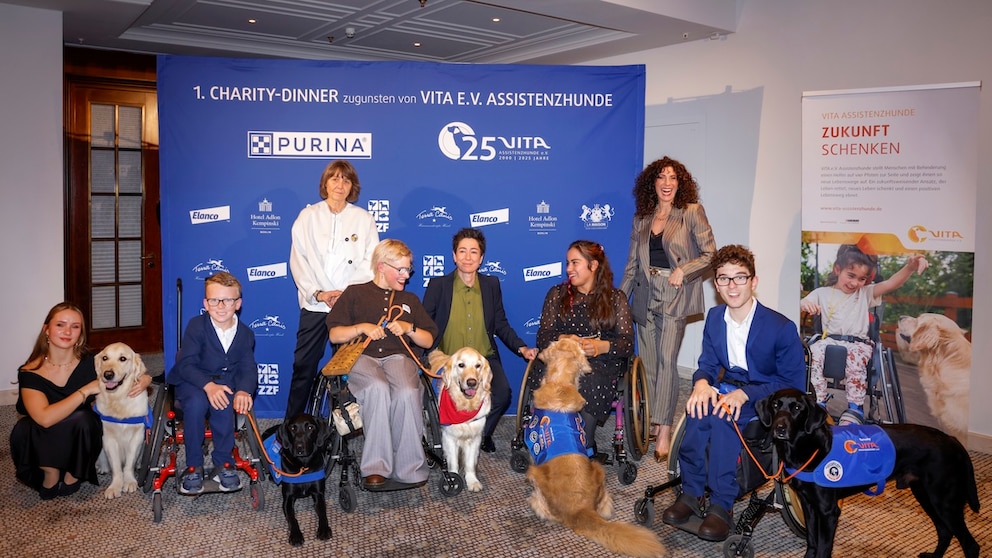
“With Haydn, I learned to be someone again” – this is just one of the statements that show: Dogs can help people start a new life. And that’s exactly what the organization Vita Assistance Dogs is about. The organization held a charity dinner at the Adlon Kempinski Berlin on October 11, 2025, to celebrate its 25th anniversary.
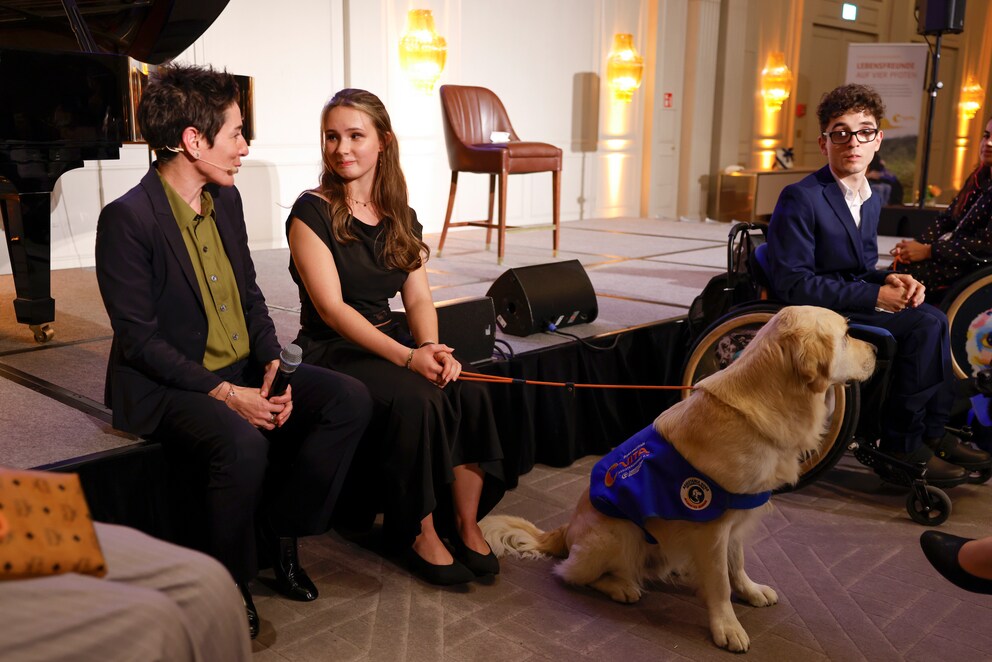
The mission of Vita Assistance Dogs e.V. is to help people with disabilities gain more independence, security, and quality of life through specially trained dogs. The dinner was almost secondary, as the stars of the evening were the human-dog teams and their stories. TV host Laura Wontorra led the panel discussion on “What potential does the human-dog relationship offer in a changing society? How can closeness, trust, and reliability between humans and dogs provide support and strengthen mental health?”
“The Dog Comes to the Foreground, the Wheelchair to the Background”
Since its founding in 2000, Vita Assistance Dogs e.V. has been providing children, teenagers, and adults with disabilities with a helper on four paws. But today—25 years later—the topic seems more important than ever. “There is a coldness that can be felt,” begins Tatjana Kreidler, founder and first chairwoman of the organization. The world has changed. All the more reason to fight for the positive—and dogs play a crucial role in this.
The helpers on four paws are more than assistants who pick things up from the floor or help open drawers at home. “A dog can often achieve more than a human. It opens hearts and brings lightness to difficult situations,” as Kreidler explained in a PETBOOK interview last year.
But the most important thing is: “They open doors—to society.” Through the dog, people move from the fringes of society back into the center of life. “The dog comes to the foreground, the wheelchair to the background,” explains Frieda. The teenager describes herself as a “Vita veteran,” as she has been supported by the organization for 16 years. Haydn is already her second assistance dog.
“Only When the Dog Is Well, Is the Human Well”
“I used to be incredibly anxious,” says Frieda. She was especially afraid of large animals. An assistance dog—and then a Golden Retriever? She didn’t want any of it. But the four-legged friend quickly became her best friend and comforter. Frieda was bullied a lot at school. “I knew when I came home, someone was always there.” But not only the dogs—the organization itself—plays a crucial role for those affected, as Frieda emphasizes: “Vita was a place where I could be myself.”
This holistic concept is important to Tatjana Kreidler. Once someone is accepted by Vita Assistance Dogs, they receive lifelong support. This quickly creates a family-like feeling. Kreidler emphasizes that the dogs are not exploited. “Only when the dog is well, is the human well,” she stresses.
“With Dogs, You Can Just Be Naked”
Dogs can often open doors that would remain closed to other people. Josephine Scholz is a child and adolescent psychotherapist at the Trauma Clinic for Children and Adolescents at Charité – Universitätsmedizin Berlin. She works mainly with children and teenagers with traumatic experiences. “These children were unreachable, their trust in the world lost,” Scholz describes in the evening’s discussion. But when she brought her dog, Cindy, joy returned to the room.
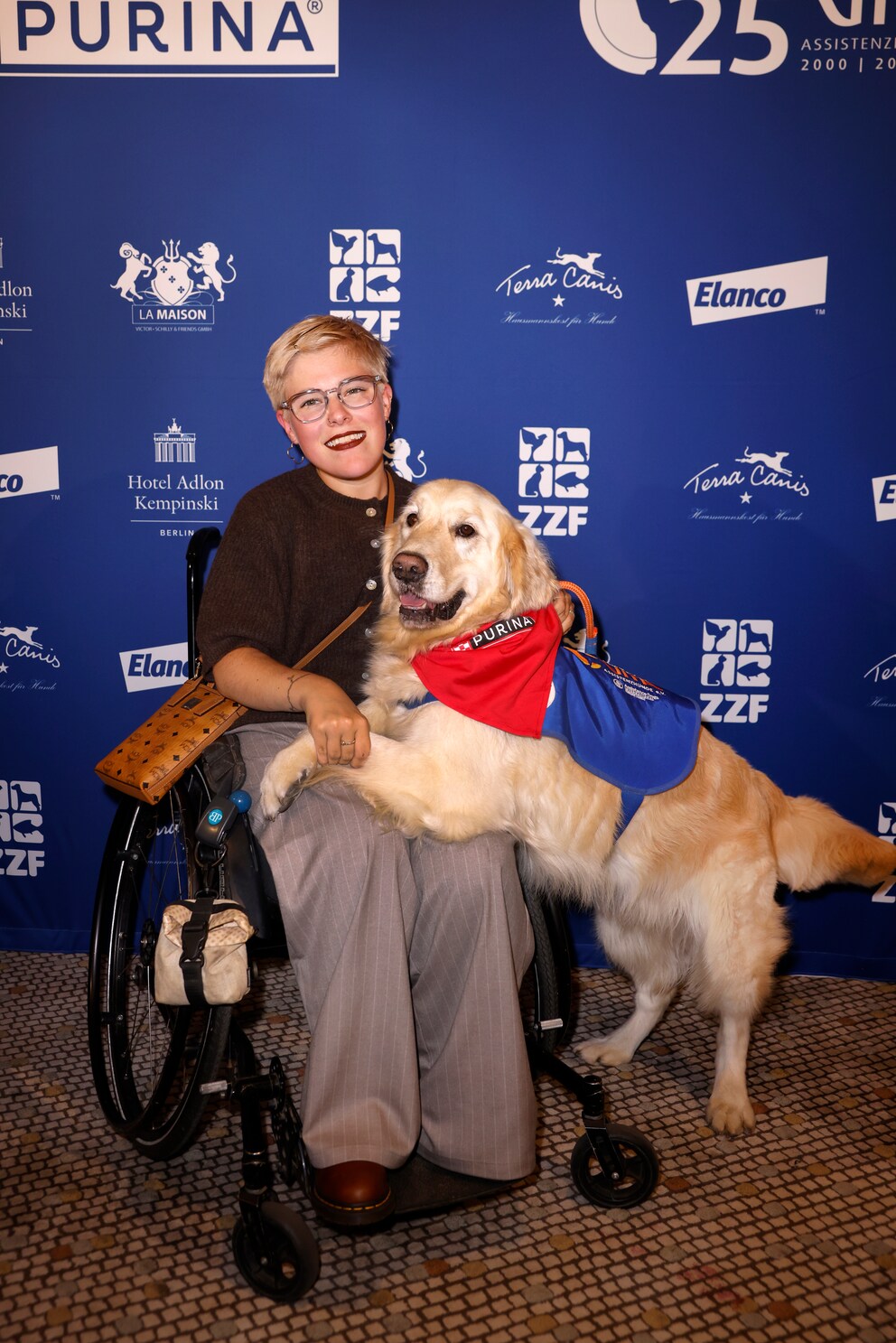
“With dogs, you can just be naked—be who you are,” summarizes patron Dunja Hayali about the effect the four-legged friends have on people. They also draw people back into everyday life. This was also the case with Frida. Unlike Vita veteran and namesake Frieda, the teenager has only been part of the Vita teams for three years. Before her assistance dog Bryan was by her side, she had severe panic attacks and wouldn’t leave the house. With Bryan, she found her way back to life, as he, like any four-legged friend, needed to be walked daily.

“Keeps Every Secret to Itself” – How Therapy Dogs Help Traumatized Children

Dunja Hayali: “Dogs Are Not Toys You Can Just Toss Aside”
“I’m Sure I Wouldn’t Be Sitting Here Today Without My Dog”
Sitting alone on a stage in front of hundreds of people and telling her story would have been unthinkable a few years ago, as Frida recounts. “I’m sure I wouldn’t be sitting here today without my dog,” she says. Frida has since graduated and is studying psychology.
There are an incredible number of people today who suffer from loneliness and depression, and increasingly, children are affected, as Carmen Borsche points out. She is responsible for the Nestlé Purina business in Germany, Austria, and Switzerland. The world’s leading pet food manufacturer has supported the organization almost from the beginning and is a “heartfelt partner” of Vita Assistance Dogs e.V. “The dogs enable people to be human again,” says Borsche. But we as a society must also stand up and talk about it.
“Only Dogs Are Capable of This”
Kreidler also wishes for society to open up more and for more people living on the fringes to receive such dogs. Currently, the organization trains about six dogs a year. That sounds like a small number, but the training involves enormous effort. Not all puppies are suitable—and before they can even start training, they spend two years in a host family.
Those who pass the training are paired with their potential human. The dog-human teams spend six weeks together. In total, costs of 58,000 euros per dog arise—all financed through donations, as there is no payment from health insurance in Germany. But the Vita teams show how important the impact of assistance dogs can be on the lives of people with disabilities, as well as those with mental illnesses. Child and adolescent psychotherapist Josephine Scholz is certain: “Only dogs are capable of this.”