


November 24, 2022, 4:08 pm | Read time: 16 minutes
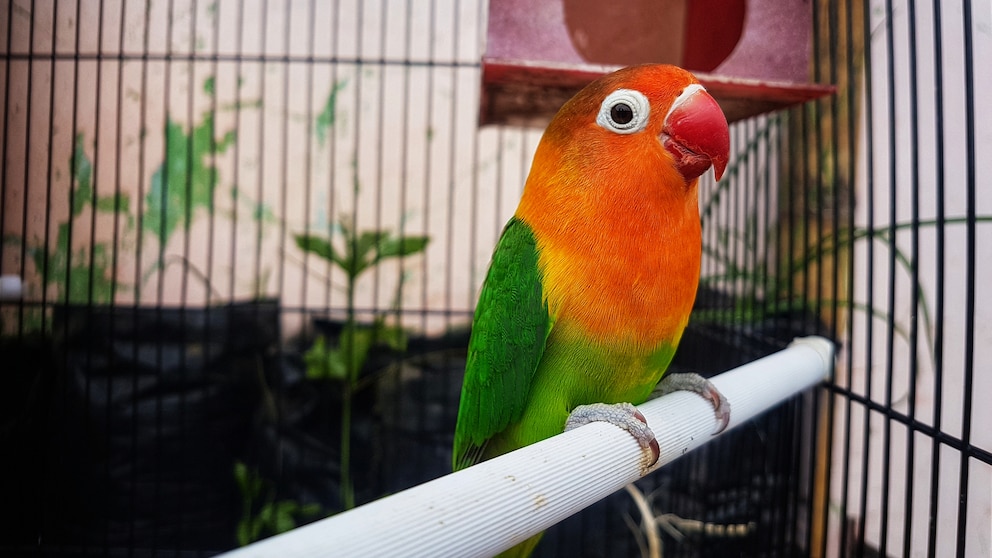
If you’re looking to buy a birdcage for small ornamental birds, don’t just focus on the price. To ensure your feathered companion feels completely at home, certain quality features must be met. PETBOOK highlights which features these are and which birdcages are recommended for parakeets, canaries, and finches.
Singing, fluttering around, puffing up: When a budgerigar behaves this way, it’s a clear sign that it feels comfortable. To ensure a parakeet, canary, or any other small ornamental bird kept indoors thrives, you must create an environment that contributes to its well-being. The cage plays a significant role in this. However, when you want to buy a birdcage, you’ll quickly realize: The selection is vast. PETBOOK knows what to look for when purchasing and which models are recommended.
Overview
- Tips for buying a birdcage
- The right size for the birdcage
- The number of doors is also important
- Customization options to modify and adapt the cage
- Recommended birdcages in comparison
- Other birdcages at a glance
- What to consider when introducing multiple birds
- How to best clean the birdcage
- Why location changes are important
- Don’t neglect the spacing of the bars
- Conclusion on birdcages for ornamental birds: Even affordable models pay off
- Sources
Tips for buying a birdcage
Parakeets like cockatiels or budgerigars, canaries, and parrots are ornamental birds. According to the German Animal Welfare Association, this term includes all bird species “kept in human care without serving the purpose of food production.” To ensure the birds feel completely comfortable and stay healthy, owners must pay attention to proper care.1
Proper care for ornamental birds means that social animals should ideally be kept in groups, or at least in pairs. They also need the opportunity to fly freely in the room daily to satisfy their natural urge to fly. Among many other factors that influence how well parakeets and other birds fare, a cage tailored to their needs is essential for proper care. Therefore, anyone considering buying a birdcage should not only look at the price but also consider the following quality features.
By the way: Large parrots are also considered ornamental birds. However, their requirements for proper care differ due to their size from other ornamental birds. Therefore, the quality features to consider when buying a birdcage apply to parakeets, canaries, finches, mynahs, and other small ornamental bird species.
The right size for the birdcage
To prevent diseases like footpad ulcers, which can arise from a lack of movement, ornamental birds should have enough space in the cage. For example, they should be able to fly from one perch to another instead of just hopping from perch to perch.
Regarding the care of finches—especially zebra finches—a group of experts on “keeping small birds”¹ established in a 1996 report that a minimum cage size of 80 x 40 x 40 cm (length x height x width) is required for birds up to 13 cm in size. Ornamental birds larger than 13 cm must be kept in cages with a minimum size of 120 x 50 x 50 cm. The German Animal Welfare Association, however, states that cage dimensions should not be less than 150 x 80 cm. The cage’s base area must be increased accordingly if more than two birds are kept together. To ensure proper care, the general principle is: the bigger the cage, the better. Additionally, a proper cage should be longer rather than taller, as birds take off forward or horizontally when they fly.
The number of doors is also important
Daily free flights are essential for proper ornamental bird care. The birds often move between the inside and outside of the cage. To make this easy, a birdcage should have as many doors as possible. Doors of different sizes are also advantageous, as large entrances allow birds to fly out easily, but can also be problematic if the owner just wants to quickly adjust a perch or fill a food bowl.
Small doors are beneficial in such cases. Naturally, all cage accesses, whether large or small, should be securely lockable to prevent the birds from escaping unintentionally. Ideally, the doors can also be fixed at a 90-degree angle to allow the birds to approach them easily.
When the birds are allowed to move freely in the room, they also use the cage for playing, climbing, and observing. They climb along the outer bars or sit on the cage. Therefore, a door on the top of the cage that can be converted into a perch or the option to attach additional perches near the doors is recommended, though not essential.
Customization options to modify and adapt the cage
Many birdcages come “furnished” with perches, food bowls, water dispensers, and toys. However, not every cage setup is suitable or appropriate for ornamental birds. Especially perches made of plastic or round-ground or turned wood are not suitable for ornamental birds due to their uniform shape and because they are often too thin.
Because: If the birds regularly sit on the thin, smooth perches, this can lead to footpad ulcers, joint, and foot diseases due to improper foot loading, according to ornamental bird owners in online forums. Therefore, the supplied perches in birdcages should be easily replaceable so they can be swapped out for more suitable inventory. Ideal perches for ornamental birds are natural branches, as their uneven surface and diameter encourage the birds to continuously adjust their foot position.
Plastic food bowls are also standard in many birdcages. However, they are unsuitable for keeping ornamental birds because they are difficult to clean, increasing the risk of bacterial infection. Additionally, the supplied plastic bowls are often hung from the outside of the cage. This is supposed to have the advantage that the bowls can be filled from the outside without having to reach into the cage. However, these bowls can pose a risk of injury, as the birds can crawl into them and get stuck. For this reason, supplied plastic food bowls—especially those hung from the outside—should be replaced immediately, preferably with hygienic stainless steel versions mounted inside the cage. Openings in the cage bars can then be closed with wire. If food bowls are included in the birdcage set, make sure they are easy to remove when purchasing.
Recommended birdcages in comparison
If you’re looking to buy a birdcage, there are a few things to consider. It’s important to keep the small birds properly and provide them with a cozy home. Below, you’ll find out which models are worthwhile and what you need to consider regarding the most important features, such as size, doors, customization options, bar spacing, etc.
Vision II Model L01
The birdcage is equipped with food and water bowls accessible from the outside, as well as plastic bird perches. There are also carrying handles on the sides, making it easy to change the cage’s location. The base of the cage is made of plastic and is particularly deep, so even if finches, budgerigars, and canaries scratch at the cage floor, no sand lands outside the cage.
Pros and Cons
The Vision II Model L01, with a size of 78.7 x 43.2 x 55.9 centimeters (cm), is just suitable for two small ornamental birds less than 13 cm in size—if you follow the guidelines of the expert group on the proper care of birds2. The recommendation of the German Animal Welfare Association, which sets a minimum cage size of 150 x 80 cm, is clearly undercut by this cage. Another disadvantage is the lack of a pull-out drawer, which would allow for easy sand replacement. To clean, the wire cage must be removed from the plastic base, which is quite cumbersome.
On the positive side, the doors remain in a 90-degree position when opened, allowing ornamental birds easy access. Additionally, the bars are coated with heat-hardened epoxy powder, ensuring that the birds are not poisoned if they nibble on the bars. The supplied plastic food bowls and perches can be easily removed.
Yaheetech Birdcage with Wheels
The Yaheetech birdcage with wheels features six wooden perches and eight plastic bowls for food and water. To easily fill the bowls hanging inside from the outside, this cage has lockable food doors. They prevent birds from getting trapped or escaping during feeding. A drawer allows for easy cleaning of the cage. Under the cage is a removable base with a shelf where food and bird sand can be stored.
Pros and Cons
A negative aspect of this birdcage is the vertical orientation of the bars, which can be challenging for older or mobility-impaired birds. Although the cage has a drawer that makes cleaning easier, it is very thin, so sand can quickly land on the floor when changed or when the birds play in it. On the positive side, the size and height of the cage are particularly noteworthy. The two large and easily lockable doors also make it easy for birds to fly in and out. However, these open vertically, so the birds cannot land on them.
Montana Cages Madeira III
The Madeira III from Montana Cages features four doors and a fifth additional one that allows for the attachment of a nesting box, as well as wheels for easy location changes. A special feature: The roof can be opened with a single motion and becomes a perch where the birds can rest during outings. The cage comes with a wooden perch and bowls, which can be removed. The bars are powder-coated and run vertically.
Pros and Cons
Thanks to its high weight of 40 kilograms, this birdcage is particularly stable. The high number of doors is also a positive feature. The roof, which can be easily opened, is a nice extra. The cage’s location can be easily changed thanks to the wheels. A negative aspect is that the base, with a height of 20 cm, was included in the manufacturer’s calculation of the cage height. The Madeira III is actually only 150 cm high, instead of the stated 170 cm. However, the base is still useful for those who want to store food and other materials directly under the cage. The base cannot be removed.
Other birdcages at a glance
In addition to the models mentioned above, there are other very good models for smaller ornamental birds.
Petgard Birdcage
With a height of 152.5 cm, the Petgard birdcage offers ornamental birds plenty of vertical space. The package includes two turned wood perches and several plastic food bowls that can be easily removed from the cage. The bowls are hung inside the cage, which has the advantage that no gaps are created when removed, which would need to be closed with wire.
Pros and Cons
Unlike the Madeira III, the PETGARD birdcage does not have a perch. It also lacks a base with a shelf, so sand, food, and other items must be stored elsewhere and not under the cage. Like the Madeira III, the PETGARD birdcage has a pull-out sand drawer, wheels, and six doors of different sizes. As with the Montana Cages model presented, the sand drawer is low. Additional protection should be added to prevent sand from being thrown out of the cage.
Ferplast Piano 6
The Piano 6 from Ferplast comes in a set with plenty of plastic accessories. These include four rotating food bowls, two water bottles, four bowls, and a mirror. Unlike the two previously presented models, this birdcage is significantly smaller, with a length of 87 cm, a width of 46.5 cm, and a height of 70 cm. Nevertheless, it allows ornamental birds to easily fly in and out thanks to its four doors. The bars of the cage are coated with polymerized epoxy powder.
Pros and Cons
A positive aspect of the Piano 6 is the high plastic tray on which the bars are mounted—a construction that prevents sand from falling out of the cage onto the floor. A criticism is the fact that this cage has neither wheels nor a carrying handle—although, due to its smaller size, it is possible to carry the cage by hand. The plastic accessories should also be replaced with appropriate natural materials and bowls made of stainless steel or ceramic. However, this is easily possible.
More For Australia
The Australia birdcage from More For is 150 cm long, 65 cm high, and 101 cm wide, providing ornamental birds with ample space to fly within the cage—though daily free flight should still not be neglected. The cage has two large doors and wheels, allowing it to be easily moved to another location if needed. The bars are powder-coated and free of heavy metals.
Pros and Cons
At 150 cm, the Australia model from More For is the only birdcage in this comparison that meets the minimum size requirements for ornamental bird care set by the German Animal Welfare Association. It also avoids using plastic bowls and toys. The four supplied perches can be easily removed and replaced with branches.
Another positive feature is the dirt guard above the cage’s bottom flap, which prevents sand from escaping. At around 319 euros, this birdcage is the second most expensive model in the comparison, but it is also particularly suitable due to its dimensions.
Ollesh Birdcage with Perch
The birdcage with perch from Ollesh, with dimensions of 78 cm in length, 81.5 cm in height, and 47.5 cm in width, is significantly more compact compared to the Australia model from More For. However, this model features four doors and, as an extra, a large perch. Four bowls that can be filled from the outside and two wooden perches are included in the set. They can be easily removed, but the openings for the food bowls must be closed again.
Pros and Cons
In addition to the perch, which provides ornamental birds with a nice resting and observation point during free flight, the stable plastic drawer in the lower cage area is particularly noteworthy. It is the only one in the comparison that is not only pull-out but also divided into two parts, allowing one half to be filled with bird sand and the other with an alternative like beech wood granulate. This is often well-received by ornamental birds and is less dusty than bird sand. At 99 euros, this model is the cheapest in the birdcage comparison.
Also interesting: 4 easy-care ornamental birds
What to consider when introducing multiple birds
When introducing two ornamental birds that are not yet familiar with each other, it is advisable to let them get used to each other gradually. If one bird is sick, it may also be necessary to separate the birds using partitions to prevent the spread of pathogens. In such cases, partitions that can be easily hung in the cage with hooks can be used.
For breeders or owners who already know they want to expand their flock soon, purchasing a cage that can be easily enlarged or expanded may be worthwhile. Ideally, the cage should allow for partitions to be inserted or cage extensions to be added due to its shape and sufficient bar spacing.
How to best clean the birdcage
Even though it is usually odorless, ornamental bird droppings can transmit diseases. For this reason, droppings, as well as food residues like nutshells or feathers, should be regularly removed from the cage. The entire cage, including perches and food bowls, should be thoroughly cleaned regularly. At least once a week, the bird sand on the cage floor should be replaced—also because the birds like to scratch and nibble at it.
To enable easy thorough cleaning, the cage should be easy to disassemble. Cleaning can be particularly straightforward if the cage has a drawer that can be filled with bird sand. When it’s time for a thorough cleaning, the drawer can be completely pulled out, the sand disposed of, and the drawer cleaned with hot water and thoroughly dried before new sand is added.
Why location changes are important
Budgerigars and other birds love variety. Even though daily free flight should be a fixed part of their routine, owners should also ensure that the cage is regularly moved to a different location. Since the birds are naturally very curious and observe their surroundings attentively, a cage location near a window is ideal, allowing them to look outside. Of course, when choosing a suitable cage location, care should always be taken to ensure that the birds are not exposed to drafts or extreme temperatures, such as constant direct sunlight without a place to retreat.
An ideal location is in the living room. The cage’s location can be easily changed if wheels are attached to the bottom—ideally with an integrated brake to prevent unwanted rolling. A transport handle on the top can also be used to quickly change the cage’s location. Care should be taken to move the cage gently or when the birds are not inside to avoid stressing them.
Don’t neglect the spacing of the bars
Finally, an important quality feature of a birdcage is the spacing and orientation of the bars. The bars should be horizontal so that even older birds or those with movement restrictions can easily climb them. The spacing of the bars should also be appropriate, ideally no more than 1.2 cm.
If the bars are too far apart, the bird can squeeze through them and escape from the cage. Hanging bowls, partitions, or toys can also become problematic if the bars are too far apart.
Cat Trees for Cats: Comparing the 9 Best Models

5 Guinea Pig Cages Compared
Conclusion on birdcages for ornamental birds: Even affordable models pay off
In summary, consider these important features when buying a birdcage:
- Size: the bigger, the better, and preferably wide and long rather than tall
- multiple doors of different sizes
- supplied perches and/or food bowls are easily replaceable
- wheels or a transport handle available
- bar spacing: no more than 1.2 cm
As this comparison clearly shows, there are significant differences, especially regarding the size of the available cages—and many manufacturers do not adhere to the size recommendations of the German Animal Welfare Association. Be sure to inform yourself before getting an ornamental bird about how much space your new feathered friend will need. Additionally, the price should not be the decisive factor in a purchase decision.
Sources
- German Animal Welfare Association e. V., “Animal Welfare-Inappropriate Accessories and Toys” (accessed on 11/09/2022)
- Federal Ministry of Food and Agriculture, “Keeping Small Birds. Expert Group Report on the Proper Care of Birds (July 10, 1996)” (accessed on 11/09/2022)