

July 25, 2026, 6:12 am | Read time: 6 minutes
While some people are reluctant to admit that summer is ending, others eagerly anticipate the start of fall, the cooler temperatures, and the spooky atmosphere of the darker days. In some U.S. states, however, it’s not Halloween horror films that set the mood, but thousands of Texas tarantulas and other tarantulas that become more visible from the end of August each year.
Tarantulas Use Fall for Mating
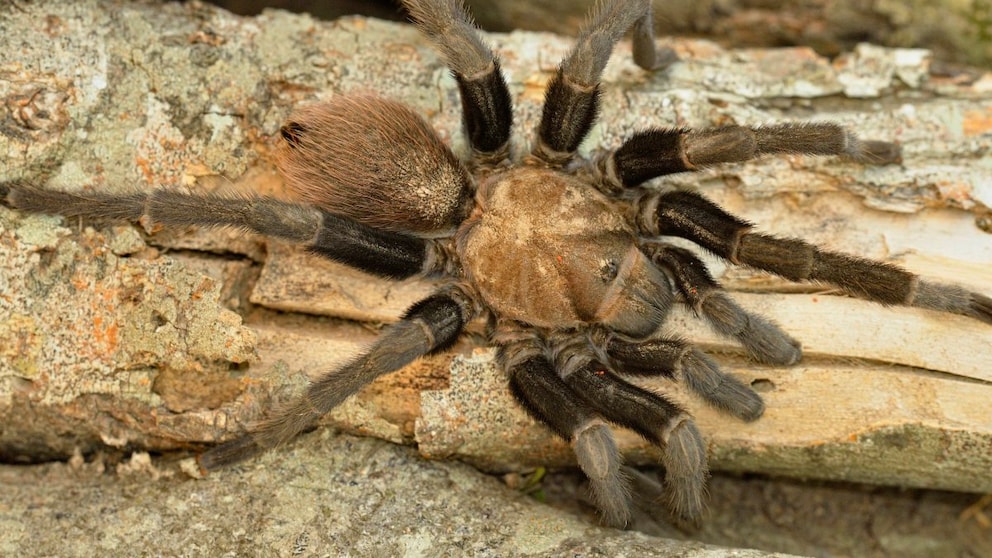
Are you one of those who, by the end of August, bring out the orange decorations from the basement and consume practically nothing but “pumpkin spice” products? On social media, fall has long arrived–and in the U.S., it also includes the great crawl: Particularly noticeable is the behavior of the Brown Texas Tarantula (Aphonopelma hentzi), which, along with about 28 other species, appears in up to 15 U.S. states at the end of summer.
As soon as high temperatures meet the first rains in late summer, the tarantulas’ mating season begins–along with a highly visible migration through desert regions and across roads. “They usually wait for the first autumn rain–they are very responsive to the late summer warmth and increasing moisture,” explains Dan McCamish, a senior environmental scientist at California State Parks, to “USA Today.” “If you’re lucky, you can sometimes see them swarming across the roads at certain times of the year.”
Why Tarantulas Hit the Road
Tarantulas are found in the wild in 15 U.S. states: Washington, Oregon, California, Nevada, Utah, Arizona, Colorado, New Mexico, Nebraska, Oklahoma, Texas, Missouri, Arkansas, Louisiana, and Florida. Outside of mating season, the animals usually remain hidden, as they are nocturnal and live in their self-dug burrows. However, during the breeding season, which typically extends from late August to October, the males embark on an intense search for partners.
The annual migration of the Brown Tarantula, which becomes more visible in the fall in eight U.S. states and Mexico, is particularly well-known. This spider is known by many different names. Texas, Oklahoma, and Missouri, among others, argue over who gets to name the tarantula. However, it is best known as the “Brown Texas Tarantula.” It is one of the most common tarantulas in the southern U.S. states and, like all other species, begins its migration in late summer.
By the way, all the animals mentioned here are actually tarantulas, not true tarantulas. The exact biological differences between the various arachnids and why they are still often simply called “tarantulas” can be read in this article: Tarantula or True Tarantula–Is There a Difference?
Females Are More Likely to Be Found at the Burrow
The Texas Tarantula and other North American arachnids embark on their annual migration because “the male tarantulas are looking for a mate at this time of year,” says Dr. Andrine Shufran from Oklahoma State University in a press release. The director of the “Insect Adventure” experience center knows: “The mating season is determined by temperature and microclimate. It can occur earlier or later because the males wait for the right situation and signals to set out, but usually, the mating season lasts from late August to October.” During this breeding season, they court up to 100 females at once.
Therefore, males are often seen searching for partners, as the females usually remain in their burrows. Male tarantulas have very little time to reproduce. Once they reach sexual maturity, they live only a few more months. In this short time, they must mate with as many females as possible and cover a lot of ground. The female tarantulas stay in their burrows and attract the males with pheromones. 1
According to the organization Los Padres Forest Watch, there are a total of 29 different tarantula species in the U.S., ten of which are found in California alone. A female can lay between 700 and 1,000 eggs, which hatch after about six to nine weeks. If you encounter a tarantula sitting in its burrow or on a hole, it is likely a female waiting for males to mate, explains McCamish.
Tarantulas Are Shy but Defensive
If you are reminded of horror films with spider attacks, you can rest assured. Aphonopelma hentzi and other North American tarantulas measure only a few centimeters and are considered rather peaceful animals despite their threatening appearance. Only their legs, which can be up to 15 centimeters long, make them about the size of a palm. Therefore, they are by no means as large as the world’s largest spider–and are also rather shy when they encounter humans.
“Tarantulas can bite if they feel threatened, but they are more likely to run away,” Dr. Shufran continues. If there is no other option, they stand on their four hind legs and show their fangs. “Usually, the paths of spider and human part without anyone getting hurt. As a last resort, however, tarantulas will bite.” But this bite is only dangerous if you are allergic to it. Usually, an ice pack is enough to treat a Texas tarantula bite.

Is There a Difference Between a Tarantula and a Bird Spider?
Aggressive and Equipped With Giant Genitalia: Researchers Identify Four New Tarantula Species
Texas Tarantula Builds Shield with Urticating Hairs
So if you simply let a male tarantula go its way, you should have no problem with the animals. However, there are also spider enthusiasts who try to pet the fluffy-looking tarantulas. Or even capture them to keep them in a home terrarium.
However, this is not advisable, as the Texas tarantula, in particular, has a very effective defense strategy in addition to its bite. What makes them look fluffy are urticating hairs, which they use as a defense mechanism. “When disturbed, they release these itching hairs by rubbing their two hind legs against the hairs, creating a kind of force field,” says Shufran. “The hairs are carried by air movement and cause intense itching in humans and animals. You can easily tell the stress level of a tarantula by how bald the itching spot is.”
Why Tarantulas Are Important for the Ecosystem
But that’s not the only reason why you shouldn’t disturb or remove the shy animals from nature. Like many other wild animals, they suffer from habitat loss due to settlement and agriculture. They are losing more and more retreats where they are not disturbed by humans and can fulfill their role in the ecosystem. Especially during migration, they are often run over or the more relaxed males are poached for the pet trade and breeding.
Tarantulas, as ground dwellers, play an important role in the ecosystem. They are effective hunters and help maintain balance in the insect world. Their diet includes beetles, grasshoppers, crickets, and smaller spider species. By controlling these populations, they prevent overpopulation and contribute to biodiversity.
At the same time, tarantulas themselves are a food source for numerous other animals–including snakes, birds, mammals like shrews, and even certain wasp species that specialize in spiders. Their retreat or even disappearance would have noticeable effects on several food chains. It is all the more important to not only respect the shy animals but also to protect their habitats.