

October 2, 2025, 10:12 am | Read time: 6 minutes
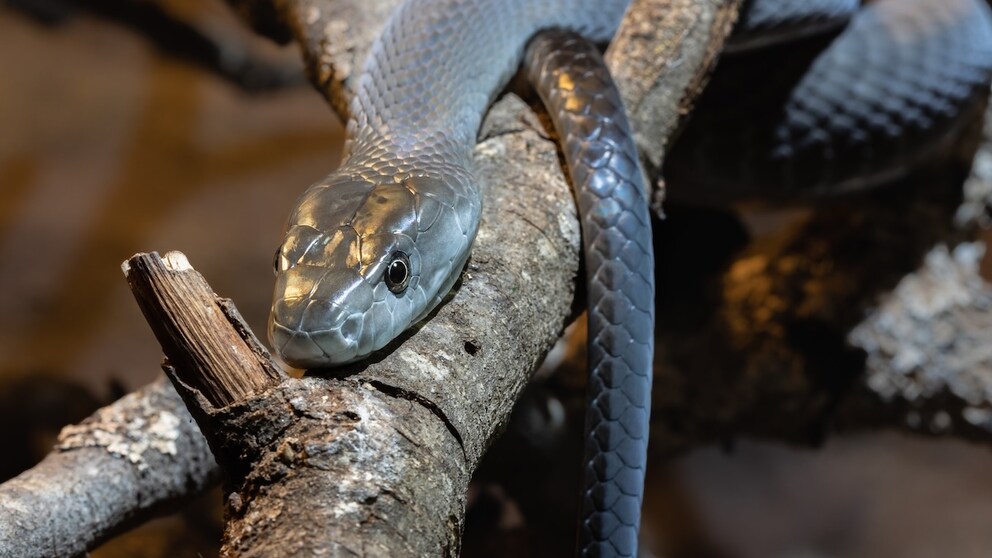
Few snakes have a reputation as dazzling as the Black Mamba. In films, books, and legends, it is considered a deadly icon, perhaps the most dangerous snake in the world. Its name alone instills fear in many people—and indeed, it is feared in Africa like few others. But is the Black Mamba truly the ultimate terror of the animal kingdom? And how does it compare to its lesser-known but equally venomous green relatives? A study brings new insights into the effects of mamba venoms—and explains why even modern antivenoms often fail to fully neutralize their consequences.
Black Mamba: Myths, Facts, and New Insights
With a mamba bites, every minute counts. Yet even with antivenom, a dangerous risk remains: a specific type of paralysis that antivenoms often cannot stop. A study now reveals why some mamba venoms cause muscle cramps despite treatment—and what this reveals about the evolution of these fascinating snakes. This finding is particularly significant for patients and doctors in Africa.
Black Mambas are rightly considered among the most dangerous venomous snakes in Africa. Their bites often lead to neurological symptoms such as muscle twitches, respiratory paralysis, and death within minutes. The problem: The neurotoxic components of their venoms are extremely diverse and potent. While some toxins block signal transmission to the muscles (flaccid paralysis), others lead to overstimulation of the nerves (spastic paralysis).
Previous studies mostly focused on individual mamba species or purely chemical analyses. Clinically, however, it was known that antivenoms often neutralized one form of paralysis—but could not stop another. Why this is so was previously unclear. An international research team led by the University of Queensland (Australia) and Monash University (Australia) systematically examined the neurotoxic mechanisms and the effectiveness of three antivenoms available in Africa for the first time. The results were published in the journal “Toxins” (September 2025). Particularly notable: One mamba species showed a completely different mechanism than its relatives.
Four Mamba Species–Four Potent Venoms
The venoms of all known mamba species were examined. Their genus Dendroaspis includes four species, all highly venomous and dangerous to humans:
- Black Mamba (Dendroaspis polylepis): The largest and most well-known species, up to 4.5 meters long, lives in savannas and bushland. It is also considered the fastest snake in the world and can be deadly within minutes.
- Eastern Green Mamba (Dendroaspis angusticeps): Strikingly emerald green, primarily inhabits the coastal forests of East Africa. It is smaller (usually 2 meters) and arboreal. Its venom causes spastic paralysis.
- Jameson’s Mamba (Dendroaspis jamesoni): Found in Central Africa with two subspecies (D. j. jamesoni in the west and D. j. kaimosae in the east). It lives both on the ground and in trees, combining features of the black and green mamba.
- Western Green Mamba (Dendroaspis viridis): Lives in West Africa, mostly in rain and coastal forests. It resembles the Eastern Green Mamba in size and lifestyle but differs genetically and in venom composition.
All four species are highly specialized hunters, preying on birds, small mammals, and reptiles. They share extreme speed, potent neurotoxins in their venom, and medical significance for the regions where they occur. The analysis showed that all mamba venoms have strong neurotoxic effects, but with significant differences:
- Muscular Paralysis (through postsynaptic α-neurotoxins): In five of the six tested venoms (except D. angusticeps), complete muscle blockade occurred within 15–29 minutes.
- Spastic Paralysis (through presynaptic Kunitz toxins and acetylcholinesterase inhibitors): Only D. angusticeps primarily triggered this form, characterized by an increase in muscle twitches.
The tested antivenoms reliably neutralized muscular paralysis—but consistently failed with the spastic component, especially with the Eastern Green Mamba. In some cases, the spastic symptoms only became visible after neutralizing the previous effects—a clinically risky “mask change.”
Geographical differences also emerged: The venom of South African Black Mamba specimens was less effectively neutralized than that of Kenyan origin. Overall, however, none of the three antivenoms could fully neutralize all toxins. Perhaps this is why the belief persists that the mamba—black and green—is the most dangerous snake in the world for humans. 1
Black Mamba and Green Mamba–Two Worlds
While the Black Mamba is primarily dangerous due to its rapid paralysis, the Green Mamba can cause muscle cramps and spastic paralysis that antivenoms have so far been unable to neutralize. Its reputation as the world’s most dangerous snake is unlikely to be lost. It is fast, delivers large amounts of venom, and fiercely defends itself when threatened. Additionally, it lives in densely populated regions of Africa, leading to frequent encounters with humans.
In terms of venom potency, the Australian Inland Taipan is superior, but it lives reclusively and rarely bites humans. The Black Mamba, on the other hand, causes far more fatalities due to its prevalence and behavior, earning it the reputation as the deadliest snake.
The study has clearly shown that the Green Mamba can also strike with rapid speed. Yet, in terms of the time available to treat a bite, the Black Mamba again secures the title of the most dangerous species. An untreated bite can be fatal within 20 to 60 minutes. The Black Mamba’s neurotoxin rapidly blocks signal transmission between nerves and muscles.
The Green Mamba acts more subtly but is no less dangerous. Particularly, the Eastern Green Mamba can cause spastic paralysis and cramp-like muscle twitches—a mechanism that doctors in Africa have long observed but was previously poorly understood. The study, which has now finally deciphered its unique venom cocktail, may hopefully help develop effective antivenoms.
The Most Poisonous Animals in the World
The Sea Wasp–the World’s Most Venomous Creature
Why Is It Called “Black Mamba”?
In fact, the Black Mamba is not black at all. Its body usually shimmers gray, brown, or olive, and it moves elegantly and almost inconspicuously through the savanna. The key is its mouth: deep black like pitch, which it opens wide when threatened. It is a clear warning signal that shows any opponent that it is not to be trifled with.
The Black Mamba is a resident of open landscapes: savannas, steppes, and bushland. There, it hunts on the ground and can reach speeds of up to 20 kilometers per hour—a pace one would hardly expect from snakes.
Its green sister, on the other hand, lives in hiding. The Green Mamba, usually smaller and slimmer, is brightly green and spends its life high in the trees of tropical coastal forests. While the Black Mamba often causes conflicts due to its proximity to humans, the Green Mamba avoids contact and remains mostly undiscovered in its treetop world.
Dangerous, but Not a “Monster”
A Black Mamba bite is undoubtedly a medical emergency. Without immediate treatment with antivenom and artificial respiration, the mortality rate is nearly one hundred percent. Symptoms set in quickly: dizziness, vision disturbances, paralysis up to respiratory arrest. And yet, the Black Mamba and its green sisters are not monsters. In most cases, they try to flee. Only when they see no way out do they bite.
The Green Mamba may be less known, but it also poses dangers, as its venom works in a completely different way and is currently difficult to treat. Both show how sophisticated snake venoms have evolved over time—and that the real threat lies not in “evil monsters,” but in the proximity of humans and animals.