

November 13, 2025, 11:01 am | Read time: 2 minutes
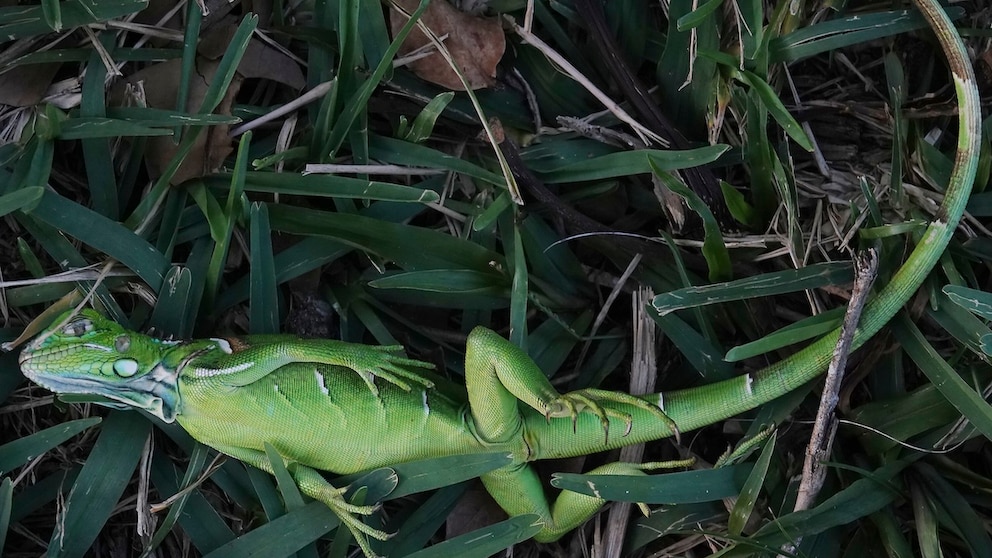
Florida is known for its tropical climate, endless beaches, and summer temperatures–but currently, the U.S. state is surprising with unusually frosty nights. Particularly curious: In some regions, the temperature drop is causing iguanas to fall from trees. What’s behind this and why you shouldn’t intervene.
Why Iguanas in Florida Are Falling from the Sky
Tourists in Central and South Florida were quite surprised when the weather service issued an unusual warning: “Warning of falling iguanas.” What sounds like a joke has a serious background, as TRAVELBOOK reported (part of the BOOK family of Axel Springer, like PETBOOK). At night, temperatures dropped to as low as 30 degrees Fahrenheit–a real problem for the cold-blooded reptiles.
Because iguanas, like most reptiles, are cold-blooded animals. They completely shut down their metabolism at low temperatures. A Miami Zoo employee explained in a 2022 interview with CBS News Miami that iguanas become sluggish when temperatures fall below 50 degrees. Below 39 to 41 degrees Fahrenheit, they enter a kind of hibernation.
Their heartbeat slows, and they essentially freeze. Since many iguanas sleep in trees at night, they can lose their balance and fall in this rigid state when they are in a short hibernation. They appear lifeless but are merely stunned.
Hands Off Stunned Animals
No matter how helpless the reptiles may seem, you should never take them with you. As soon as it gets warmer, they awaken from their stupor. “Never take cold-stunned iguanas home! These are wild animals and can behave aggressively once they have warmed up and recovered,” warns the Florida Fish and Wildlife Conservation Commission (FWC).
The animals generally do not need human help. If they land directly from a tree onto the road and are at risk of being run over, you can also contact local wildlife conservationists who can relocate them expertly. Once it gets warmer, they recover on their own and return to their natural state. Human contact mainly means stress for them–and poses the risk of injury.
The local weather service also reassures: The current cold snap is only temporary. In the coming days, temperatures are expected to rise again–and with it, the danger of “falling iguanas” will disappear.