

October 7, 2025, 1:43 pm | Read time: 3 minutes
Stranded dolphins–reports that are alarming. But the reason behind it is even more shocking. A climate change-induced toxin is said to cause Alzheimer’s-like symptoms in dolphins, according to a study. Find out what’s behind this and what it means for us humans here.
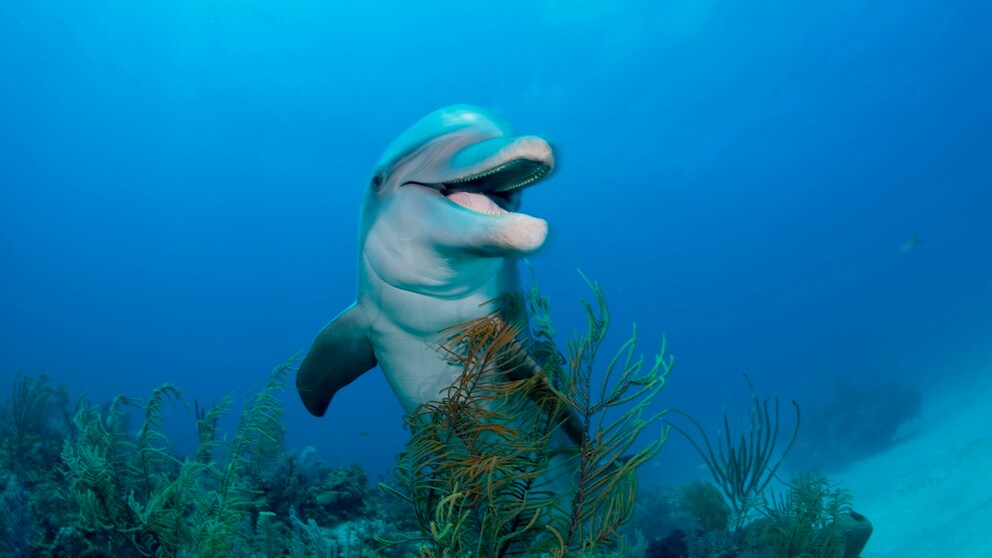
Like whales, dolphins often strand on beaches. One reason could be poisoning from algae. A research team led by David A. Davis from the University of Miami discovered this. Due to climate change, harmful algal blooms (HABs) are increasingly occurring in Florida’s Indian River Lagoon, caused by rising water temperatures and nutrient overload. They not only damage the ecosystem but also release toxic substances that can penetrate the brains of marine animals. For the animals, this can be a death sentence, as the short-term effects of the toxins lead to disorientation and stranding.
The long-term effects on the animals’ nervous systems are still largely unknown. This is where the research group focused their efforts, asking: Is there a connection between seasonal toxin exposure from HABs and neurodegenerative changes in the brains of dolphins? The results of this study were published in 2025 in the journal Current Biology.1
Gene Profiles Strongly Resemble Those of Alzheimer’s Patients
The researchers examined 20 stranded bottlenose dolphins (Tursiops truncatus truncatus) from the Florida Indian River Lagoon area. The selected animals died between 2010 and 2019. The samples came from various regions along the lagoon. The animals were divided into two groups: during the algal bloom season (June-November) and outside this period (December-May). The researchers analyzed the brains for the HAB neurotoxin 2,4-diaminobutyric acid (2,4-DAB), conducted gene expression analyses (RNA-Seq), and examined Alzheimer’s-like brain changes histologically.
The results indicate that dolphins that died during the algal season had up to 2,900 times higher concentrations in their brains than those outside the bloom season. The researchers identified changes in 536 genes. The gene analysis suggests that this leads to disruptions in synapse function, which are responsible for signal transmission, the blood-brain barrier, and the basal membrane. The gene profiles strongly resemble those of Alzheimer’s patients. There were also significant similarities to Alzheimer’s patients at the protein level, along with deposits in brain tissue.

Cats Show Surprising Parallels to Humans in Alzheimer’s

The Most Poisonous Animals in the World
Are Dolphins Our “Early Warning System”?
It should be noted that the study provides very clear evidence of the effects of seasonal environmental stressors. One insight stands out in this context: The effect of the neurotoxin is associated with pathological Alzheimer’s symptoms. With a bitter aftertaste, this causal chain could prove to be an “early warning system.” We humans could derive important insights about our health from this.
Because the similarity to human Alzheimer’s gene profiles underscores the significance of this data for human medicine, especially in the context of growing environmental stressors due to climate change. However, the study is based on only 20 samples. To confirm the results, much more research in this area is needed in the future.
A Wake-Up Call for Research
It is well-known that climate change is affecting many species and bringing massive consequences. But the brain damage caused by algae presents another facet that might provoke thought—a kind of wake-up call for research, conservation, and also for us humans.