

June 9, 2026, 11:01 am | Read time: 4 minutes
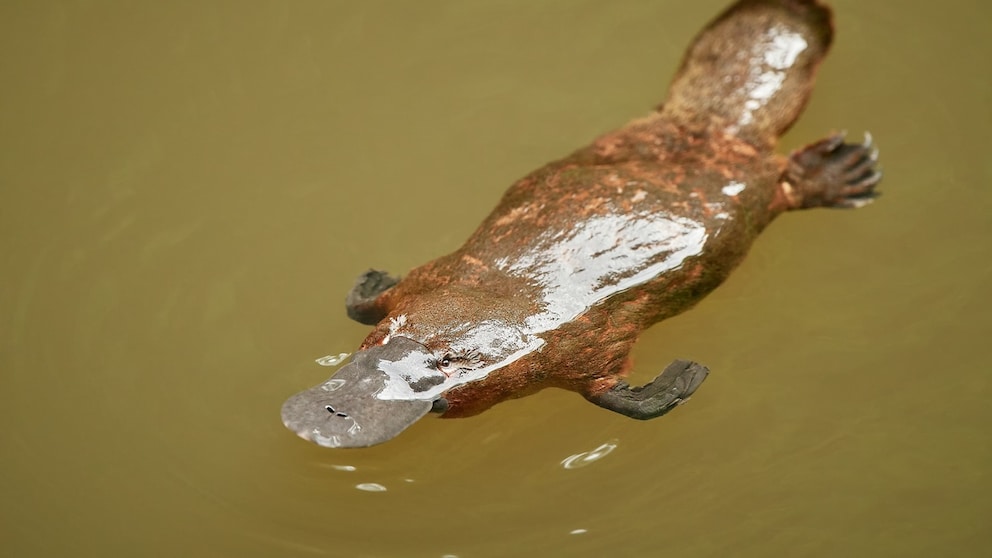
An animal that lays eggs, produces milk, glows under UV light, possesses venom, and detects prey with electrical signals? That sounds more like a mythical creature from the Harry Potter universe than a real mammal. Yet, the platypus combines all these traits. Since its discovery, this Australian animal has amazed scientists—and even today, new surprises continue to emerge. PETBOOK presents seven fascinating facts about the platypus.
1. Platypuses Are Mammals–but They Lay Eggs
The platypus combines traits that seemingly don’t fit together: It has fur and is clearly a mammal, yet it reproduces by laying eggs. This places it among the monotremes, an ancient group of mammals, of which only platypuses and echidnas exist today.1
The females lay one to three soft-shelled eggs, from which the young hatch after a short period. This unusual combination of mammalian and reptilian features makes the platypus one of the most extraordinary animals in the world. Geneticist Francis Collins once described it as “an evolutionary accident.”
2. Their Fur Glows Under UV Light
Platypuses usually appear inconspicuously brown. But under ultraviolet light, they reveal a surprising trait: Their fur glows green to turquoise. Scientists discovered this phenomenon in several platypus specimens from museum collections, as reported by the science magazine “Scinexx.” 2
The fur absorbs UV light and re-emits it as visible light with a longer wavelength. This so-called “biofluorescence” has previously been observed in some nocturnal mammals such as flying squirrels and opossums.
Why platypuses glow under UV light is not yet fully understood. However, researchers suspect that this trait may be related to their crepuscular and nocturnal lifestyle. The platypus is also the first known monotreme in which biofluorescence has been detected.
3. Platypus Babies Drink Milk From Their Mother’s Fur
Platypuses not only lay eggs, but they also feed their young in an unusual way. Unlike other mammals, the females do not have teats. Instead, special mammary glands produce the nutritious milk, which is secreted through the skin. The milk collects in the fur on the mother’s belly, where the young simply lap it up. 3
The young platypuses spend the first months well hidden in the burrow. It is only after about three to five months that they venture outside for the first time. However, it takes significantly longer for them to become fully grown: up to 18 months.
4. Platypuses Are Among the Most Venomous Mammals in the World
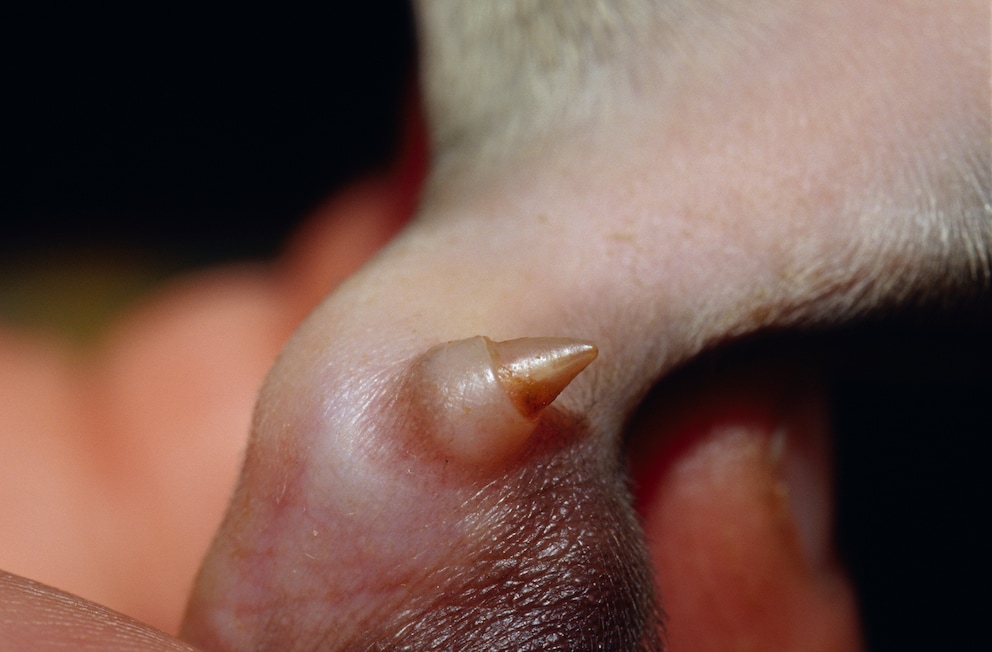
Anyone who thinks platypuses are harmless water dwellers is gravely mistaken. The males have a venomous spur on their hind legs, which they can use to sting, especially during the mating season. While the venom is generally not lethal to humans, it causes extremely severe pain that can last for days or even weeks. This makes the platypus one of the most venomous mammals in the world—a rare trait among mammals.
5. Many Initially Thought the Platypus Was a Hoax
Today, the platypus is world-famous—but when it was first introduced in Europe at the end of the 18th century, few believed in its existence. The animal seemed like an absurd mix of duck, beaver, and mammal: It had a duck bill, dense fur, and webbed feet. Even experienced naturalists initially suspected a joke and believed someone had sewn together parts of different animals. Only after careful examination did it become clear: The bizarre creature was real. Thus began the scientific career of an animal that is still considered one of the most extraordinary creatures on Earth.
“Extremely Rare Event” Explains Why There Are Three Egg-Laying Mammals
Why the platypus is the most poisonous mammal in the world
6. Platypuses Have a Sixth Sense
While other animals see, hear, or smell their prey, the platypus relies on an almost supernatural ability. When diving, it completely closes its eyes, ears, and nostrils, yet still hunts successfully. Its bill contains thousands of sensory cells that can detect tiny electrical signals emitted by the muscle movements of other animals.4
This fascinating mammal can thus detect worms, insect larvae, and small crustaceans even when they are deeply buried in the mud. Such an ability is extremely rare among mammals and is otherwise mainly known from sharks and rays.
7. Their Fur Contains Unique Pigment Structures
As if the platypus weren’t unusual enough: Researchers discovered tiny hollow pigment bodies, called melanosomes, in its hair. These structures store the pigment melanin, which is responsible for the fur color. The remarkable thing is that such hollow melanosomes were previously only known from birds and had not been detected in any other mammal.
Nevertheless, they do not give the animal striking colors, but only its typical brown fur. Why the animals possess this unique fur structure is still unclear.5