

July 9, 2026, 3:22 pm | Read time: 4 minutes
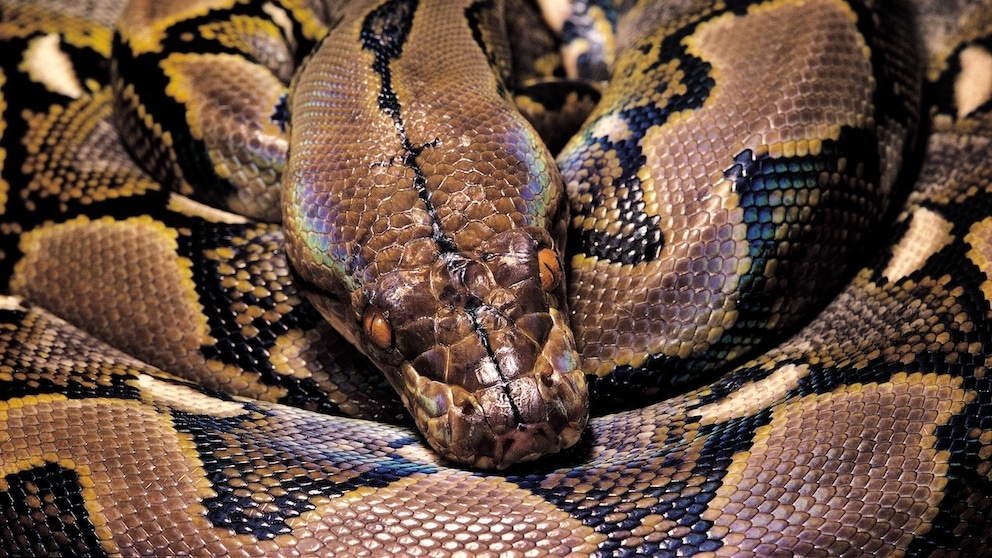
Reports from Indonesia repeatedly cause shock: People disappear, and later their bodies are found inside a giant snake. In June 2026, it was reported that a 44-year-old woman was killed by a nearly eight-meter-long reticulated python on a plantation. When her husband found her, the animal had already begun to swallow her body. But can snakes really eat an adult human, or is this mostly a myth from movies and horror stories?
Only a Few Snakes Are Actually Capable of This
The short answer is: Yes, it is possible. But only under very specific conditions. “This is only possible if the snake is large enough, as proven with the reticulated python and the African rock python,” explains Dr. Jakob Hallermann, curator of the Herpetology Section at the Leibniz Institute for the Analysis of Biodiversity Change, to PETBOOK.
It’s not just the length of the animal that matters. Body girth and weight also play a role. According to Hallermann, a giant snake must reach about five meters to swallow an adult human. However, most known animals that have swallowed humans were significantly larger, explains Dr. Claudia Koch, curator of the Herpetology Section at the Leibniz Institute for the Analysis of Biodiversity Change. Generally, the larger the snake, the larger the prey it can handle.1
Why Cases Are Particularly Known from Indonesia
Reports of this nature are particularly common from Indonesia. According to Hallermann, this is not because reticulated pythons specifically hunt humans. Rather, the habitats of humans and snakes overlap there.
In some regions of Indonesia, there are also populations with relatively small body size and slim build. At the same time, particularly large reticulated pythons occur there. This combination theoretically increases the likelihood that a snake can completely swallow a human.
Reticulated pythons live near human settlements, plantations, and rural areas. At the same time, the population density in Indonesia is high. This makes encounters between humans and these very large snakes more likely.
Such cases are still “very rare,” says Hallermann. According to herpetologists, despite the significant overlap of humans and reticulated pythons in Indonesia, there is on average less than one fatal case per year. Humans are not part of the animals’ natural prey spectrum.
Anaconda: Fatalities Yes, Swallowing Not Proven
When it comes to man-eating giant snakes, many immediately think of the anaconda. But the situation here is different from the reticulated python. Although an exceptionally large green anaconda would likely be anatomically capable, there are no scientifically proven cases. Individual reports remain unverifiable to this day, explains Koch. Additionally, anacondas live much more secluded than reticulated pythons, are more water-bound, and therefore encounter humans much less frequently.
Hallermann points to a scientific study in which around 600 anacondas were measured. None were larger than six meters. The largest recorded reptile of this species was measured at eight meters in 1945. Hallermann knows of no scientifically proven cases where an anaconda has completely swallowed a human: “Fatalities yes, but no swallowing.”
The famous Discovery Channel experiment “Eaten Alive – The Anaconda Experiment” from 2014 is also viewed critically by the herpetologist. In the attempt, American Paul Rosolie wanted to be swallowed alive by a green anaconda in a special suit. An attempt that Dr. Hallermann calls “completely irrational.”
Dr. Koch also views the experiment critically: “Regarding the format, I can only say that people who seriously study such animals scientifically have no interest in giving a platform to a format like ‘Eaten Alive.'”

These are the 6 biggest snakes in the world

Scientists Solve Mystery of How Burmese Pythons Digest Entire Skeletons
Why Giant Snakes Can Swallow Such Large Prey
The reason giant snakes can swallow such large animals lies in their special anatomy. Their jaw is extremely flexible. Contrary to popular belief, snakes do not simply “dislocate” their jaw. Instead, the bones in the skull are connected by stretchable ligaments, allowing the mouth to open wide.2
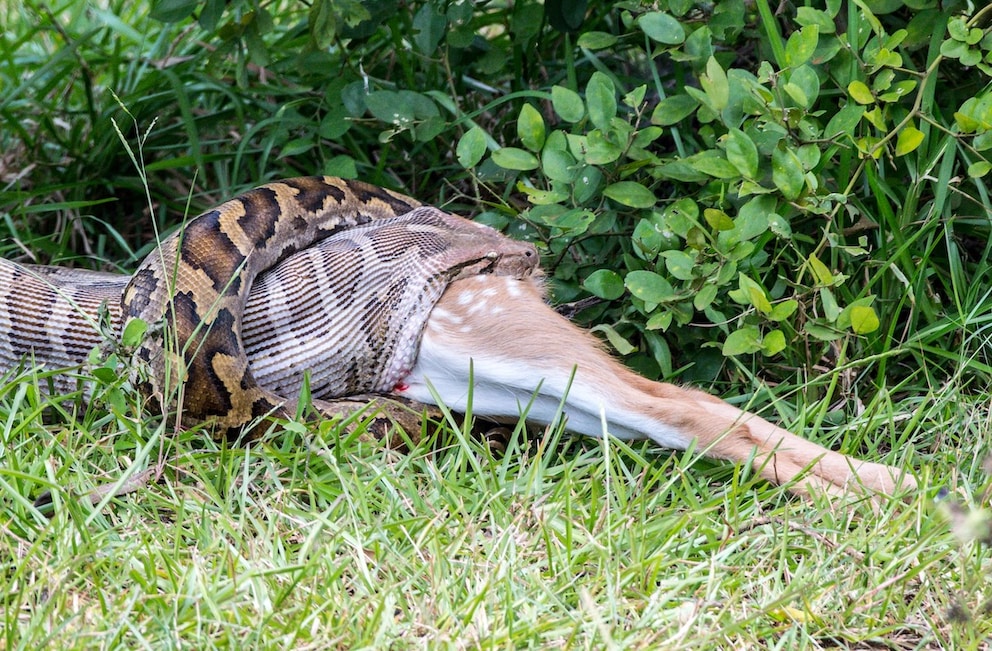
The prey is then slowly pushed down whole. Giant snakes usually start at the head to prevent limbs from getting stuck in the throat. After a large meal, the snake’s metabolism goes into overdrive. Organs like the intestines, liver, and heart work significantly harder until the prey is digested.
Myth with a Grain of Truth
The idea of man-eating snakes is often exaggerated in movies and headlines. However, it is not entirely fictional. Very large reticulated pythons and African rock pythons can indeed kill and swallow a human under extremely rare circumstances. For the vast majority of people, giant snakes pose no real threat. The few known cases show, however, that it cannot be completely ruled out–if a snake is large enough and human and animal meet at the wrong time and place.
Herpetologists therefore warn against portraying snakes solely as “man-eaters.” Such portrayals foster fear and can contribute to the animals being hunted or killed.