

March 23, 2026, 12:45 pm | Read time: 7 minutes
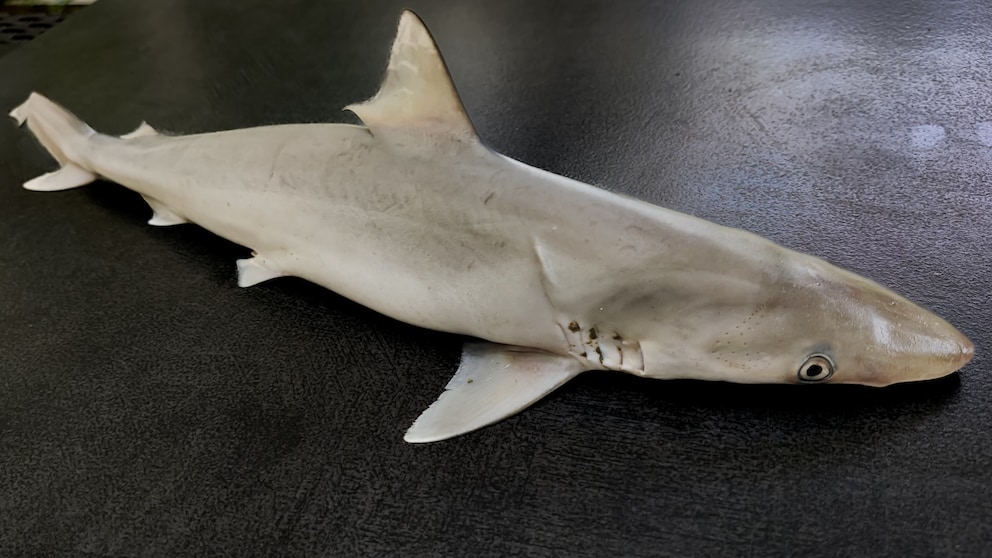
When people think of ocean pollution, they often think of plastic, oil, or ghost nets. But something else has long been entering the oceans: medications, drugs, and other pharmaceutical residues. A study from 2026 in the Bahamas shows how far this problem has spread. Researchers found painkillers, caffeine, and even cocaine in wild sharks there–in a region long considered ecologically intact. PETBOOK provides context.
Drug Residues in Supposed Natural Paradises
Particularly concerning: The substances detected were not only present in the animals’ blood but were also associated with measurable changes in important metabolic values. This suggests that human pollutants could influence even large marine predators.
The Bahamas study is another indication that pharmaceutical and illegal substances are no longer just a problem in rivers or densely populated coastal regions. They apparently reach even apex predators in supposed natural paradises. Further studies show how widespread the problem is for marine ecosystems.
2026 Study Shows Medications, Caffeine, and Cocaine in Bahamas Sharks
For the study, an international research team led by Natascha Wosnick analyzed blood samples from 85 wild sharks around Eleuthera Island. Five species were examined, including tiger sharks, lemon sharks, and Caribbean reef sharks. The goal was to detect “Contaminants of Emerging Concern”–novel environmental contaminants like medications or psychoactive substances, whose ecological effects are not yet fully understood.
In 28 of the 85 animals, scientists found measurable residues. Four substances were detected: diclofenac, paracetamol, caffeine, and cocaine. The Caribbean reef shark, the Atlantic nurse shark, and the lemon shark were particularly affected–species that often live near the coast and are thus more likely to come into contact with human inputs.
How Do Drugs and Medications Affect Sharks?
Notably, affected animals showed altered levels of triglycerides, urea, and lactate. These markers provide insights into fat metabolism, osmotic balance, and physiological stress. While the study does not yet conclusively prove that the pollutants directly cause these changes, it shows for the first time that human residues reach the top of the food chain even in the waters of the Bahamas–and may be biologically active there. 1
While ocean pollution is most commonly associated with plastic or refined oil, there is another man-made problem in the world’s oceans: drugs. Sharpnose sharks off the coast of Brazil have now tested positive for cocaine, with breakdown products of the drug found in their organs. What this could mean for the animals and the ecosystem.
Sharks Off Brazil Tested Positive for Cocaine as Early as 2024
What had long been suspected was proven in another groundbreaking study in 2024: Brazilian researchers detected cocaine in sharpnose sharks off the coast of Rio de Janeiro. It had long been suspected that drug residues could end up in marine animals. The study provided the first concrete evidence.
Enrico Mendes Saggioro and his colleagues analyzed muscle and liver samples from 13 Brazilian sharpnose sharks caught by fishermen. They found cocaine in all the examined animals–at concentrations significantly higher than previously described in other marine animals. Their study was published in the journal “Science of the Total Environment.”
How Does Cocaine Get Into the Sea?
But how does the drug even get into the world’s oceans? The basic mechanisms are known: Some enter coastal waters through inadequately treated wastewater. Additionally, there are inputs from drug trafficking, such as when smuggled goods end up in the sea or are deliberately disposed of to cover tracks. In regions with high consumption or active smuggling routes, this can lead to persistent contamination.
The exact consequences for sharks are not yet fully understood. However, disruptions in behavior, reproduction, or general health are conceivable. This is particularly problematic because sharpnose sharks are important predators in their ecosystems and are already suffering from fishing and habitat loss in many places.
Fentanyl and Pharmaceutical Waste
But, as proven in the Bahamas, not only hard drugs end up in the water, but also medical-pharmaceutical waste. Not only sharks, but dolphins now carry human medications within them. U.S. researchers were able to detect fentanyl in living, free-swimming dolphins in the Gulf of Mexico for the first time in 2024 (PETBOOK reported). This made it clear that pharmaceutical pollutants reach not only fish but also marine mammals at the top of the food chain.
Dolphins are considered important bioindicators because pollutants can accumulate in their fatty blubber. The fact that fentanyl was found not only in dead but also in living animals is particularly alarming. Although the measured concentrations were below acutely lethal levels according to the researchers, it remains unclear what effects chronic exposure could have on behavior, health, and reproduction.
The individual cases from the Bahamas, Brazil, and the Gulf of Mexico fit into a larger picture: Residues of medications and drugs are now detectable in waters worldwide. A Swedish study from 2024 showed that such substances can have massive impacts on animals–especially fish and birds (PETBOOK reported).
Antidepressants and Birth Control Pills Detected in Marine Animals
According to the study, residues of antidepressants drastically change animal behavior. In experiments, perch lost their natural caution toward predators. Birds showed changes in mating behavior and increased aggression. Hormones from birth control pills are also considered problematic: They can cause profound reproductive disruptions in fish populations and have already been linked to local population collapses.
Then there are illegal drugs like methamphetamine or cocaine. Previous studies have already shown that fish react to such substances and can even develop addiction-like behavior. In the Czech Republic, for example, contaminated trout preferred to stay in water areas containing methamphetamine. Such findings make it clear that pharmaceutical residues are not just “carried along” but can have biological effects.
The problem often begins on land: Medications are not completely broken down by the human body and enter wastewater through excretion. There are also inputs from pharmaceutical production, hospitals, households, and improper disposal. Many sewage treatment plants are not equipped to handle such substances and can only partially filter them out. Thus, they end up in rivers, coastal waters, and eventually in food chains.
Drug-addicted fish and aggressive birds! How pharmaceutical waste affects the animal world

Can You Simply Dispose of Veterinary Medicines in the Trash?
Constant Cocaine Consumption Could Strongly Affect Sharks
Earlier research had already shown that the problem is particularly severe in Brazil. Cocaine is introduced through inadequate infrastructure with wastewater simply discharged into the sea. Or it is deliberately “destroyed” in drug labs or thrown into the waters from small planes. This happens especially when drug manufacturers or dealers try to prevent the discovery of their activities.
However, it is largely unknown how long the drug actually remains in seawater and what effects it has on the animals living there. The 100-fold increased levels of sharks that tested positive for cocaine provide initial clues.2
Possible consequences include disruptions in fish reproduction, as it is known that their liver is particularly sensitive to toxins. Toxins of all kinds can severely disrupt yolk formation for shark eggs, as reported by the science portal “Phys.org.” Constant cocaine consumption could also negatively affect shark behavior. Additionally, it is already known from some marine animals that deposited cocaine can sustainably damage their DNA.
Human Waste Must Be Removed from the Sea–But How?
The findings from the studies show one thing above all: The problem does not start in the sea but on land. Medications, drugs, and their breakdown products enter the environment through wastewater, industry, agriculture, and improper disposal–and are carried from there into the oceans. Sewage treatment plants are often not equipped to fully filter out such complex chemical compounds.
A key lever lies in wastewater treatment. Modern purification methods like activated carbon filters or ozone treatment could remove many of these substances much more effectively. At the same time, scientists are calling for medications to be developed in the future so that they break down faster and more completely in the environment after use.
But everyday actions can also make a difference: Medications should never be disposed of via the toilet or sink. Instead, they belong in the trash or–depending on the region–returned to pharmacies. Every active ingredient that does not enter the wastewater is a win for the environment.
In the long term, it will be important to take a holistic view of the problem. The studies show: Even remote regions are not protected. What we release on land eventually ends up in the sea–and thus with the animals that live there. The challenge now is to take this invisible form of pollution as seriously as plastic or oil.