

October 9, 2025, 10:36 am | Read time: 5 minutes
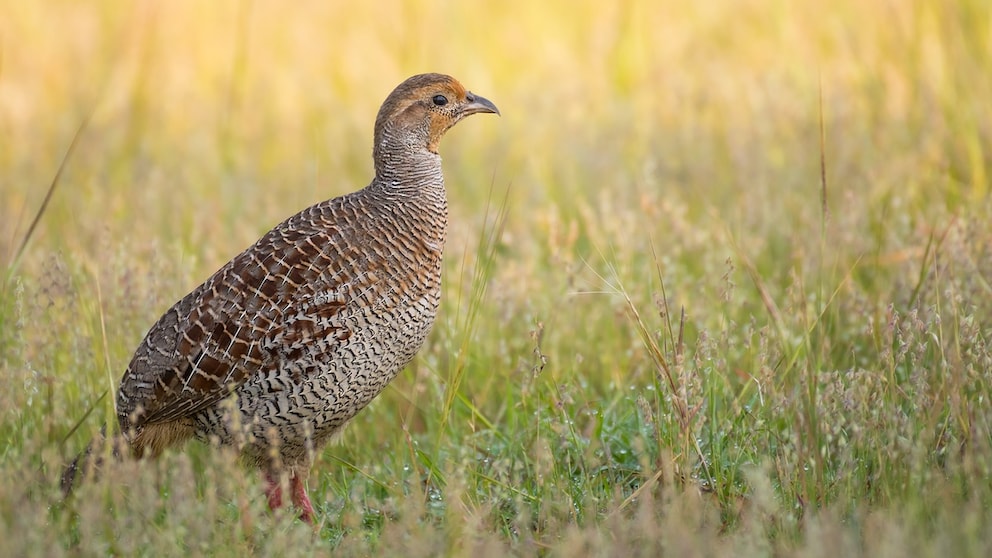
With its distinctive call “Repreprep,” the partridge returns to public awareness: It has been chosen as the Bird of the Year 2026. But what initially sounds like a victory is also an urgent appeal—the once-common species is now highly endangered.
Record Election: Partridge Wins by a Wide Margin
In the sixth public election for “Bird of the Year,” more people participated than ever before: A total of 184,044 votes were counted—a new record. The partridge won decisively with 81,855 votes (44.5 percent), beating the blackbird (26.6 percent), the long-eared owl (12.7 percent), the barn owl (11.7 percent), and the little grebe (4.5 percent).
“With the partridge, a species comes into the spotlight that has almost disappeared from our fields,” explains LBV bird expert Dr. Angelika Nelson. The field bird replaces the black redstart as the titleholder. The election has been organized jointly by the Bavarian State Association for Bird and Nature Conservation (LBV) and NABU at the federal level since 2021.
Dramatic Decline Since the 1980s
The situation of the partridge has drastically worsened over the past decades. According to information from NABU, populations have declined by about 87 percent since 1980. It was already named Bird of the Year in 1991—the issue is not new.
The causes are varied: The intensification of agriculture, the decline of structured field edges, and the increased use of pesticides have severely affected the species. “In the cleared agricultural landscape, the partridge finds too few nesting sites and hardly any food,” says Angelika Nelson. The partridge ran under the election motto “For Fields Full of Diversity,”—a clear plea for more biodiversity-friendly agriculture.
Unassuming and Perfectly Camouflaged: Life on the Ground and Field Edges
The partridge belongs to the family of game birds and is part of the pheasant-like species—but unlike its colorful relatives, it forgoes any splendor. Males and females are almost identical in appearance. Only the orange-brown face and a distinctive dark spot on the belly reveal the adult male. The gray-brown, marbled plumage is perfect camouflage for life on the ground. There, the birds are mainly scratching and pecking—searching for food or taking sand and dust baths, which they use for feather care and well-being.
Partridge females lay up to 20 eggs in well-camouflaged ground nests. After hatching, which usually occurs synchronously in one day, both parents lead their chicks together. Even when the young are independent after about five weeks, the family often stays together as a so-called “chain” until winter.
Observations are not easy, as the birds are very shy and usually nest well hidden in hedges or dense shrubbery. “The best chance for observation is at field edges and borders, where the vegetation is lower and the game birds, especially now in autumn, search for seeds and insects—with a bit of patience, you can experience this fascinating, unfortunately rare bird,” explains the LBV biologist.
The diet mainly consists of plant-based food: Grass tips, seeds of wild herbs, and grains are central. To digest the fibrous food, the animals ingest small stones. But for the offspring, that’s not enough: In the first weeks of life, the chicks need protein-rich food—they eat insects, spiders, and other small animals. These are essential for growth.
Raven or Crow? How to Recognize the Difference
Garden Dormouse Named Garden Animal of the Year–Why This Is an Important Signal
From Steppe Dweller to Symbol of Agricultural Change
Partridges are active during the day and twilight but are rarely seen. Usually, only the territorial call of the male—a harsh, rattling “girrhäk”—reveals their presence at dawn. With a bit of luck, they can be observed searching for food at the field edge or taking a sand bath—usually in tightly-knit family groups.
Originally, the partridge lived in the open steppe landscapes of Europe and Asia. Only with the spread of agriculture in the Middle Ages did it find new habitats in fields and meadows. As a classic cultural follower, it today symbolizes many field bird species that are threatened by modern agriculture.
Monocultures, intensive farming, the use of pesticides, and the loss of fallow land, hedges, and field edges have led to the partridge finding hardly any suitable habitat in many places.
More Diversity Instead of Uniformity–What the Partridge Needs Now
To prevent the partridge from disappearing completely, it urgently needs structured habitats. Hedges, flowering strips, fallow land, and extensively managed areas are essential for it to breed and find food again. Also, refraining from pesticides and adjusted fertilization contributes to the return of insects and wild herbs—important food sources not only for partridge chicks but for many other species.
The “Bird of the Year” award has a long tradition in Germany: The title was first awarded in 1971. Since 2021, the public has determined through an online vote which species will be in focus the following year. The election of the Bird of the Year 2026 is therefore not only an award for the partridge, but a call to action. Only if our agricultural landscape allows more diversity again will this distinctive field bird have a future.