

April 22, 2026, 11:53 am | Read time: 5 minutes
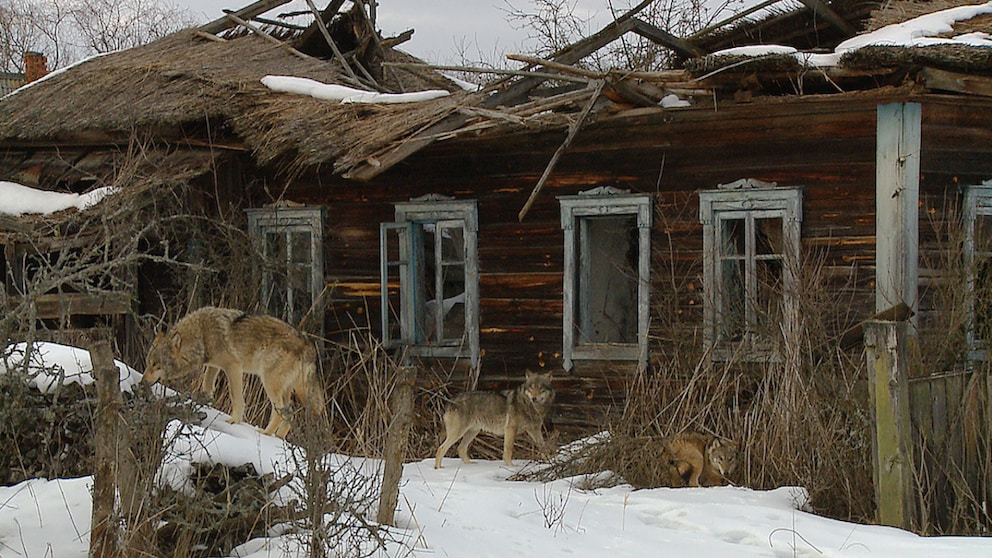
On April 26, 1986, one of the worst nuclear disasters in history began. Since then, the site of Chernobyl has been abandoned by humans–but not by other living beings. Many animals and plants have adapted to life in the radioactive exclusion zone. The wolves of Chernobyl have adapted so well that they appear to have developed mechanisms that could better protect them from cancer.
The Unique Life in the Exclusion Zone
The Chernobyl nuclear power plant in Ukraine stands as a symbol of the destruction that nuclear accidents can cause. Around 100,000 people were evacuated from the area in 1986 and have not returned to this day. Yet the high radiation levels do not deter animals from reclaiming the area around the abandoned city of Pripyat and the old reactors.
In addition to a population of semi-feral dogs, their wild relatives also live there again. Wolves have permanently settled in the exclusion zone–and apparently successfully: Studies show that they form stable populations despite high radiation exposure.
Wolves from Chernobyl: Strikingly Unremarkable
When thinking of animals in a radioactive zone, one often imagines drastic mutations. However, researchers on site have not observed this.
“I have not seen a single wolf with five legs or more than two eyes in the exclusion zone,” explains evolutionary biologist Dr. Cara Love from Princeton University, according to the “ORF.” Externally, the animals appear completely normal–their peculiarities only become apparent on a genetic level.
Dr. Love, an evolutionary biologist and ecotoxicologist at Princeton University in the U.S., has been on site with her team since 2014, studying the wolf population in Chernobyl. Among other things, the team took blood samples from the animals and equipped them with GPS trackers. These GPS collars also contained dosimeters, allowing researchers to measure the animals’ radioactive exposure.
Mutation in the Immune System Instead of Visible Damage
The result: The wolves are exposed to radiation levels on average about six times higher than the threshold considered safe for humans (11.28 millirem). This exposure should theoretically lead to a significantly increased cancer risk and even be compounded in the much smaller bodies of the wolves. One would expect the animals to develop multiple types of cancer and various tumors. However, the wolves endure this exposure every day of their lives without their cells changing.
Love and her colleagues aim to investigate why this is the case by studying wolves that lived outside the exclusion zone. But this is where the uniqueness lies:
Genetic analyses show that the animals’ immune systems have changed.
“The findings of almost every type of immune cell in the blood were altered,” says Love. Notably, these changes resemble those observed in humans undergoing radiation or chemotherapy. Certain genes involved in tumor defense appear to be particularly active. This suggests that the wolves may have developed mechanisms to detect and combat cancer cells early.
These resemble those of humans undergoing chemotherapy. Although mutations typically promote cancer, these seem to be very beneficial for the animals and reduce their tumor risk instead of increasing it. The researchers were even able to sequence specific genes in the wolf genome that have become resistant to cancer cells.
Evolution in Fast-Forward
The researchers believe that the extreme environment has created strong selective pressure: The animals that survived were those whose bodies could handle the radiation particularly well.
Over several generations–presumably now eight–a population may have developed that is better equipped against the carcinogenic effects of radiation.
How many animals died in the decades following the disaster is unclear. What is certain, however, is that enough survived to establish a stable population comparable in size to wolf populations outside the exclusion zone.

Mutated Wolves from Chernobyl Apparently Even Resist Cancer

Decades of Assumption Disproved! Large Animals Do Get Cancer Faster
Opportunity for Cancer Research
The genetic peculiarities of the Chernobyl wolves could also be of interest to human medicine. To this day, it is not fully understood how cancer develops–or why it sometimes does not occur at all.
The animals provide a unique opportunity to investigate this: They have lived for decades under conditions that would be considered highly harmful to human health. If the mechanisms behind their apparent resilience can be deciphered, they could offer new approaches for cancer research.
Research on Wolves in Chernobyl Has Been on Hold for Years
Research on the animals in the exclusion zone has been severely hindered for years. The COVID-19 pandemic had already slowed work on site. The Russian invasion of Ukraine then led to massive setbacks:
- Stays in the exclusion zone became temporarily too dangerous
- Power outages rendered frozen samples unusable
- Long-term data now show significant gaps
- Landmines were placed on already contaminated fields
Many projects are therefore on hold or can only be continued in a limited capacity. “Our priority is to ensure that the people and staff there are as safe as possible,” Love said in a press release.
Whether the animals have truly developed a genuine “cancer resistance” or “only” particularly effective protective mechanisms is not yet conclusively determined. What is certain, however, is that their genetic material could provide crucial insights into how organisms can cope with one of the most dangerous environmental conditions–and perhaps even how cancer can be better combated in the future. 1