

October 14, 2026, 7:27 am | Read time: 4 minutes
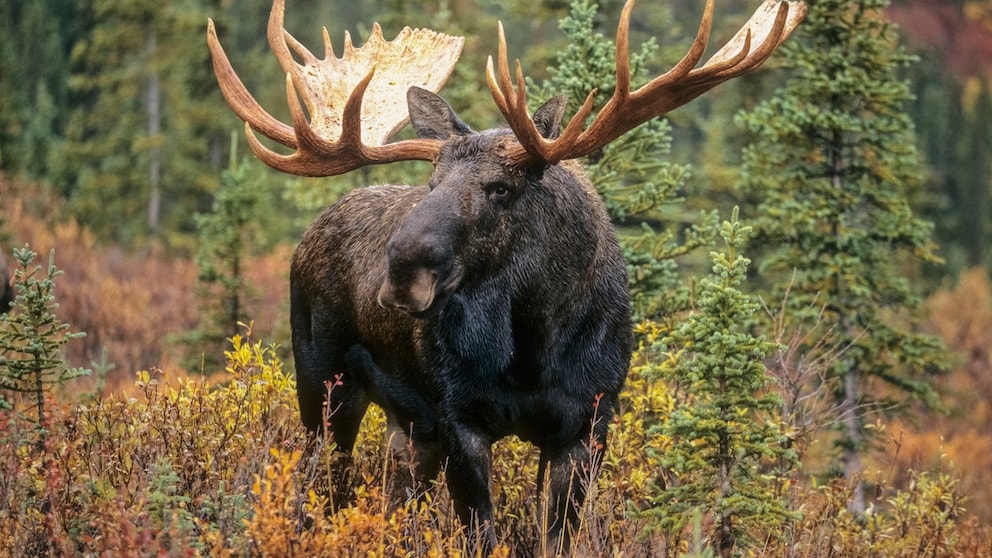
Weighing up to 800 kilograms and standing more than two meters tall, moose are typically expected in Scandinavia rather than Germany. However, these wild animals are increasingly being spotted, especially in the eastern part of the country. PETBOOK reveals where they are appearing and whether these massive returnees could settle here permanently.
Where Moose Are Actually Found in Germany
Most moose are currently being spotted in eastern Germany. Brandenburg, in particular, is considered a “hotspot”: In mid-June 2026, wildlife experts reported a record of at least five moose roaming the state simultaneously. Sightings have been reported in areas such as Oder-Spree, Barnim, the Nuthe-Nieplitz region, and near Grünheide. The animals are also on the move in Mecklenburg-Western Pomerania, Saxony, and parts of Bavaria.1 2
Many of the moose come to Germany from Poland or the Czech Republic. Their populations have significantly recovered in recent years, prompting especially young animals to wander. In the summer, they even swim across rivers like the Oder and the Neisse. In winter, they use frozen crossings.
Some animals don’t just stay briefly. Individual moose have been repeatedly observed in the same regions over extended periods, suggesting that Germany is more than just a stopover for them.
How Many Moose Currently Live in Germany?
It’s not possible to reliably quantify how many moose are currently residing permanently in Germany. Besides individual animals that remain longer in the same region, moose frequently pass through the country temporarily.
Nevertheless, this is remarkable. Moose were long considered extinct in Germany. By the 18th and 19th centuries, hunting and habitat loss had completely driven the wild animals out of the country. Only in recent years have they slowly returned. Since around 2015, sightings have been increasing, especially in eastern Germany.3
Why Moose Feel Comfortable Here Again
Germany surprisingly offers excellent conditions for the world’s largest deer species. Especially in the northeast, the animals find exactly what they need: expansive forests, wetlands, lakes, and sparsely populated landscapes.
Moose love diverse habitats with water. They feed on leaves, shoots, bark, and aquatic plants, all of which are abundant here. On warm days, they specifically seek out bodies of water to cool off.
Additionally, populations are growing in our neighboring countries, increasing the “pressure” on these giants to explore new habitats. Germany lies directly on their natural westward expansion route.
Can You Really Encounter Moose in Germany?
Theoretically, yes–practically, it is still rare. Moose are solitary and cover large distances. They can wander several dozen kilometers in a day, which is why they sometimes appear unexpectedly in places where they are not anticipated.4
Compared to the rest of Germany, the likelihood of encountering a moose is greatest in the east of the country. Such an encounter remains a true stroke of luck. Seeing a moose in the wild is an experience that would have been nearly impossible just a few years ago.

How the European Wildcat Returned to Germany

Wildcat or House Cat? How to Tell the Difference
Are Moose Dangerous to Humans?
Moose are generally not aggressive animals. They usually retreat when they notice humans. However, they should not be underestimated. These wild animals can weigh up to 800 kilograms, grow over two meters tall, and are surprisingly fast. If they feel threatened, they can indeed become dangerous–for example, by delivering powerful kicks with their front legs.
The greatest danger, however, does not come from direct encounters but from road traffic. Like deer, moose tend to stand still in the face of danger rather than flee. This can lead to serious accidents, especially on country roads and at dusk. If you encounter a moose, you should keep your distance and not provoke the animal.5
What the Return of Moose Means for Germany
The return of moose is primarily a positive sign for nature. It indicates that ecosystems are partially recovering and once again providing space for large wild animals.
At the same time, these giants bring new challenges. Habitats need to be better connected, such as through wildlife corridors or green bridges, to allow the animals to migrate safely. Managing moose in road traffic may also become more significant as their population increases.
In the long term, it is quite possible that stable moose populations will develop in Germany again. There are already initial indications of this, such as individual animals that remain permanently and may even reproduce.
What is surprising today could become quite normal in the future: that moose will soon be part of the native wildlife again.