

October 19, 2026, 2:50 pm | Read time: 4 minutes
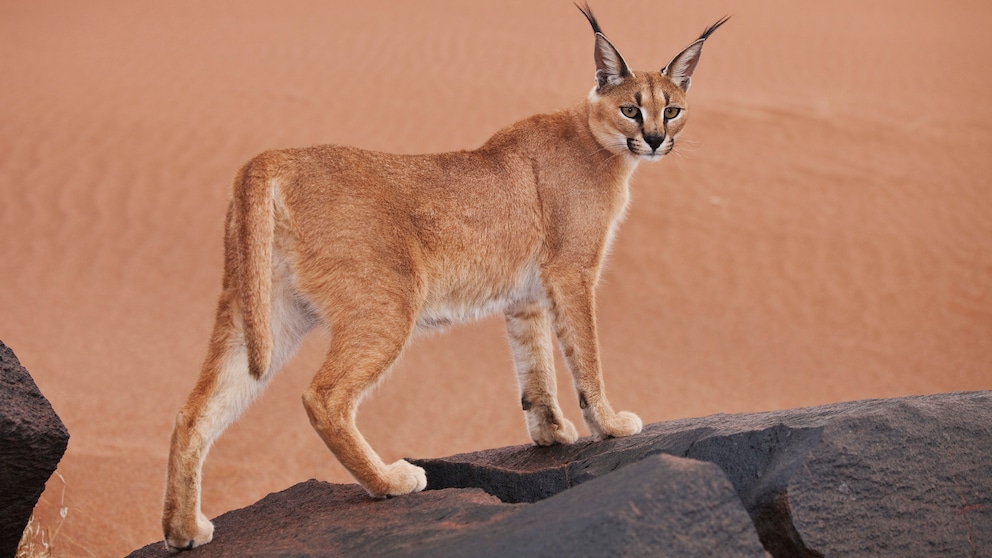
Two black tufts on its ears, the agility of a high-performance athlete, and a look that says, “I know you’re watching”–the caracal looks like a house cat that starred in a gym commercial. In reality, it’s a hunter that snatches birds out of the air in flight. And a wildcat that has no place in a living room.
Up to Three Meters of Vertical Leap from a Standstill
A fully grown caracal weighs about 13 to 40 pounds, depending on the source, and stands only about 16 to 20 inches tall at the shoulder. That sounds like handbag size, but the body is pure spring: The IUCN Cat Specialist Group reports a jump height of two meters or more. The South African National Biodiversity Institute (SANBI) even mentions up to three meters and that a caracal can catch up to twelve birds in a single leap.1,2
Also interesting: Why ocelots sometimes hang out with opossums
Its specialty is bird hunting. The caracal often sneaks up on the animals and grabs them as they take flight. It primarily eats small to medium-sized mammals and birds, including hares, rodents, rock hyraxes, lizards, and even venomous snakes. It usually preys on animals under 11 pounds, but it can also take down prey two to three times its own weight, such as adult springboks.
Caracal, the Airport Guardian
Because of its skill with birds, it became a job candidate. According to SANBI, the South African Air Force once trained a group of caracals to keep runways clear of birds. The hunting tradition is even older: In India and Iran, caracals were tamed and used in competitions where they caught pigeons in enclosures. In German, the cat is also called the desert lynx.3
Why the Caracal Has Such Distinctive Ears
The ear tufts are its trademark and are even part of its name. “Caracal” comes from the Turkish “karakulak,” meaning “black ear.” The four to five-centimeter-long black hair tufts on the ear tips make the cat unmistakable. The exact purpose of these tufts still puzzles scientists today. It is known that caracals actively use their ears for communication. Other theories suggest they enhance hearing, aid in camouflage, and serve as insect or sun protection.
Also interesting: Why you shouldn’t buy a Bengal or Savannah cat
From Africa to India
The caracal lives in large parts of Africa, from there across the Arabian Peninsula and the Middle East to Turkmenistan and northwest India. It is absent only in the tropical rainforests of West and Central Africa, the deserts of Namibia, and the central Sahara. Globally, the species is not considered endangered. However, the situation is different in some regions: In Morocco, it is critically endangered, and in Pakistan, experts estimate the population at only 100 to 150 animals.

Cute but Deadly: The World’s Smallest Wild Cats

Hardly anyone knows these 16 wild cats
Trend Animal with a Catch
Cute, agile, and photogenic–that’s enough to become a trend animal today. This is precisely what Swiss zoo director Marc Zihlmann views with concern. Photos of people with wildcats fuel demand: “This ‘aww’ portrayal of the animals tempts many to want such a status symbol,” he tells SRF.4
Also interesting: These 17 unique wildcats are hardly known
According to Zihlmann, the reality in the living room is different from Instagram. Many wildcats receive cat food instead of prey animals, leading to poor teeth and soft bones. He reports of a caracal that lived in a villa, adorned with a collar featuring Swarovski stones and luxury meals. Well-intentioned, but not species-appropriate, says Zihlmann.
He is particularly critical of crossbreeds between caracals and house cats, which are becoming more common. The mating is often fatal for the house cat mother, and the young must be delivered by cesarean section. He calls the animals “terrible torture breeds.” Hybrids are also considered highly unpredictable. When owners can no longer cope, they often cannot be surrendered to animal shelters and are euthanized. In Switzerland, a permit is also required to keep them.
And in the Wild?
The caracal also faces challenges in the wild. In some areas, it preys on sheep, goats, and poultry, leading to it being hunted, trapped, or poisoned. In Iran, retaliatory killings and traffic accidents are major issues. The animal trade also plays a role: It is estimated that 50 to 100 caracals are smuggled from Somaliland to the Gulf states each year.
The moral: Admire, yes. Take home, no. The caracal is a wild animal and belongs in the savanna–not on the sofa.