

March 17, 2026, 2:51 pm | Read time: 4 minutes
Majestic, strong, and fascinating–the lion has always been considered the king of animals. But how long do these impressive big cats really live, and what factors affect their lifespan? PETBOOK explains what influences the life of lions–in the wild and in captivity.
How Old Do Lions Get in the Wild?
The lion (Panthera leo) belongs to the cat family (Felidae). Along with the tiger, jaguar, leopard, and snow leopard, it is part of the genus of true big cats (Panthera). With its imposing stature, it is the second-largest cat in the world after the tiger.
Anyone who thinks lions are found only in Africa is mistaken. Some still roam the landscape in India–specifically in Gir National Park in the western Indian state of Gujarat. In the wild, lions prefer vast savannas, open bushland, and dry forests, but they are remarkably adaptable and can even be found in semi-deserts and mountains. A habitat with enough prey, shady resting places, and safe hiding spots where they can stalk and protect their young is crucial for them.
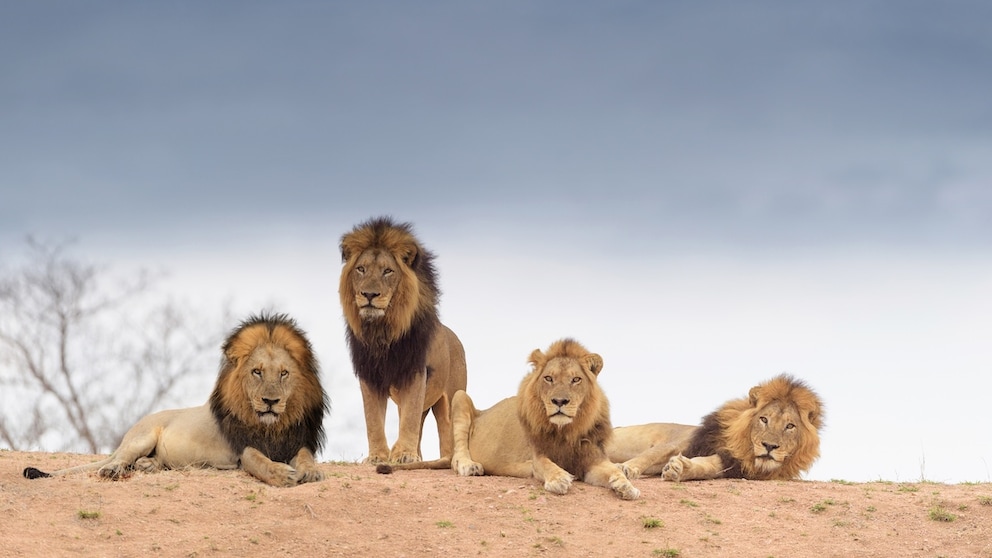
Female lions typically live up to 16 years in the wild. Their male counterparts reach an age between 8 and 10 years. This is significantly shorter than females–due to rival fights and territorial conflicts that often shorten the lives of males. 1, 2
From Prey to Territorial Fights–What Determines a Lion’s Age
How old lions get depends on various factors. A key role is played by the availability of food. On average, lions eat up to 10 kilograms of meat a day. If there is enough prey, they can eat significantly more: males can consume up to 40 kilograms under good conditions. However, a sparse food supply significantly reduces the animals’ life expectancy.
Injuries and diseases can also greatly shorten a lion’s life. In the wild, the animals are entirely on their own–there is no help, no care. Particularly dangerous are the territorial and rival fights among males: they often lead to severe injuries and frequently end fatally. When a young lion challenges the pride leader, there can only be one winner. The loser must leave the pride–and surviving alone in the savanna is usually only possible for a short time.
Strong Together: The Unique Social Behavior of Lions
Lions are also the only big cats that live permanently in prides. Such a pride usually consists of 15 to 40 animals. This close community is vital for survival in the savanna, where prey, water, and shade are often scarce. While the lionesses hunt together and raise the young, the males defend the territory and protect the pride from rivals. Through this clear division of tasks and strong cohesion, lions have developed a unique social structure that sets them apart from all other big cats.3
Loonkito–The Oldest Lion in the World
The lion Loonkito lived in the wilds of Kenya, where he led and defended his pride for many years. At 19 years old, he lived almost twice as long as most of his peers–an extraordinary age for a lion in the wild. His long life made him a living legend, a symbol of strength and endurance.
In 2023, Loonkito’s story came to a tragic end: Near a village in Kenya, he was killed by herders after he apparently attempted to prey on livestock. 4
Up to 100 Times a Day! 8 Facts About Lion Mating

Did You Know? Why Tigers Are Only Found in Asia
How Long Do Lions Live in Captivity?
Compared to the wild, lions in captivity have a higher life expectancy–many can even live beyond 20 years. But why is that? When lions live in captivity, they have very different living conditions than their counterparts in the wild. On one hand, they do not suffer from hunger, as they are fed daily by humans. Territorial and rival fights are entirely absent, and if they get injured or sick, they receive veterinary care.
Threatened Future of Lions
Whether in the wild or in captivity, a lion’s life is characterized by adaptability and social cohesion. Nevertheless, the species is now among the threatened animal populations. The loss and fragmentation of their habitat mean that lions live in increasingly smaller areas. Only through targeted protection and the preservation of suitable habitats can their survival be secured in the long term.