


February 4, 2026, 5:52 am | Read time: 8 minutes
Many hamster owners are convinced: A bowl of seed mix is enough because hamsters are low-maintenance animals. But this impression is misleading. Hamsters are not just seed eaters; they are omnivores with very different needs depending on species, age, and activity. Why ready-made mixes from pet stores often fall short and what hamsters really eat is explained by PETBOOK editor and biologist Saskia Schneider.
What Do Hamsters Eat in the Wild?
Many still consider hamsters to be small seed eaters that live contentedly on a few seeds. In reality, their diet in the wild is much more complex. Hamsters are omnivores and have adapted to very different habitats depending on the species. Accordingly, their diet is also diverse.
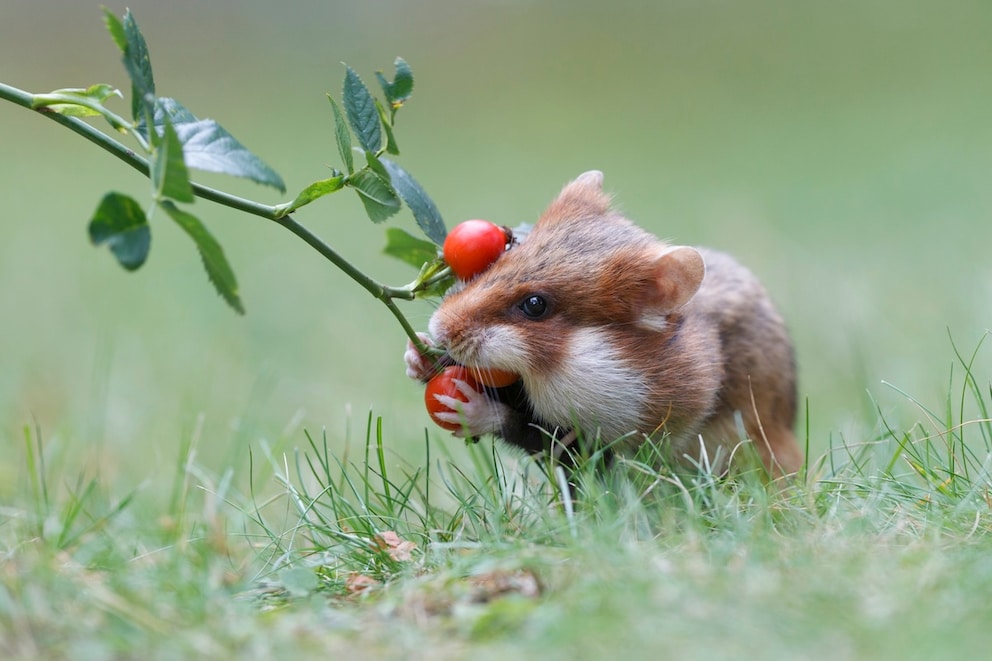
In the wild, they feed on seeds, grains, and grasses, but also on herbs, leaves, roots, and—depending on the season—fruits. An important, often underestimated component of their diet is insects and other invertebrates. These provide high-quality protein, essential fatty acids, and important micronutrients.
Especially during periods of increased energy demand, such as growth or reproduction, animal protein sources are crucial. At the same time, hamsters are avid collectors. Since the food supply in their native regions is often abundant only for a short time each year, they store large reserves. This behavior is deeply ingrained in their instincts—even in our pets.
Nutritional Needs of Hamsters
To meet your hamster’s nutritional needs, you should not only focus on variety in the bowl but also ensure that the food composition meets their nutritional requirements. Generally, hamsters need:
- 15–20% protein
- 4–7% fat
- 5–20% fiber
Important: Depending on age, breed, and activity level, these values can vary.
How to Feed Your Hamster Properly
A proper hamster diet closely follows what hamsters would eat in the wild. This means, above all, variety.
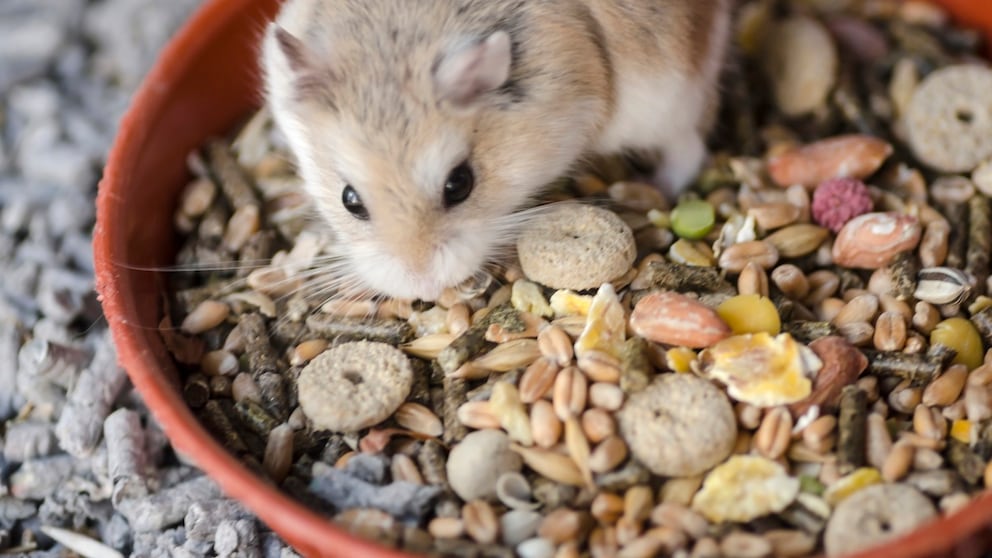
The foundation is a high-quality dry food made from various grains and seeds, which provides the majority of daily energy. This should be balanced and contain enough protein, moderate amounts of fat, and sufficient fiber.
The basic food is supplemented daily with fresh food in the form of vegetables, herbs, and leafy greens. These provide vitamins, secondary plant compounds, and moisture. Fruit can also be fed, but only sparingly, as the fructose it contains can burden the metabolism.
A crucial point that is often underestimated is the supply of animal protein. Hamsters are not vegetarians. Insects, cooked eggs, or small amounts of unseasoned animal products are necessary to meet their protein needs. High-quality hay rounds out the diet, supports digestion, and is often used for nest building. Fresh water should always be available, even if many hamsters drink very little.1
Why Pet Store Food Is Rarely Suitable
Many owners rely on ready-made hamster mixes from pet stores, assuming they are automatically appropriate. Unfortunately, this is often not the case. Many products contain sugar, such as molasses, honey, or dried fruits. A high fat content is also not uncommon. Cheap fillers like corn often dominate the composition, while high-quality seeds are only present in small amounts. Additionally, artificial colors and flavorings offer no benefit to hamsters.
Sugar is particularly problematic. It can not only burden the metabolism but also stick to the sensitive cheek pouches and cause inflammation. Dwarf hamsters, in particular, are very sensitive to this and develop diabetes more quickly. Pellets are also no guarantee of quality. While they can provide nutrients, they do not replace a varied, natural diet. The ingredient list is always crucial—not the colorful packaging design.2
When Should You Feed Hamsters?
Hamsters are nocturnal animals. Their main activity phase begins in the late afternoon and continues through the night. Feeding should be timed accordingly. Feeding your hamster in the evening aligns with their natural rhythm.
In the wild, hamsters consume small portions throughout the day and prefer to eat from their reserves. This behavior persists in domestic settings. It is therefore completely normal for a hamster to collect and store its food in the nest rather than eating it immediately. This is not a sign of hunger or deficiency but an expression of a deeply rooted need for security.
How to Feed Properly
Not only what is fed but also how it is fed plays a significant role. The so-called scatter feeding is particularly recommended. In this method, dry food is distributed throughout the enclosure, so the hamster has to search, gather, and transport it. This promotes movement, keeps the animal mentally engaged, and aligns with its natural behavior.
Fresh food, on the other hand, should always be offered in a bowl, as it can spoil and mold quickly in the bedding. Food bowls for dry food are especially useful for old, sick, or mobility-impaired animals. It is also important to regularly check food reserves without removing them unnecessarily. A filled food bunker provides the hamster with security and reduces stress.3
Why Do Hamsters Eat Their Own Feces?
What initially seems strange to many owners is biologically quite sensible. Hamsters practice what is known as cecotrophy. They eat special, soft fecal pellets that form in the cecum. These contain important nutrients like B vitamins, vitamin K, proteins, and essential fatty acids that were not fully absorbed during the first digestion.
By eating them again, the hamster optimally utilizes its food and simultaneously supports a healthy gut flora. This mechanism is particularly beneficial for young animals and pregnant or nursing females. Usually, this happens so discreetly that owners hardly notice it.
What Do Different Hamster Species Eat?
Not all hamsters are the same—and this is where many feeding mistakes occur. Syrian hamsters come from regions with a relatively rich food supply, while dwarf hamster species like Campbell’s, Djungarian, or hybrid hamsters are adapted to very sparse habitats. Their metabolism is sensitive to sugar and quickly available carbohydrates, making them particularly prone to diabetes.
Roborovski dwarf hamsters, on the other hand, live in dry steppe and desert regions and primarily feed on seeds and insects in the wild. Juicy fresh food plays little role for them. Chinese hamsters also show a genetic predisposition to metabolic disorders. A uniform diet for all hamster species does not do justice to these differences and can have long-term health consequences.4
Here’s a brief overview:
| Hamster Species | Characteristics |
|---|---|
| Syrian Hamster | tolerate more grains, vegetables, and some fruit |
| Roborovski Dwarf Hamster | very seed- and insect-rich, little juicy food |
| Campbell’s & Hybrid Hamsters | highly prone to diabetes, very little sugar |
| Djungarian Dwarf Hamster | sparse diet, little fruit |
| Chinese Hamster | genetic predisposition to diabetes |
Nutritional Needs by Age and Activity
A hamster’s nutritional needs are not static. Young animals in growth, pregnant or nursing females, and very active hamsters require significantly more protein than older animals. As they age, the need decreases while digestion becomes more sensitive.
The fat content of the diet should also be adjusted according to activity and health status. The quality of the fatty acids is more important than the absolute amount. Unsaturated fats from seeds are more suitable than saturated or industrially processed fats. Regular weight checks help detect over- or under-supply early.
What Belongs in the Bowl
Even though hamsters like to collect and should distribute their food in the enclosure, there are some components of the diet that, as mentioned, should sensibly be offered in the bowl. This includes primarily fresh food. Nutrient-rich vegetables and leafy greens are particularly suitable, which should be offered fresh regularly and removed after a few hours at the latest.
Animal protein, such as insects, cooked eggs, or dairy products like quark or yogurt, should also be fed in a controlled manner in the bowl. This way, owners can better monitor how much is actually eaten and avoid protein-rich food spoiling unnoticed in the reserve. The same applies to very energy-rich or fatty components, which should be dosed consciously.
Fresh drinking water should also always be in the bowl or drinker and should be renewed daily. The cleanliness of the water source is more important than its form. The bowl is not a place for all the food, but an important part of a well-thought-out and hygienic feeding.5

Pouched Rat: These Pets Can Even Detect Landmines

12 Premium Wet Dog Foods Tested–Half Are Unsuitable
What Hamsters Should Not Eat
Strictly prohibited are, among others:
- Avocado
- Onions, garlic, leeks
- Raw potatoes
- Chocolate, sweets
- Citrus fruits
- Spiced, salted, or processed foods
- Alcohol, coffee, tea
Salt or mineral licks and vitamin drops are also unnecessary and potentially harmful for healthy hamsters.
Conclusion
A proper hamster diet is varied, nature-oriented, and adapted to the specific species. High-quality dry food forms the basis, but is not sufficient on its own. Only the combination of grains, fresh food, and animal protein meets the actual needs.
By avoiding sugar, low-quality ingredients, and unsuitable treats, you protect your hamster from common diseases like diabetes, obesity, and organ problems. In short: The more we orient ourselves to nature, the better our hamsters fare—and the greater the chances for a long, healthy life.