

April 12, 2026, 10:08 am | Read time: 4 minutes
Keeping rabbits in the garden—for many, this sounds like an especially humane solution. Fresh air, plenty of space, and natural behavior seem to support this idea. But it’s not that simple: Those who want to keep their animals outside must consider several factors—otherwise, it can quickly become dangerous.
Keeping Rabbits Outside–When Is It Possible?
In general, rabbits can be kept outside. However, owners must pay attention to several things, starting with the right grouping and the proper selection of the enclosure. Outside, there are different temperature fluctuations than indoors, so appropriate precautions should be taken. And in the event of a fox visit, the enclosure should also be prepared.
When Can Rabbits Be Kept Outside?
A crucial factor in outdoor keeping is the proper acclimatization to temperatures. Rabbits that already live outside year-round or were born outside can usually remain outdoors in winter without any issues. They develop a thick winter coat and adapt well to the weather.1
It’s different for indoor rabbits: They should not simply be placed outside in winter. Instead, they must be gradually acclimated to outdoor temperatures so their bodies can adjust accordingly.2
The best time for the transition is spring, ideally between April and May, when no severe night frosts are expected. This gives the animals enough time to acclimate to changing temperatures and develop a protective winter coat by fall.
Single Keeping Is Not Suitable for Rabbits
For humane keeping—whether indoors or outdoors—the first rule is: Rabbits should never be kept alone. In the past, guinea pigs were often kept with rabbits, but this is now considered outdated. At least two rabbits should always be kept together, and ideally, a group of up to six rabbits is recommended. However, owners should pay attention to gender distribution.
What Should the Enclosure Be Like?
The enclosure should be at least six square meters for two rabbits. For each additional animal, the area should be expanded by about 20 percent. Many commercially available pens are too small and therefore unsuitable. The general rule is: The more space available, the better.
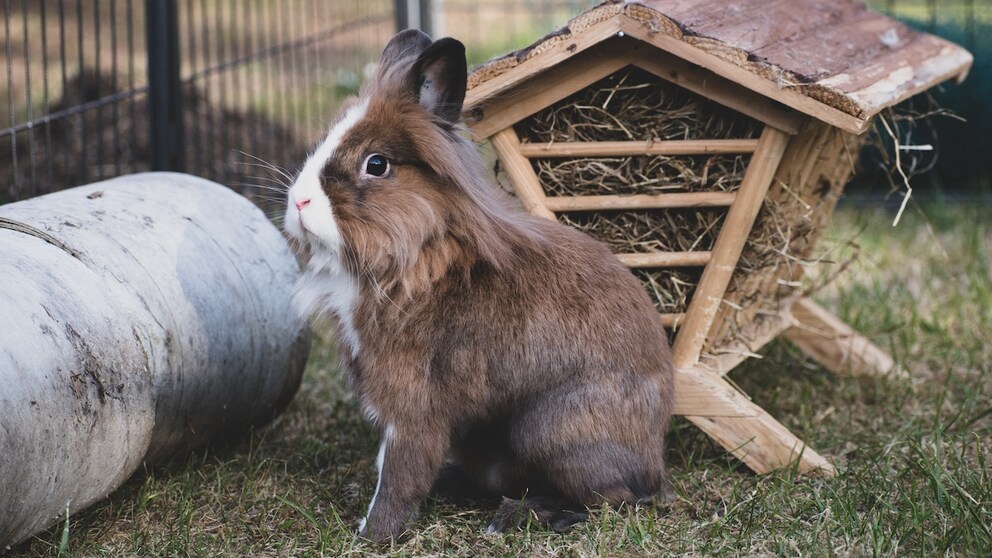
Besides size, the setup is also crucial. Rabbits need hiding places and retreats, elevated areas, opportunities for activity, and enough space to run and dig. Different surfaces and a protected feeding area further contribute to their well-being.
Safety is also important: The enclosure must be protected all around—including above and below—against predators like martens or foxes. Sturdy aviary wire is essential here. Especially if owners cannot secure their animals daily before dusk, the enclosure should be built securely.

Can Rabbits Stay Outside in Winter?

Tips for letting rabbits move freely within the home
Outdoor Enclosures Need Digging Protection
Rabbits love to dig—and this can quickly become a problem. Without protection, they might dig out of the enclosure or inadvertently create access for predators. Therefore, the ground should be well thought out.
A proven solution is paving slabs: They are considered hygienic, easy to clean, and reliably prevent the animals from digging out. To ensure the hard surfaces don’t burden their sensitive paws, they should be covered with bedding or mulch.
Those who want to encourage natural digging behavior can alternatively work with a secured earth excavation, where wire is laid under and on the sides of the enclosure. This is more natural.
In practice, a middle ground often proves effective: solid, secure surfaces combined with digging opportunities like a digging box or a designated earth area.
How Do I Protect the Enclosure from Wind and Weather?
Besides safety, weather protection plays a central role. Ideally, at least a large part of the enclosure should be covered. This ensures dry retreats even in rain—and at the same time creates shaded areas for hot days. Important: Shade must be available all day, as the sun constantly changes.
Additionally, the weather sides should be protected, such as with fixed coverings or flexible solutions like tarps. The rule is: In winter, the enclosure must protect against wind and moisture, but in summer, it should be well ventilated to prevent heat buildup.
Rabbits are surprisingly robust but sensitive to extreme temperatures. Therefore, they need the ability to independently seek protected, dry, and shaded places—whether in summer heat, rain, or snow.