

April 25, 2026, 10:03 am | Read time: 4 minutes
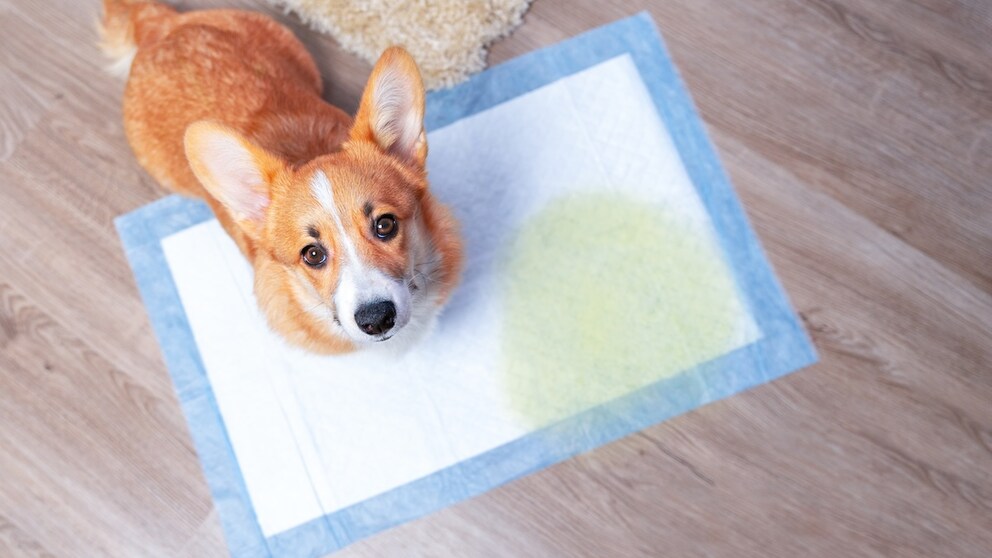
A wet patch on the dog’s favorite spot or small urine droplets on the floor—such situations can quickly unsettle owners. What initially seems like a one-time mishap can turn out to be a serious health issue. Uncontrolled urine loss often indicates a condition that requires targeted treatment. PETBOOK explains how owners can recognize incontinence and what measures can help.
Symptoms of Incontinence in Dogs
Not every dog that urinates uncontrollably has a bladder weakness. Owners should also watch for other symptoms that might indicate incontinence.
- The dog needs to urinate significantly more often and drinks more than usual
- Unconscious urine loss during sleep, climbing stairs, coughing, standing up, or lying down
- Frequent straining to urinate, often associated with visible pain
- The dog appears visibly uncomfortable, in pain, or it even limps
If you notice these symptoms more frequently, you should have them checked by your veterinarian.
Possible Causes of Sudden Urine Loss in Dogs
Incontinence is classified as either primary or secondary. Primary incontinence involves a defect in the urethral closure. Secondary incontinence, however, requires an underlying cause that leads to incontinence.1
Primary Urinary Incontinence
There can be various causes for primary urinary incontinence. Often, older and spayed female dogs are affected. This is due to a weakened bladder sphincter and generally weak connective tissue. This weakness occurs due to the decrease in the female sex hormone estrogen with age and after spaying. Therefore, bladder weakness is more common in spayed females than in spayed males.
Incontinence in females is also favored by their anatomy: The urethra is shorter and straighter than in males, allowing urine to escape more easily.
Another cause of primary incontinence is a malformation of the ureter (ectopic ureter). Here, the ureter does not empty into the bladder as usual but directly into the urethra. Depending on how deep the ureter is in the urethra, one or even both sphincters may be bypassed.2
Secondary Urinary Incontinence
Secondary urinary incontinence can result from various diseases. Common causes include:
- Side effects of medications
- Bladder infection (cystitis)
- Bladder stones (urolithiasis)
- Diabetes
- Kidney diseases
- Tumors that damage nerves or directly affect the bladder
- Consequences of accidents: trauma, back injuries, slipped discs
- Stress
- Dementia: Older animals often lose urine involuntarily. Due to dementia, they do not notice their urge to urinate or forget it during walks
- Arthritis: General muscle weakness often occurs in older animals, leading to bladder weakness.3
Can Incontinence in Dogs Be Treated?
For treatment, it is important to know the exact cause of the dog’s incontinence. In many cases, incontinence can then be successfully treated.
Hormonal fluctuations and diseases can be treated with hormone therapy. Here, the missing hormone is replaced with supplements. However, treatment with estrogen often leads to side effects. Therefore, it must be done in consultation with the treating veterinarian and strictly monitored.
In the case of a bladder infection, taking anti-inflammatory drugs can help. If the bladder infection is bacterial, it can be treated with antibiotics. Bladder stones can be treated with a special diet to dissolve the stones. If this does not work, they must be surgically removed.
If incontinence in dogs occurs as a result of spaying, it can be treated with neural therapy or acupuncture. In some cases, medications are also used. Treatment always depends on the dog’s overall health and age.
Malformations and tumors can usually be surgically removed by the veterinarian. Other treatment options for tumors include radiation and chemotherapy.
What Can I Do as an Owner?
To best support your dog with incontinence, there are several things you can do as an owner:
- Increase the number of walks to give the dog more opportunities to urinate
- Use dog diapers
- Equip the dog’s sleeping areas with waterproof pads
- Keep cleaning supplies handy to quickly clean up any accidents
And most importantly: Never punish your dog for involuntary urination. They are not doing it on purpose and are likely already unsettled. Scolding can further stress them in this already uncomfortable situation. The resulting stress can then worsen their condition.

Incontinence in Dogs: Recognizing Symptoms and Taking Proper Action

Why Struvite Stones Are Dangerous for Cats and How to Treat Them
Can Incontinence Be Dangerous for Dogs?
In principle, bladder weakness is not dangerous for dogs. However, it is unpleasant and disruptive for both the pet and the owner. Depending on the symptoms, a more serious condition, such as a bladder tumor, may be behind the incontinence. Therefore, a thorough examination by a veterinarian is important.
Which Dogs Are Particularly Susceptible?
Incontinence can potentially affect all dogs. However, older female dogs are often affected. This can be related to a low estrogen level in spayed females or weak connective tissue, as previously mentioned. Nevertheless, some breeds are more affected than others. Breeds more susceptible to urinary incontinence include boxers, dalmatians, rottweilers, Weimaraners, and German shepherds.4
Boxers, golden retrievers, labrador retrievers, terriers, and poodles also more frequently suffer from an ectopic ureter.