


October 7, 2026, 11:22 am | Read time: 5 minutes
How can you tell a marten from a weasel or ferret? This question puzzles many animal lovers, as these small predators resemble each other in body structure and fur color. However, upon closer inspection, there are some distinct features. PETBOOK reveals how you can identify martens, weasels, and ferrets.
How to Differentiate Martens, Weasels, and Ferrets by Appearance
Martens, weasels, and ferrets look similar at first glance. However, there are clear features that allow you to distinguish these wild animals.
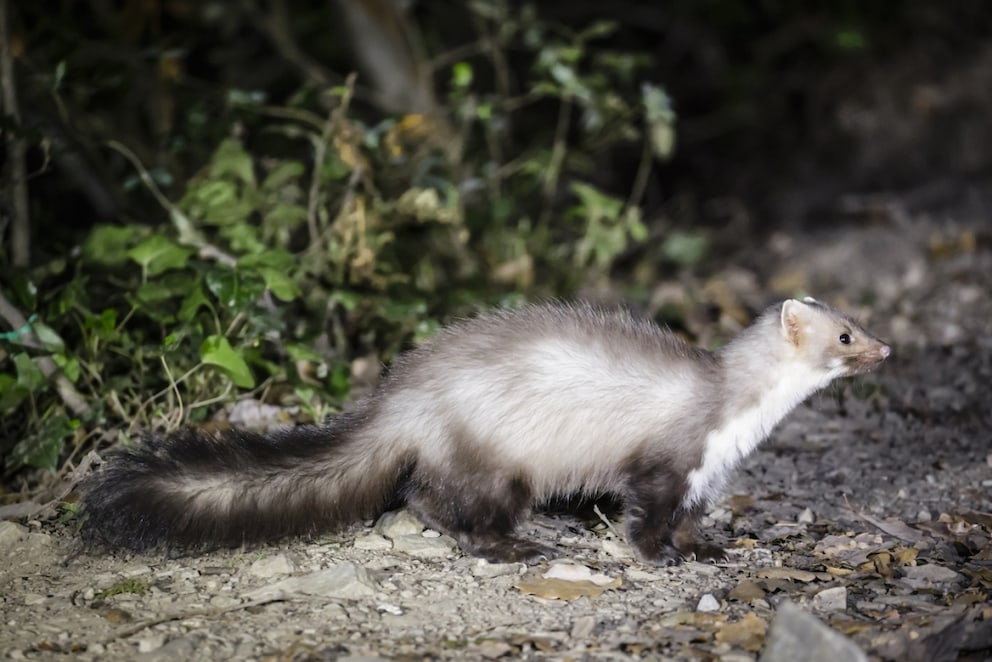
Stone Marten (Martes foina):
About one-third of its approximately 70-centimeter-long, slender body consists of its bushy tail. Its fur color is gray-brown, with a white patch on the throat that forks between and partly over the front legs. Stone martens weigh up to 2.3 kilograms.
Least Weasel (Mustela nivalis) and Stoat (Mustela erminea)
The least weasel, the smallest member of the marten-like predators in our region, is only between 11 and 26 centimeters long, while the stoat, the second smallest native predator, can grow up to 33 centimeters long. Both have light brown fur with a brown upper body and white underbody.
The least weasel has a jagged line in between. It also has brown feet and a brown tail without the stoat’s black tip. Both can develop white winter fur.1
Also interesting: What is the difference between winter rest, winter torpor, and hibernation?

Ferret (Mustela putorius furo)
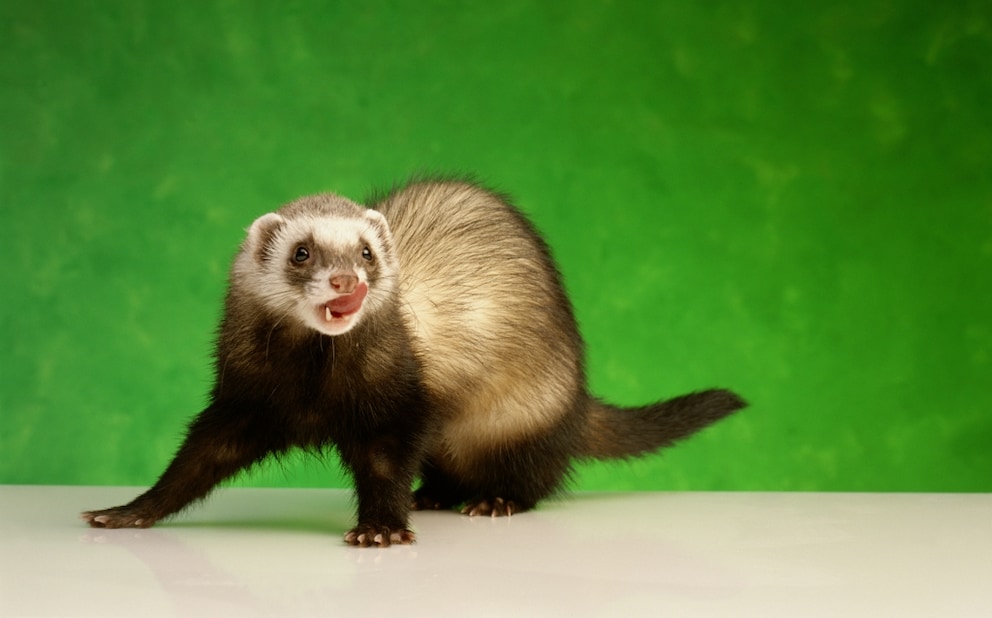
Males can grow up to 80 centimeters long and females up to 60 centimeters. About 25 percent of their body length is the tail, which is not quite as long as that of a marten. In terms of weight, they can match martens, as male ferrets can weigh up to 2.5 kilograms.
The fur color varies depending on the breed (beige, black), with the base color being whitish-yellow. There are also wild forms in various shades of brown, silver ferrets, and albinos. The fur length can vary by breeding, from short-haired to semi-long-haired and long-haired. A characteristic feature is the mask-like pattern on the face. The head is also slimmer than that of a marten.2
Also interesting: Keeping ferrets as pets – not suitable for everyone
Differences in Social Behavior
Martens, ferrets, and weasels differ not only in appearance but also in social behavior. The stone marten is a solitary animal and roams alone through deciduous and mixed forests outside the mating season in summer. It also likes to stay near human settlements, in barns and attics, where it builds its nests.
Those lucky enough to have a garden plot may have already spotted least weasels and stoats. These shy animals are generally nocturnal and, like martens, are solitary outside the mating season.
However, those who keep ferrets as pets should never keep them alone. Ferrets are social animals that also live in groups in the wild. These groups are called “businesses” and consist of five to twenty animals. Within this “business,” there is a hierarchy. In pet care, at least two of these playful animals should be kept together.
Distinguishing Martens, Weasels, and Ferrets by Droppings
Whether ferrets, martens, or weasels–in nature, you rarely see these animals. More often, you find their droppings. If you want to determine which animal you’re dealing with based on these, you need to examine the smell, color, and shape of the droppings.
Both ferrets and martens (stone martens) have very strong and unpleasant-smelling droppings and urine. The droppings of weasels (least weasels and stoats) smell rather sweet and musky.
The droppings of small weasels like stoats and least weasels are hard to distinguish from each other. They are about 0.2–0.6 centimeters long. The droppings of the least weasel are generally smaller. The color is blackish, and they are usually placed visibly on a stone or path.3
The droppings of martens are 6 to 11 centimeters long and often taper to a point. The color ranges from brownish to black, sometimes whitish. Additionally, the droppings sometimes contain food remnants like cherry pits.
Ferret droppings are jet black when they eat a lot of meat, otherwise medium to dark brown and slightly grainy depending on their diet.

Hardly anyone knows these 16 wild cats

Why Martens Attack Your Car–and How to Prevent Damage
Ferrets Have an Intense Body Odor
Ferrets are often called “little stinkers” for a reason. Many people perceive their natural odor more strongly, while others less so. Some say it smells like game, while others detect a hint of beeswax. However, when male ferrets are in rut, everyone agrees: The stench is unbearable!
The secretion they use to mark their territory comes from their anal glands and smells terrible. Neutering ferrets can reduce their typical odor, but their “stink glands,” or anal glands, must not be removed for animal welfare reasons, as they need them for skin care and social behaviors. However, a veterinarian can express and flush them if they are blocked.
How Martens, Weasels, and Ferrets Are Related
All three species belong to the marten family, which also includes polecats, otters, and badgers. However, while martens and weasels are found exclusively in the wild, ferrets have been domesticated for about 2,500 years and have even made their way into our homes.
In the past (now only rarely), they were used to assist in hunting. Ferrets can become very tame, and a ferret released in Germany has little chance of survival due to its almost nonexistent hunting instinct. Learn more about ferrets and how they differ from martens and weasels here at PETBOOK.