

April 14, 2026, 2:47 pm | Read time: 5 minutes
When cleaning out the hooves, an unpleasant odor suddenly becomes noticeable, along with dark, greasy deposits in the frog. The horse also reacts unusually sensitively or steps more cautiously. Such signs can easily be overlooked or misinterpreted in everyday life. However, they may indicate thrush in horses—a common, often underestimated hoof disease. PETBOOK explains what owners should pay attention to now.
The Function of the Frog in the Hoof–and What Happens with Thrush
The horse’s hoof is subjected to significant stress daily—while running, standing, and on various surfaces. The frog, a wedge-shaped, elastic area on the underside of the hoof, plays an important role. It cushions each step and supports blood circulation in the hoof.
In the case of thrush, this area is affected. Bacteria attack the horn material and initiate a decomposition process. The horn becomes soft, cracked, and loses stability. The disease often begins inconspicuously in the central sulcus of the frog and initially goes unnoticed.1
If the infection spreads further, adjacent areas such as the lateral sulci, the sole, and the hoof wall can also be affected. This increasingly restricts the hoof’s shock-absorbing function.2, 3
Why Thrush Develops in Horses
The main cause is putrefactive bacteria such as Fusobacterium necrophorum, which thrive particularly well in moist, warm, and oxygen-poor environments. The main triggers at a glance:
- Moist living conditions: Wet bedding, muddy paddocks, or constantly damp pastures soften the hoof horn and promote bacterial penetration.
- Poor stable hygiene: Manure and urine residues release ammonia, which attacks the hoof horn, making it porous and more susceptible to germs.
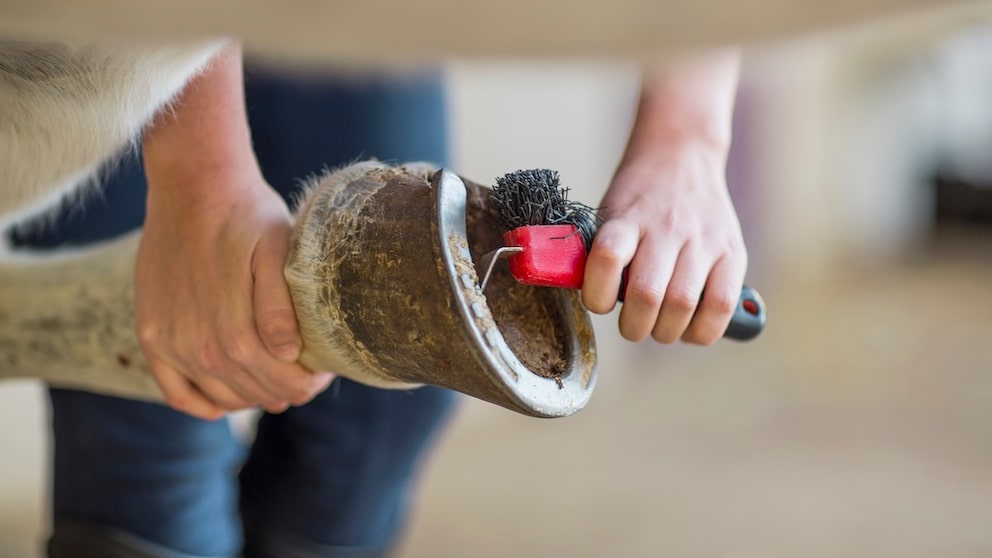
- Inadequate hoof care: If hooves are not regularly cleaned, dirt and moisture accumulate in the sulci—ideal conditions for bacteria.
- Lack of exercise: Too little movement impairs blood circulation in the hoof and weakens the frog’s natural resistance.
- Anatomical peculiarities: Narrow hoof positions or deep sulci create areas where moisture and germs can easily settle.
- Unbalanced diet: Over- or undersupply of nutrients can deteriorate the quality of the hoof horn and increase susceptibility.
- Weakened immune system: If the body’s defenses are reduced, bacteria can multiply more easily and promote infections.
Usually, several of these factors simultaneously contribute to the development of thrush in horses.
How Owners Can Recognize Thrush
The signs of thrush in horses are often easily recognizable. A typical feature is an intense, foul odor when cleaning the hooves.
Additionally, a dark, greasy substance appears in the frog area. It results from the bacterial decomposition process of the horn material. At the same time, the horn appears soft, brittle, or partially detached. Noticeable are also narrowed and deepened sulci. Moisture and dirt often accumulate in these areas.
Many horses react sensitively to pressure on the frog. As the disease progresses, pain can increase and lead to lameness. In long-standing cases, so-called heel rings appear on the hoof wall, indicating a chronic course.
How Veterinarians Diagnose Thrush
The diagnosis is usually made through a thorough examination of the hoof. Veterinarians assess the smell, appearance, and structure of the frog.
Additionally, it is checked whether the horse reacts sensitively to pressure. This provides clues about how advanced the disease is. If more serious damage is suspected, imaging techniques such as X-rays can be used to assess the internal structures of the hoof.
Early clarification is important to limit the progression of the disease.
How Thrush is Treated
The treatment of thrush is carried out step by step. First, the hoof is thoroughly cleaned to remove dirt and bacterial deposits. Then, damaged horn material is professionally removed. This step is crucial, as bacteria can continue to spread in the diseased tissue.
Next, the affected areas are disinfected. Depending on the severity, different agents are used. The selection is made by the veterinarian.
At the same time, living conditions must be improved. Clean, dry bedding and regular exercise support healing. Additionally, repeated checks are necessary to ensure treatment success. The duration of treatment varies: while mild cases can subside within about two weeks, therapy for advanced cases takes several months.

How Mauke Develops in Horses and What Owners Should Know
Recognizing and Treating Laminitis in Horses
What Are the Chances of Recovery
The prognosis largely depends on the timing of treatment. If thrush is detected early and treated consistently, the chances of recovery are generally good.
Untreated, however, the infection can spread further and cause significant damage to the hoof. In severe cases, secondary diseases are possible, which are associated with pain and permanent limitations.
How to Prevent Thrush
The most important measure for prevention is consistent hygiene. Clean and dry bedding, as well as regularly cleaned pastures, significantly reduce the risk. Daily hoof care also plays a central role. Regular cleaning removes dirt and moisture before bacteria can settle. Regular hoof trimming by farriers helps correct misalignments and maintain hoof health.
A balanced diet also contributes to hoof health. Both deficiency and oversupply of nutrients can impair the quality of the hoof horn and increase susceptibility.