

November 7, 2025, 1:03 pm | Read time: 4 minutes
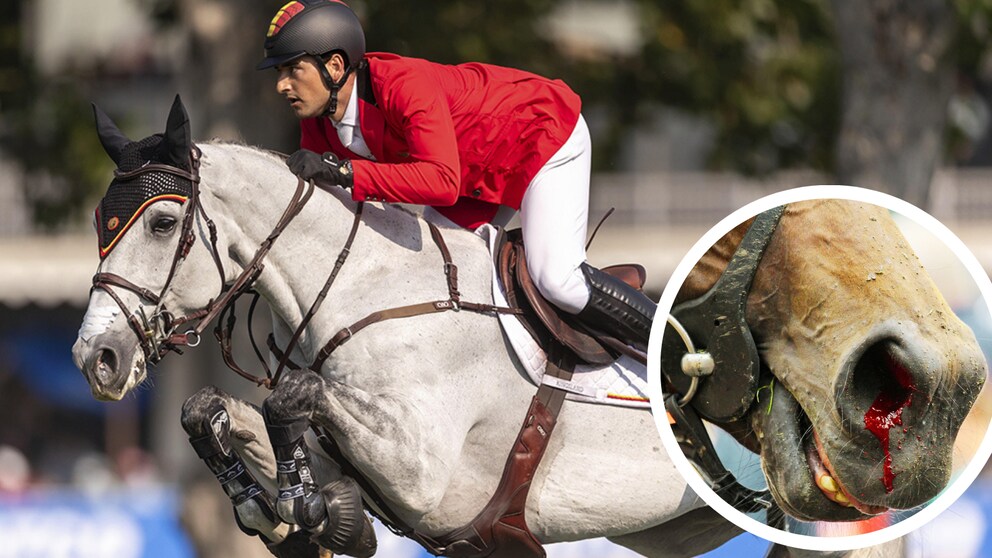
Blood on the horse—and the competition is over. That’s how it has been in international equestrian sports. But the Fédération Équestre Internationale (FEI) wants to relax the so-called blood rule—but what does this mean for animal welfare?
On November 7, 2025, a vote on changing the rule was held at the FEI General Assembly in Hong Kong. Fifty-six nations voted in favor, and 20 against the relaxation. The new regulation is set to take effect on January 1, 2026.
What Is the Blood Rule?
The blood rule is a regulation by the Fédération Équestre Internationale (FEI), the international governing body for equestrian sports. It represents zero tolerance for visible blood on horses during competitions. If blood is found on a horse in a rider-horse duo, immediate exclusion and disqualification follow. Visible blood is considered an indication of tissue damage and thus an overstepping of the horse’s stress limits. The rule was introduced to protect the horse and its well-being from physical stress in the context of competitive sports.
FEI Relaxes the Blood Rule and Faces Criticism
A change to the blood rule was proposed by the International Jumping Riders Club (IJRC). The background is that relaxing the rule allows more leeway for officials on site. This refers to local judges and veterinarians who have previously disqualified riders for minor injuries.
In the future, the rule is to be applied less strictly:
- Natural injuries—such as a bitten tongue—will no longer result in disqualification. The rider may clean the horse’s mouth and continue.
- Minor injuries caused by the rider—such as wounds from spurs—will now only result in a warning.
- If a second warning occurs within twelve months, a fine of up to 1,000 Swiss francs and a one-month suspension may be imposed.
- More serious injuries will still lead to disqualification and disciplinary proceedings. 1, 2
In recent days, there have been many voices criticizing the change. The animal rights organization PETA also criticized the change in a letter to FEI President Ingmar De Vos. 3

Is Horse Riding Considered Animal Cruelty? An Expert Weighs In

Foam at the Horse’s Mouth: Good or Bad Sign?
Why Is the Blood Rule Important?
Competitive sports can already be an enormous burden for these sensitive animals. That’s why for most riders and owners, the well-being of the horse is of utmost priority.
Nevertheless, bloody incidents occur at competitions: spurs causing tissue damage to the animal’s belly, sharp and strong bits or bridles, overly harsh whip strikes, or injuries to the mouth leading to bloody injuries to the mucous membrane.
Due to the FEI’s zero-tolerance policy, rider-horse pairs were disqualified and excluded from the competition in this context—a clear sign that animal welfare took precedence over equestrian sports. 4
What Does This Mean for German Equestrian Sports?
In Germany, equestrian sports are organized through the FN (Fédération Équestre Nationale). The FN is the German Equestrian Federation, the umbrella organization for equestrian sports and breeding in Germany. It organizes competitions, sets rules, but also follows the rules of the FEI. So, how does the FN respond to the change in the blood rule?
The president of the FN, Martin Richenhagen, commented on the change in “Pferd Aktuell,” the FN’s online platform:
“I consider this a clear mistake. Blood has no place in equestrian sports. Even though the number of cases worldwide is very low—recently at every 3,366th start, with more than 99 percent being very minor scratches—the issue symbolizes our treatment of the horse. If a horse bleeds due to the rider, it cannot continue in the competition. It’s a matter of respect and responsibility.”
Since national competitions are organized by the FN, the zero-tolerance mandate will likely be maintained in Germany. However, how the international competition landscape will change remains to be seen. 5